

Working Principle and Features of White Earth Pneumatic Conveying Systems
White earth, also known as bleaching earth or Fuller's earth, is a crucial material in various industrial processes, particularly in the petroleum refining and food processing sectors. The efficient handling and transportation of white earth are essential for maintaining production efficiency and quality control. Pneumatic conveying systems have emerged as a preferred solution for this purpose due to their ability to transport bulk materials like white earth in a dust-free, hygienic manner. This article explores the working principle and key features of white earth pneumatic conveying systems, highlighting their advantages and practical applications.

Working Principle of White Earth Pneumatic Conveying Systems
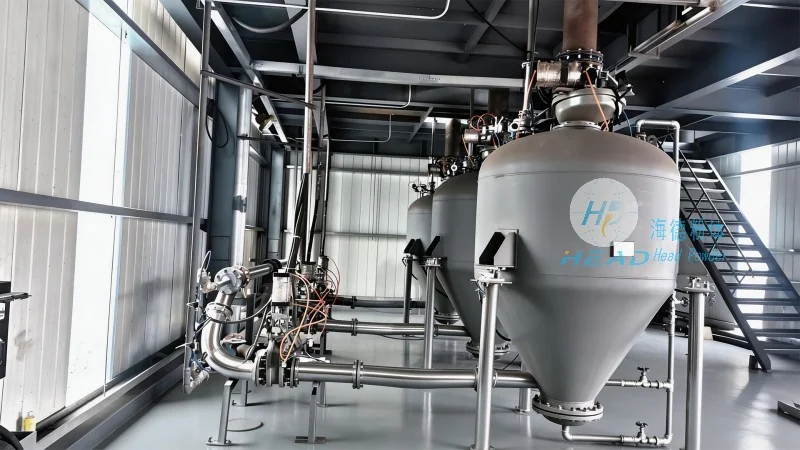
The core mechanism of a white earth pneumatic conveying system involves the use of compressed air to transport the material through a pipeline network. The process typically begins with the material being fed into a hopper or feeder, where it is then drawn into the conveying line by the air flow. There are two main types of pneumatic conveying systems: dilute phase and dense phase. Dilute phase systems operate at higher air velocities, allowing the material to be suspended in the air stream and transported over longer distances. Dense phase systems, on the other hand, use lower air velocities and higher material concentrations, which is ideal for transporting delicate or abrasive materials like white earth without causing degradation. The system consists of several key components, including a blower or compressor to generate the air pressure, a hopper for material storage, a feeder to control the flow rate, a conveying line with appropriate fittings and valves, and a receiver to collect the material at the destination. The air flow is regulated by a control system to ensure consistent material transport and prevent blockages or pressure drops. The entire process is designed to minimize material degradation, reduce dust emissions, and maintain a clean and safe working environment.

Key Features and Advantages of White Earth Pneumatic Conveying Systems
White earth pneumatic conveying systems offer several distinct features and advantages that make them suitable for industrial applications. One of the primary advantages is the ability to transport materials in a closed system, which significantly reduces dust contamination and improves workplace safety. This is particularly important for white earth, which can be fine and easily airborne, posing health risks if not handled properly. Another key feature is the flexibility in system design, allowing for customization based on the specific requirements of the application, such as the distance to be covered, the volume of material to be transported, and the need for dust control measures. The systems are also capable of handling a wide range of material properties, including different particle sizes, moisture content, and bulk densities, making them versatile for various industrial processes. Additionally, pneumatic conveying systems are energy-efficient compared to traditional methods like belt conveyors or bucket elevators, as they use compressed air to move the material, reducing mechanical wear and maintenance costs. The closed system design also helps in maintaining material purity, which is critical for applications where white earth is used as a filter or adsorbent in processes like oil refining or food processing. Furthermore, these systems can be integrated with other process equipment, such as storage silos or processing units, to create a seamless material handling workflow. The reliability and low maintenance requirements of pneumatic conveying systems contribute to their long-term operational efficiency and cost-effectiveness.
Applications and Practical Considerations
White earth pneumatic conveying systems are widely used in industries where the handling of fine powders is essential. In the petroleum industry, for example, white earth is used as a bleaching agent in the refining of vegetable oils and petroleum products. The pneumatic conveying system ensures that the white earth is transported from storage to the processing units without contamination, maintaining the quality of the final products. Similarly, in the food processing industry, white earth is used as a filter aid in the production of beverages and dairy products. The system's ability to handle hygienic materials and maintain a clean environment is crucial for meeting food safety standards. Practical considerations when implementing a white earth pneumatic conveying system include the selection of appropriate air velocities and material concentrations to prevent blockages and ensure efficient transport. The design of the system must also account for the material's properties, such as its abrasiveness and moisture content, to prevent wear and corrosion of the conveying components. Regular maintenance of the system, including cleaning of the hopper and conveying line, is essential to prevent material buildup and ensure consistent performance. Additionally, the system's integration with other process equipment requires careful planning to ensure smooth material flow and avoid bottlenecks. The use of high-quality materials for the construction of the conveying components, such as stainless steel or corrosion-resistant alloys, is recommended to extend the system's lifespan and maintain material purity. Overall, white earth pneumatic conveying systems provide an effective and efficient solution for the transportation of this critical material, contributing to improved productivity and quality in various industrial applications.