

Principle and Working Scenario Characteristics of Activated Carbon Material Pneumatic Conveying Line
Activated carbon material pneumatic conveying lines represent a sophisticated system designed to transport activated carbon efficiently and reliably. This technology is pivotal in various industrial applications, particularly where the material's unique properties, such as high adsorption capacity and fine particle size, demand specialized handling solutions. The following sections delve into the fundamental principles governing these systems and explore the distinct working scenarios where they excel, with a focus on the expertise of Shandong HeadPowder Engineering Co., Ltd. in developing and implementing such advanced material handling solutions.

Core Principles of Pneumatic Conveying for Activated Carbon
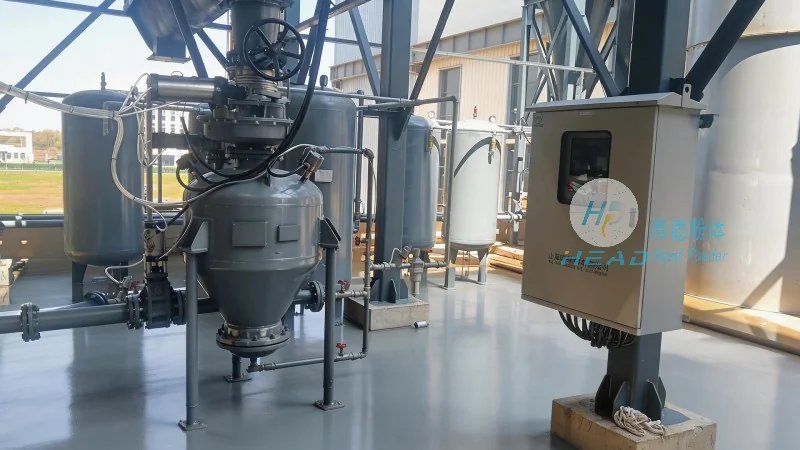
The operation of an activated carbon material pneumatic conveying line is based on the fundamental principle of transporting bulk materials through a pipeline using a pressurized or vacuum air stream. In this system, activated carbon particles are suspended and propelled by the air flow, eliminating the need for mechanical components like belts or buckets that are common in traditional bulk material handling. The system typically comprises several key components: a feeding hopper to introduce the material, a conveyor pipeline, a control valve for regulating air flow, and a discharge point where the material is released. The air velocity within the pipeline is critical; it must be sufficient to lift and transport the carbon particles without causing excessive wear or degradation of the material. For activated carbon, which often has a relatively low bulk density and fine particle size, maintaining an optimal air-to-solid ratio is essential to ensure smooth and continuous operation. The system may operate under positive pressure (where air is forced through the pipeline) or negative pressure (where air is drawn from the pipeline), depending on the specific application and the need to manage dust emissions or environmental factors.

Working Scenario Characteristics: Industrial Applications and Operational Environments
Activated carbon material pneumatic conveying lines are widely employed in industrial settings where the material's adsorption properties are leveraged for processes like air purification, water treatment, and chemical processing. One primary working scenario is in environmental remediation facilities, where large quantities of activated carbon are required to treat contaminated air or water streams. In such applications, the conveying system must handle high volumes of material while maintaining low dust emissions to comply with environmental regulations. The system's design often includes dust collection and filtration components to ensure that the air discharged is clean and safe for the surrounding environment. Another common scenario is in the chemical and pharmaceutical industries, where activated carbon is used as a catalyst or adsorbent in production processes. Here, the conveying line may be integrated into a larger production line, requiring precise control over material flow rates and particle size distribution to meet product quality standards. The operational environment in these settings can vary, from controlled indoor facilities to outdoor installations, but the system's robust design ensures consistent performance under diverse conditions. Additionally, in power generation and industrial manufacturing plants, activated carbon is used for flue gas treatment and odor control. The conveying line in these scenarios must be capable of handling abrasive or corrosive materials, often requiring specialized materials for the pipeline and components to extend the system's lifespan. The working scenario characteristics also include the need for flexibility in material handling, as activated carbon may be sourced from different suppliers or used in varying concentrations, necessitating systems that can adapt to different feed rates and particle characteristics.
Technical Advantages and Considerations for Effective Operation
Implementing an activated carbon material pneumatic conveying line offers several technical advantages that make it a preferred choice over traditional handling methods. The primary benefit is the elimination of mechanical wear and tear, as the system relies on air flow rather than moving parts to transport the material. This reduces maintenance costs and extends the operational life of the equipment. Additionally, the system provides a dust-free and enclosed environment, which is crucial for maintaining product quality and ensuring worker safety in industrial settings. The ability to handle fine particles without segregation or agglomeration is another key advantage, as activated carbon particles are often small and prone to clumping. The system's design, with its consistent air flow and controlled velocity, prevents particle separation and maintains a uniform material stream. However, several considerations must be addressed to ensure optimal performance. The choice of air velocity and pressure is critical; too low a velocity may cause material deposition or blockages, while too high a velocity can lead to excessive energy consumption and wear on the pipeline. The material's properties, such as its density, moisture content, and particle size distribution, also impact the system's efficiency. For example, high moisture content can cause the carbon particles to clump, requiring pre-drying or the use of a humidification system to maintain optimal flow. The system's design must also account for the potential for dust generation, as activated carbon is a fine powder. Proper filtration and dust collection systems are essential to prevent environmental contamination and ensure compliance with local regulations. Furthermore, the system's integration with other industrial processes, such as storage silos or processing units, requires careful planning to ensure seamless material transfer and minimize downtime. The use of sensors and control systems to monitor air pressure, flow rate, and material level can enhance the system's performance and provide real-time feedback for adjustments, improving overall operational efficiency.

Conclusion: The Role of Activated Carbon Pneumatic Conveying in Modern Industry
In conclusion, activated carbon material pneumatic conveying lines are a vital technology in modern industrial operations, offering efficient, reliable, and safe methods for handling activated carbon. The core principles of pneumatic conveying, combined with specialized design considerations for activated carbon's unique properties, enable these systems to operate effectively in diverse working scenarios. From environmental remediation to chemical processing, the applications of these lines are broad and essential for maintaining product quality and environmental standards. As industrial demands evolve, the continued development and optimization of pneumatic conveying systems will remain critical to meeting the challenges of material handling in the 21st century. The technology's ability to adapt to varying operational conditions and integrate seamlessly with other industrial processes underscores its importance as a cornerstone of modern material handling solutions.