

Operation Process and Working Principle of Phosphorus Pentachloride Pneumatic Conveying Equipment
Phosphorus pentachloride (PCl₅) is a critical chemical compound widely used in various industrial applications, including pharmaceuticals, agrochemicals, and chemical synthesis. The safe and efficient handling of PCl₅ is paramount due to its reactivity and potential hazards. Pneumatic conveying systems offer a reliable solution for transporting PCl₅ from storage to processing units, ensuring minimal exposure to personnel and maintaining product integrity. This document provides a detailed overview of the operation process and working principle of a specialized pneumatic conveying equipment designed for PCl₅, manufactured by Shandong HeadPowder Engineering Co., Ltd., a leading provider in the field.
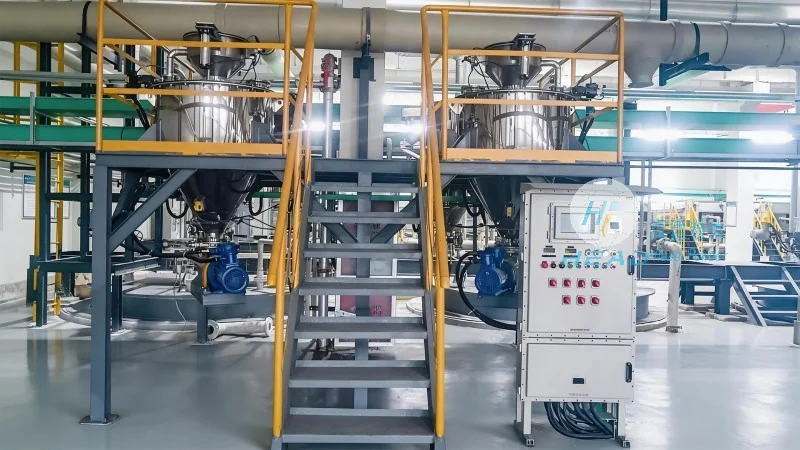
Overview of the Pneumatic Conveying System
The pneumatic conveying equipment for PCl₅ is engineered to handle the unique properties of phosphorus pentachloride, such as its high reactivity, potential to form corrosive vapors, and the need for precise control during transport. The system typically consists of several key components, including a hopper for material storage, a rotary valve for controlled discharge, a conveying line with appropriate piping, a venturi or pressure drop device for air induction, and a receiver for the material at the destination. Each component is designed to work in harmony to ensure smooth and safe operation.
Key Components and Their Functions
1. **Material Hopper**: The hopper is a large, sealed container that stores the PCl₅ powder. It is equipped with a level indicator to monitor the material volume and a discharge valve to regulate the flow rate. The hopper is made of corrosion-resistant materials, such as stainless steel or special alloys, to withstand the chemical properties of PCl₅.
2. **Rotary Valve**: This component is installed at the bottom of the hopper to control the flow of PCl₅ into the conveying line. The rotary valve ensures a consistent and controlled discharge, preventing blockages and maintaining a steady flow rate. It is designed to handle abrasive and corrosive materials, with a sealed mechanism to avoid dust leakage.
3. **Conveying Line**: The conveying line is a pipeline that transports the PCl₅ particles along with the air stream. The pipe material is selected based on the chemical compatibility with PCl₅, typically using stainless steel or PTFE-lined pipes to prevent corrosion and material adhesion. The line is equipped with appropriate fittings and elbows to ensure minimal pressure loss and smooth flow.
4. **Venturi or Pressure Drop Device**: This device is used to induce the air flow necessary for pneumatic conveying. The venturi creates a pressure drop that draws air into the line, while the material is fed into the air stream. The pressure drop is carefully controlled to maintain the desired conveying velocity and prevent material degradation.

5. **Receiver**: The receiver is a container at the destination where the PCl₅ is deposited. It is designed to be large enough to accommodate the expected material volume and equipped with a discharge valve for easy removal. The receiver is also made of corrosion-resistant materials to ensure long-term durability.
Operation Process of the Pneumatic Conveying Equipment
The operation of the PCl₅ pneumatic conveying system follows a systematic sequence to ensure safe and efficient transport. The process begins with the loading of PCl₅ into the hopper. Once the hopper is filled, the rotary valve is activated to start the material discharge. Simultaneously, the air compressor or blower is started, and the venturi device induces the air flow into the conveying line. The PCl₅ particles are then drawn into the air stream and transported through the pipeline to the receiver.
During the conveying process, the system monitors several parameters, including pressure, flow rate, and material level. The pressure sensors in the line detect any blockages or pressure fluctuations, triggering alarms or automatic shutdowns if necessary. The flow rate is adjusted by controlling the rotary valve speed or the air volume, ensuring optimal conveying efficiency. The material level in the hopper is continuously monitored to prevent overfilling or underfilling, which could affect the system performance.
The receiving process is initiated when the material reaches the receiver. The receiver is equipped with a discharge valve that opens automatically or manually to allow the PCl₅ to be collected. The system then returns to standby mode until the next batch of material is loaded. The entire operation is controlled by a programmable logic controller (PLC) or a similar control system, which manages the sequence of operations and ensures compliance with safety protocols.
Working Principle of the Pneumatic Conveying System
The working principle of the pneumatic conveying equipment for PCl₅ is based on the fundamental concept of transporting solid particles using an air stream. The system operates under either positive or negative pressure, depending on the application requirements. In positive pressure systems, the conveying line is pressurized with air, and the material is pushed through the line. In negative pressure systems, the line is under vacuum, and the material is drawn into the line.
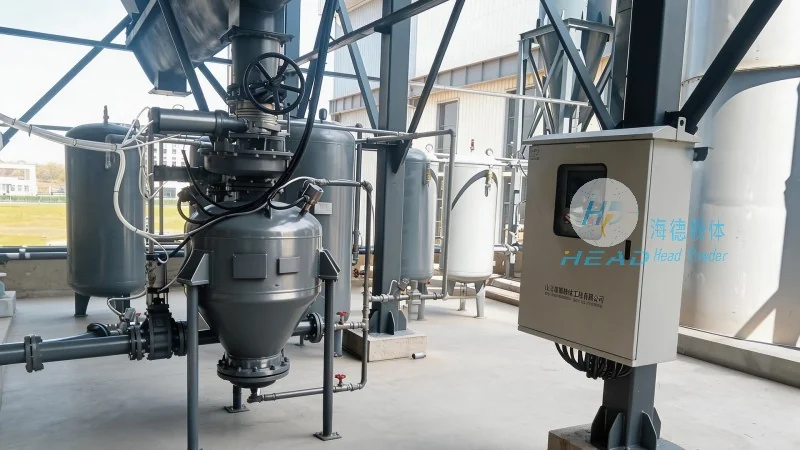
For PCl₅, a negative pressure system is commonly used due to the need to minimize exposure to the material and prevent dust dispersion. The venturi device creates a low-pressure zone in the conveying line, which draws air from the environment and mixes with the PCl₅ particles. The air stream carries the particles forward, maintaining a consistent velocity to prevent material settling or degradation. The velocity of the air stream is critical; it must be high enough to keep the particles suspended but low enough to avoid excessive wear on the equipment.
The material is transported as a dilute or dense phase flow, depending on the system design and material characteristics. In dilute phase conveying, the particles are dispersed in the air stream, and the conveying velocity is relatively high. In dense phase conveying, the particles are more concentrated, and the velocity is lower. The choice between these two modes depends on factors such as the material's reactivity, particle size, and the required conveying distance. For PCl₅, a dense phase system is often preferred to reduce the risk of dust formation and ensure stable transport.
Technical Advantages and Safety Features
The pneumatic conveying equipment for PCl₅ offers several technical advantages that make it an ideal solution for handling this hazardous chemical. First, the system provides a closed-loop operation, which minimizes the exposure of personnel to PCl₅ dust and vapors, reducing the risk of respiratory and skin irritation. Second, the equipment is designed with corrosion-resistant materials, ensuring long-term durability and reliability. Third, the system includes advanced control features, such as pressure monitoring and automatic shutdowns, to prevent accidents and maintain product quality.
Additionally, the equipment is equipped with safety features to handle the potential hazards associated with PCl₅. These include explosion-proof components, dust collection systems, and emergency shutdown valves. The system also incorporates a ventilation system to remove any residual vapors from the hopper and receiver, ensuring a safe working environment. The control system is designed to comply with international safety standards, such as those from the American Conference of Governmental Industrial Hygienists (ACGIH) and the Occupational Safety and Health Administration (OSHA).
Conclusion
Phosphorus pentachloride is a vital chemical in many industrial processes, and the safe handling of this material is crucial for operational efficiency and personnel safety. The pneumatic conveying equipment manufactured by Shandong HeadPowder Engineering Co., Ltd. provides a reliable and efficient solution for transporting PCl₅ from storage to processing units. By understanding the operation process and working principle of this equipment, users can optimize its performance, ensure compliance with safety regulations, and enhance overall operational productivity.