

Design Considerations for a Powder Activated Carbon Pneumatic Conveying System
Shandong HeadPowder Engineering Co., Ltd., a leading provider in the field, specializes in the design and implementation of pneumatic conveying systems tailored for activated carbon powder. This article outlines key design considerations to ensure efficient, reliable, and cost-effective operation of such systems, drawing on industry best practices and the company's extensive experience.

Understanding the Unique Properties of Activated Carbon Powder
Activated carbon powder, widely used in filtration, adsorption, and industrial processes, presents specific challenges during material handling. Its fine particle size, high dust content, and potential for static charge require careful consideration in system design. The material's density, flowability, and tendency to agglomerate or clog equipment are critical factors that influence the selection of conveying methods and system components.
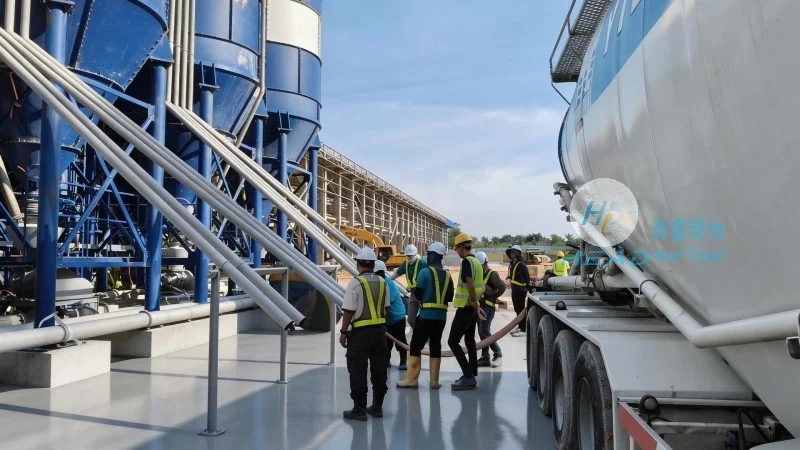
Key Design Considerations for Pneumatic Conveying Systems
When designing a pneumatic conveying system for activated carbon powder, several factors must be addressed to optimize performance and prevent operational issues. These include:
- Conveying Method Selection: The choice between positive pressure, negative pressure, or mixed systems depends on the distance, elevation changes, and material characteristics. For activated carbon powder, positive pressure systems are often preferred due to their ability to handle fine powders and minimize dust emissions.
- Airflow Rate and Velocity: Proper airflow is essential to maintain particle suspension and prevent deposition. Calculating the correct air velocity (typically 20-30 m/s for fine powders) ensures that particles remain in the air stream without settling, which can lead to blockages or system inefficiencies.
- System Sizing and Capacity: The system's capacity must match the production requirements. This involves determining the required air volume, pressure, and pipe diameter to handle the desired flow rate of activated carbon powder. Under-sizing can result in poor flow, while over-sizing increases energy consumption.
- Pipe Material and Surface Finish: The material of construction (e.g., stainless steel, PVC, or carbon steel) and surface finish are critical to prevent corrosion and material buildup. Activated carbon is corrosive in some applications, so materials resistant to chemical attack are essential. Smooth pipe surfaces reduce friction and minimize the risk of clogging.
- Filter and Dust Collection: Efficient filtration is vital to capture fine particles and prevent environmental contamination. High-efficiency particulate air (HEPA) or bag filters are commonly used to ensure compliance with environmental regulations and maintain system cleanliness.
- Static Control Measures: Activated carbon powder is prone to generating static electricity, which can cause dust explosions or equipment malfunctions. Implementing grounding systems, anti-static additives, or ionizers helps mitigate these risks and ensures safe operation.
System Integration and Maintenance
Effective integration of the pneumatic conveying system with existing processes is crucial for seamless operation. This includes proper connection to storage silos, feeders, and processing equipment. Regular maintenance, such as cleaning filters, inspecting pipe integrity, and checking air compressor performance, is essential to maintain system efficiency and longevity.

Conclusion
Designing a reliable pneumatic conveying system for activated carbon powder requires a comprehensive approach that addresses the material's unique properties and operational requirements. By considering factors such as conveying method, airflow, system sizing, and maintenance, companies can achieve efficient material handling while minimizing downtime and environmental impact. Shandong HeadPowder Engineering Co., Ltd. offers expert design and implementation services to help clients optimize their activated carbon powder handling processes.