

Resin Particle Pneumatic Conveying Technology: Principles, Applications, and Development Trends
Pneumatic conveying technology has become an essential method for transporting resin particles in various industrial applications. This technology utilizes air or other gases as the conveying medium to move solid particles through a pipeline system. The process involves creating a pressure differential or using vacuum to transport the resin particles from the source to the destination. The fundamental principle is based on the interaction between the air flow and the resin particles, which allows for efficient and often dust-free material handling. Understanding the core principles of this technology is crucial for optimizing its application in different industrial settings.

Principles of Resin Particle Pneumatic Conveying
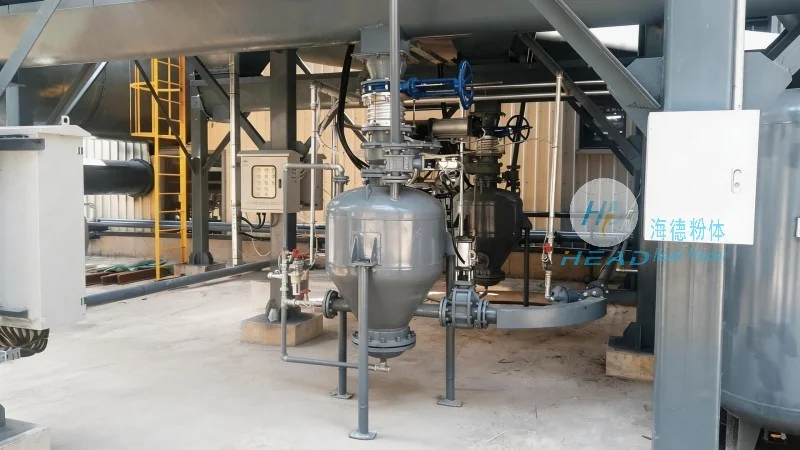
The operation of resin particle pneumatic conveying systems typically involves several key components and mechanisms. The system generally consists of a feeding device, a conveying pipeline, a separation unit, and a collection container. The feeding device, such as a rotary valve or a hopper, introduces the resin particles into the pipeline. The conveying medium, usually compressed air, is introduced at the inlet of the pipeline, creating a flow that propels the particles forward. The velocity of the air flow is critical; it must be sufficient to overcome the gravitational force and frictional resistance of the particles while preventing excessive pressure drop or particle degradation. The separation unit, often a cyclone or a filter, separates the resin particles from the air stream, allowing the air to be recycled or vented while the particles are collected. This closed-loop system enhances efficiency and reduces environmental impact.

Applications in Industrial Sectors
Resin particle pneumatic conveying technology is widely applied across multiple industrial sectors due to its versatility and efficiency. In the chemical industry, it is commonly used for transporting various types of resin, including polymeric resins, epoxy resins, and phenolic resins, from storage tanks to processing equipment. The ability to handle fine particles and maintain a clean environment is particularly valuable in pharmaceutical and food processing industries, where contamination control is paramount. For instance, in the production of resin-based composites, the technology ensures that the resin particles are delivered to the mixing and molding equipment without degradation or loss of quality. Additionally, in the manufacturing of coatings and adhesives, pneumatic conveying systems facilitate the precise dosing of resin components, improving product consistency and reducing waste. The technology also finds application in the packaging industry, where resin powders are conveyed to filling and sealing machines, enhancing production line efficiency.
Technological Advancements and Development Trends
Over the years, resin particle pneumatic conveying technology has undergone significant advancements to meet evolving industrial demands. One of the key trends is the development of more efficient and energy-saving systems. Modern systems incorporate advanced control technologies, such as variable frequency drives (VFDs), to adjust the air flow and pressure based on the conveying requirements, reducing energy consumption. Another trend is the integration of automation and monitoring systems, which provide real-time data on system performance, particle flow rates, and pressure differentials. This enables proactive maintenance and optimization of the conveying process. Environmental considerations have also driven technological improvements, with the adoption of closed-loop air recycling systems and the use of low-pollution air filtration to minimize emissions. Furthermore, the development of specialized materials and coatings for pipeline components has enhanced the durability and longevity of the systems, especially when handling abrasive resin particles. The future of resin particle pneumatic conveying is likely to focus on further integration with digital technologies, such as artificial intelligence and IoT, to achieve predictive maintenance and smart process control. These advancements will continue to improve the efficiency, reliability, and sustainability of resin particle handling in industrial applications.

Company Overview: Shandong HeadPowder Engineering Co., Ltd.
Shandong HeadPowder Engineering Co., Ltd., commonly known as HeadPowder, is a leading provider of pneumatic conveying solutions specializing in resin particle handling. With its headquarters in Shandong, China, the company has established itself as a trusted partner in the industrial material handling sector. HeadPowder offers a comprehensive range of pneumatic conveying systems tailored to the specific needs of resin processing industries. The company's expertise lies in designing and manufacturing efficient, reliable, and environmentally friendly conveying systems that meet the highest industry standards. By leveraging advanced engineering and customer-centric approaches, HeadPowder ensures that its solutions not only enhance operational efficiency but also contribute to sustainable industrial practices. The company's commitment to innovation and quality has made it a preferred choice for businesses seeking to optimize their resin particle handling processes.