

What Are the Methods of Fly Ash Powder Transportation?
For industrial operations dealing with fly ash powder, selecting the right transportation method is crucial for efficiency, safety, and cost-effectiveness. Fly ash, a byproduct of coal combustion, is commonly used in construction materials, cement production, and other applications. Properly transporting this fine powder requires specialized equipment and techniques to prevent dust dispersion, ensure material integrity, and maintain operational safety. This article explores the primary methods of fly ash powder transportation, highlighting the key considerations and applications for each approach.

1. Pneumatic Conveying Systems
Pneumatic conveying is one of the most widely used methods for transporting fly ash powder due to its ability to handle fine, dry materials over long distances. This system uses compressed air or gas to move the powder through a network of pipes. There are two main types: pressure and vacuum systems. Pressure systems push the material forward using positive pressure, while vacuum systems pull it through using negative pressure. The choice between these depends on the distance, material characteristics, and system complexity. Pneumatic conveying is particularly effective for applications requiring high throughput and minimal material degradation. It offers advantages such as reduced labor costs, improved safety by containing dust, and the ability to transport materials vertically or horizontally. However, it requires careful design to manage air flow and prevent blockages, which can be a challenge with highly abrasive or sticky fly ash. Proper maintenance and regular cleaning of the pipeline are essential to ensure consistent performance.
2. Screw Conveyors
Screw conveyors, also known as auger conveyors, are another common method for transporting fly ash powder. These systems use a rotating screw or helical blade to move material along a trough or tube. Screw conveyors are ideal for horizontal or slightly inclined transport and are particularly effective for handling bulk materials that are not too fine or abrasive. They are often used in processing plants where the fly ash is being prepared for further use, such as in blending with other raw materials. The main advantage of screw conveyors is their simplicity and reliability. They require minimal maintenance and can operate continuously without the need for additional power beyond the motor driving the screw. However, they are less suitable for long-distance transport or vertical lifting compared to pneumatic systems. The risk of material bridging or clogging is higher with screw conveyors, especially if the fly ash has a high moisture content or is prone to agglomeration. Proper design, including the use of flights with appropriate pitch and diameter, is critical to prevent these issues and ensure smooth operation.
3. Belt Conveyors
Belt conveyors are widely used in bulk material handling, including the transportation of fly ash powder. These systems consist of a continuous belt that moves over rollers or pulleys, carrying the material from one point to another. Belt conveyors are suitable for both horizontal and inclined transport and can handle large volumes of material efficiently. They are particularly effective for transporting fly ash from storage silos or hoppers to processing equipment. The primary advantage of belt conveyors is their high capacity and ability to transport materials over long distances with minimal energy consumption. They are also relatively low-maintenance compared to other systems, as the main components are the belt and rollers. However, belt conveyors require regular inspection and replacement of the belt to prevent wear and tear, which can be costly over time. The risk of material spillage or belt damage is also a consideration, especially when handling fine powders that may cause the belt to slip or the material to fall off. Proper alignment and tensioning of the belt are essential to maintain performance and prevent accidents.
4. Hydraulic Conveying
Hydraulic conveying systems use water or other liquids to transport fly ash powder. This method is particularly useful for transporting materials over long distances or in areas with significant elevation changes. The fly ash is mixed with water to form a slurry, which is then pumped through a pipeline to the destination. Hydraulic conveying is effective for handling materials that are difficult to transport by other means, such as highly abrasive or sticky fly ash. The main advantage of this system is its ability to transport materials over long distances with relatively low energy consumption compared to pneumatic systems. It also allows for the simultaneous transport of multiple materials in a single pipeline. However, hydraulic conveying has several drawbacks, including the need for additional equipment to separate and dry the material after transport, which increases operational costs. The system also requires careful management of water usage and disposal to prevent environmental contamination. The risk of clogging and corrosion in the pipeline is another concern, as the slurry can be abrasive and may contain particles that can damage the pipeline over time. Proper filtration and maintenance are essential to ensure the longevity and efficiency of hydraulic conveying systems.

5. Bucket Elevators
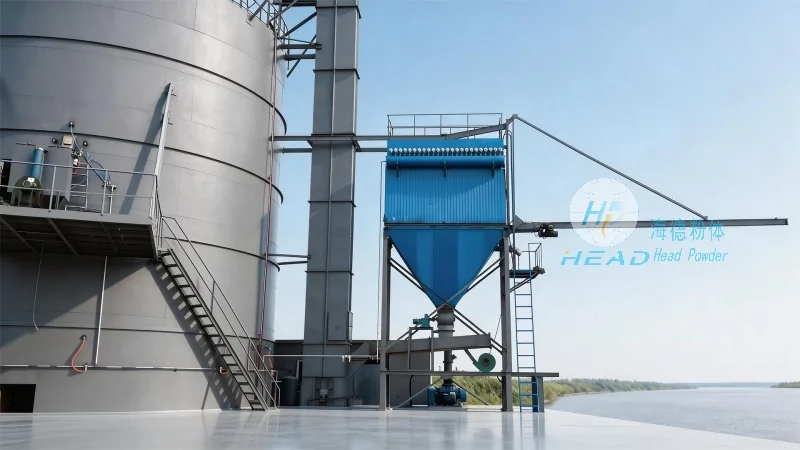
Bucket elevators are a specialized form of conveyor system designed for vertical transport of fly ash powder. These systems use a series of buckets attached to a chain or belt that moves vertically, lifting the material from a lower to a higher level. Bucket elevators are ideal for applications where vertical lifting is required, such as transporting fly ash from a storage hopper to a processing plant at a higher elevation. The main advantage of bucket elevators is their high capacity and ability to handle vertical transport efficiently. They are also relatively compact and can be installed in tight spaces, making them suitable for facilities with limited vertical clearance. However, bucket elevators have limitations in terms of horizontal transport and are less effective for long-distance or high-speed applications. The risk of material spillage or bucket damage is a consideration, especially when handling fine powders that may cause the buckets to wear out quickly. Proper bucket design and material selection are critical to ensure the durability and performance of the system. Regular inspection and replacement of buckets are necessary to maintain safety and efficiency.
6. Air-Lift Conveyors
Air-lift conveyors, also known as pneumatic lift systems, are a variation of pneumatic conveying designed specifically for vertical transport of fly ash powder. These systems use a vertical pipe with a pump at the bottom to create a vacuum or pressure that lifts the material upward. Air-lift conveyors are particularly effective for transporting materials from ground level to elevated storage silos or processing equipment. The main advantage of this system is its simplicity and low cost compared to other vertical transport methods. It requires minimal maintenance and can handle a wide range of material sizes and densities. However, air-lift conveyors have limitations in terms of capacity and speed, making them less suitable for high-throughput applications. The risk of material degradation or clogging is also a concern, especially with fine powders that may stick to the pipe walls. Proper design, including the use of appropriate pipe diameter and pump speed, is essential to ensure consistent performance and prevent blockages. Air-lift conveyors are often used as a secondary transport method in conjunction with other systems, such as belt or screw conveyors, to complete the vertical lift portion of the transport process.