

Principle and Application of Pneumatic Conveying for Powdered Rice
HeadPowder, a leading provider in the field of powder handling technology, specializes in solutions tailored for the efficient and reliable transportation of powdered materials such as rice. This article delves into the fundamental principles of pneumatic conveying for powdered rice, outlines the key classifications of systems used, and explores practical applications in various industrial settings.
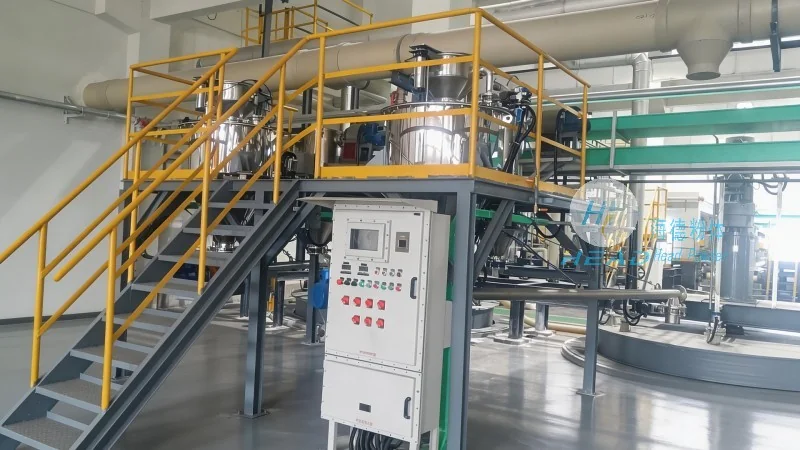
Introduction to Pneumatic Conveying Systems
Pneumatic conveying is a method of transporting bulk materials through a pipeline using a stream of pressurized or vacuum air. For powdered rice, this technology offers significant advantages over traditional mechanical conveying methods, including reduced contamination risk, improved product quality, and enhanced operational flexibility. The core principle involves creating a flow of air that lifts and propels the rice particles through the system, ensuring smooth and continuous movement from the source to the destination.
Working Principles of Pneumatic Conveying for Powdered Rice
The operation of pneumatic conveying systems for powdered rice relies on the interaction between the material and the air stream. In a typical setup, the rice powder is introduced into a hopper or feeder, where it is then drawn into a pipeline by either a positive pressure (blower) or negative pressure (vacuum) system. The air velocity is carefully controlled to ensure that the rice particles are fully suspended and transported without clogging or degradation. Key components include the feed hopper, air mover (blower or vacuum pump), conveying pipeline, and discharge equipment. The system's efficiency depends on maintaining optimal air-to-material ratios and pipeline design to prevent particle segregation or degradation.

Classification of Pneumatic Conveying Systems
Pneumatic conveying systems for powdered rice are broadly classified into two main categories: dilute-phase and dense-phase systems. Dilute-phase systems operate at higher air velocities, typically 20-30 meters per second, and are suitable for short to medium-distance transport. These systems are characterized by low pressure and high air flow rates, making them ideal for applications where speed and minimal pressure drop are priorities. Dense-phase systems, on the other hand, use lower air velocities (5-15 meters per second) and higher material concentrations, resulting in higher pressure and lower air flow rates. This approach is preferred for longer distances or when handling materials that are prone to degradation under high velocity.

Applications in Industrial Settings
The versatility of pneumatic conveying makes it applicable across various industries dealing with powdered rice. In the food processing sector, these systems are commonly used in rice mills and processing plants to transport raw rice from storage silos to milling equipment, and then to packaging lines. The ability to maintain product integrity and prevent contamination is critical in food applications, where hygiene and quality standards are paramount. Additionally, in the agricultural and storage industries, pneumatic conveyors facilitate the transfer of rice from storage bins to processing facilities, ensuring efficient inventory management and reduced labor costs.

Benefits and Considerations for Pneumatic Conveying
Implementing pneumatic conveying systems for powdered rice offers several benefits, including improved process efficiency, reduced downtime due to fewer maintenance requirements, and enhanced safety by eliminating the need for manual handling of bulk materials. However, system design must consider factors such as material properties (e.g., particle size, moisture content), system distance, and required throughput to ensure optimal performance. Proper sizing of the air mover and pipeline diameter is essential to avoid issues like clogging or excessive energy consumption. HeadPowder, with its expertise in powder handling, provides customized solutions that address these considerations, ensuring that clients achieve maximum efficiency and reliability in their operations.
Conclusion
Pneumatic conveying represents a sophisticated and effective method for transporting powdered rice, offering significant advantages over traditional conveying techniques. By understanding the working principles and classifications of these systems, industries can select the most appropriate solution for their specific needs. HeadPowder, as a trusted partner in powder handling technology, continues to innovate and provide advanced solutions that enhance operational efficiency and product quality in the rice processing and related industries.