

Conveying Methods for Activated Carbon Granules
When it comes to the efficient handling and transportation of activated carbon granules, selecting the right conveying method is crucial for maintaining product quality and operational efficiency. As a leading provider in the industry, Shandong HeadPowder Engineering Co., Ltd. offers a range of solutions tailored to meet diverse industrial needs. This article explores the various methods used for activated carbon granule conveying, highlighting their applications and benefits.

1. Air-Flow Conveying Systems
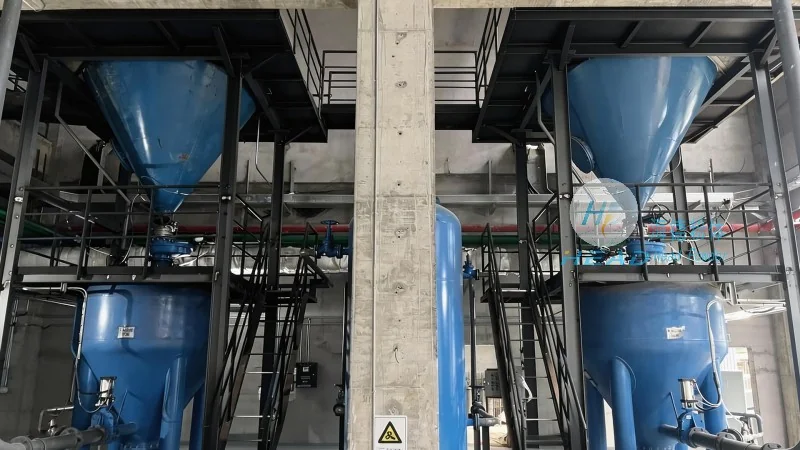
Air-flow conveying, also known as pneumatic conveying, is a popular method for transporting activated carbon granules, especially in applications requiring long-distance or high-volume transport. This system utilizes compressed air to move granules through a pipeline. There are two main types: dilute-phase and dense-phase conveying. Dilute-phase systems are suitable for short to medium distances and low to medium capacities, while dense-phase systems are ideal for longer distances and higher capacities, as they minimize product degradation and pressure drops. The choice between these depends on factors such as the distance to be covered, the volume of granules to be moved, and the need to preserve the granules' integrity.
2. Screw Conveyors
Screw conveyors are another effective method for activated carbon granule conveying, particularly in applications where the material needs to be moved vertically or at a moderate angle. These systems consist of a rotating screw (also known as an auger) enclosed in a trough. The screw rotates, pushing the granules forward along the trough. Screw conveyors are simple in design, easy to install, and can handle a wide range of granule sizes and moisture contents. They are often used in processing plants for feeding, dosing, and transferring activated carbon granules to different processing stages. The key advantage of screw conveyors is their ability to handle materials with varying properties without the need for additional equipment, making them a versatile choice for many industrial applications.

3. Belt Conveyors
Belt conveyors are widely used for the horizontal or slightly inclined transport of activated carbon granules, especially in large-scale operations. These systems feature a continuous belt that moves over rollers or pulleys, carrying the granules from one point to another. Belt conveyors are capable of handling high volumes of material and can be extended to cover long distances. They are particularly suitable for applications where the granules need to be transported over long distances or across different levels. The design of belt conveyors allows for easy integration with other processing equipment, such as storage silos or processing units. The main benefits include high throughput, low maintenance requirements, and the ability to transport granules in a controlled manner, minimizing spillage and product loss.
4. Bucket Elevators
Bucket elevators are an efficient method for vertical or steeply inclined transport of activated carbon granules, especially in applications where the material needs to be lifted to a significant height. These systems consist of a series of buckets attached to a chain or belt, which moves vertically within a casing. As the buckets rise, they pick up the granules and discharge them at the top. Bucket elevators are ideal for applications requiring high vertical lift and moderate to high capacities. They are commonly used in industrial settings where activated carbon granules need to be moved from lower to higher levels, such as in storage silos or processing plants. The key advantages of bucket elevators include their ability to handle a wide range of granule sizes and moisture contents, as well as their low power consumption and minimal product degradation during transport.

5. Vibrating Conveyors
Vibrating conveyors are another option for activated carbon granule conveying, particularly in applications where the material needs to be moved over moderate distances with a gentle slope. These systems utilize vibration to move the granules along a trough. The vibration is typically generated by an electric motor connected to a drive system, which causes the trough to oscillate. Vibrating conveyors are suitable for handling granules with varying properties, including those that are sticky or have a tendency to agglomerate. They are often used in processing plants for feeding, dosing, and transferring activated carbon granules to different processing stages. The main benefits include their ability to handle materials with high moisture content and low friction, as well as their low maintenance requirements and quiet operation.
6. Hydraulic Conveying
Hydraulic conveying is a less common but effective method for transporting activated carbon granules, especially in applications where the material needs to be moved over long distances or through complex layouts. This system uses a liquid medium, such as water or a slurry, to transport the granules. The granules are mixed with the liquid to form a slurry, which is then pumped through a pipeline. Hydraulic conveying is particularly suitable for applications where the granules need to be transported in a slurry form, such as in wastewater treatment plants or chemical processing facilities. The main advantages of hydraulic conveying include its ability to handle high volumes of material and long distances, as well as its low energy consumption and minimal product degradation. However, it requires additional equipment for slurry preparation and separation, which can increase the overall cost of the system.