

Preventing Pipeline Blockages in Flaky Graphite Conveying with Pneumatic Conveying Systems: Key Desi
Flaky graphite, a critical material in numerous industrial applications, presents distinct challenges during material handling due to its thin, plate-like structure. This morphology can easily lead to pipeline blockages in conventional conveying systems, making the selection and design of an appropriate pneumatic conveying system essential for efficient operation. This article examines effective strategies to prevent pipeline blockages in flaky graphite transportation and highlights the critical design parameters that ensure smooth and reliable operation.

Understanding Flaky Graphite and Its Conveying Challenges
Flaky graphite, also known as crystalline graphite, is characterized by its layered, plate-like structure. This morphology makes it prone to agglomeration and bridging within pipelines, which can result in significant blockages if not properly managed. Unlike bulkier materials, flaky graphite requires a conveying system that can maintain consistent flow and prevent material accumulation. Pneumatic conveying systems, which utilize air or gas to transport materials, offer a solution by providing the necessary velocity and pressure to keep the material in suspension and prevent it from settling or sticking to the pipe walls.
Key Design Parameters for Preventing Pipeline Blockages
Several critical design parameters must be considered when designing a pneumatic conveying system for flaky graphite to minimize the risk of blockages. These parameters are directly related to the material's physical properties and the system's operational conditions.

Pipeline Diameter and Velocity
The diameter of the conveying pipeline is a primary factor influencing the risk of blockage. Larger diameters generally reduce the likelihood of material accumulation, as they allow for higher flow rates and lower material concentration. However, excessively large diameters may increase system costs and energy consumption. The optimal diameter is typically determined by balancing material flow rate requirements with the need to maintain sufficient velocity to keep the material in suspension. For flaky graphite, velocities ranging from 20 to 30 meters per second are commonly recommended to prevent agglomeration and ensure smooth transport. This velocity ensures that the material particles remain in a state of continuous motion, avoiding the settling that can lead to blockages.
Pressure and Airflow Rate
Appropriate pressure levels and airflow rates are crucial for maintaining the material's suspended state. The system must generate enough pressure to overcome the resistance of the material and the pipeline, while also providing sufficient airflow to keep the particles moving. Overpressurization can lead to excessive wear on components and higher energy costs, whereas underpressurization may result in material settling and blockages. The airflow rate is typically calculated based on the material's bulk density, particle size distribution, and the desired conveying velocity. For flaky graphite, a pressure range of 0.5 to 1.5 bar is often used, with airflow rates adjusted to maintain the required velocity.
Material of Construction
The choice of pipeline and component materials is vital to prevent corrosion and material adhesion, which can contribute to blockages. Flaky graphite is chemically inert but can still cause wear on metal surfaces due to its abrasive nature. Stainless steel, particularly 316L, is commonly used for conveying pipelines and components due to its corrosion resistance and durability. Additionally, materials with smooth surfaces, such as PTFE-coated pipes or lined components, can reduce friction and prevent material buildup. The selection of materials must consider both the chemical compatibility of the graphite and the mechanical properties required for long-term operation.
System Configuration and Flow Control
The overall system configuration, including the type of pneumatic conveying system (e.g., dilute phase, dense phase) and flow control mechanisms, plays a significant role in preventing blockages. Dilute phase systems, which operate at higher velocities and lower material concentrations, are generally more effective for flaky graphite as they maintain the material in suspension. Dense phase systems, which use lower velocities and higher material concentrations, may be suitable for certain applications but require careful control to avoid settling. Flow control devices, such as rotary air locks and surge tanks, help regulate the material flow and prevent overloading of the system. Properly sized and positioned these components ensure that the material is conveyed at a consistent rate, reducing the risk of blockages caused by uneven flow or material accumulation.

Case Study: Successful Implementation by Shandong HeadPowder Engineering Co., Ltd.
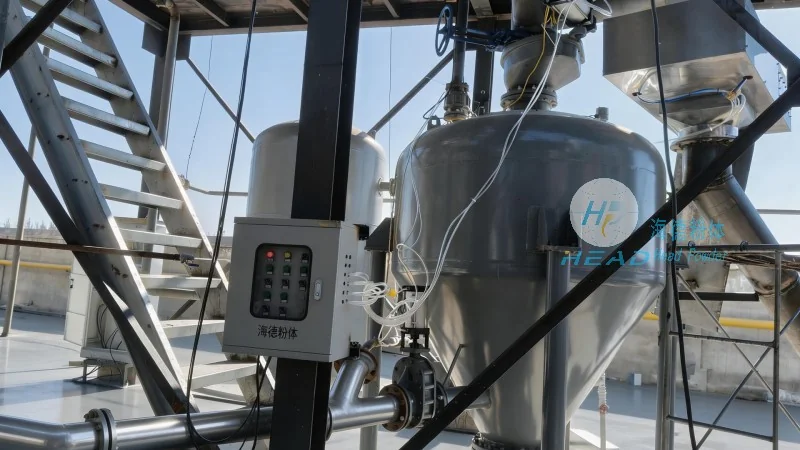
Shandong HeadPowder Engineering Co., Ltd., a leading provider of pneumatic conveying solutions, has successfully implemented systems for flaky graphite transportation in various industrial settings. By carefully selecting the appropriate design parameters, their systems have demonstrated high efficiency and reliability in preventing pipeline blockages. For instance, a client in the battery manufacturing industry required a system to transport flaky graphite from storage to processing equipment. The system was designed with a 150mm diameter pipeline, operating at a velocity of 25 meters per second and a pressure of 1 bar. The use of stainless steel 316L pipelines and PTFE-lined components ensured minimal material adhesion and corrosion. Flow control devices were strategically placed to regulate the material flow, preventing overloading and maintaining consistent operation. The result was a system that operated continuously for over 12 months without any blockages, significantly improving production efficiency and reducing maintenance costs.
Conclusion and Recommendations
Preventing pipeline blockages in flaky graphite conveying requires a comprehensive approach that considers the material's unique properties and the system's design parameters. Key factors include appropriate pipeline diameter and velocity, optimized pressure and airflow, suitable material of construction, and effective system configuration. By carefully evaluating these parameters and selecting the right pneumatic conveying system, industries can achieve efficient and reliable transportation of flaky graphite. Shandong HeadPowder Engineering Co., Ltd. offers expert solutions tailored to these requirements, ensuring that clients can maximize their operational efficiency and minimize downtime caused by blockages.