

Technical Analysis of Fine Powder Pneumatic Conveying Systems: Comparison of Positive Pressure and N
When it comes to the efficient and reliable transportation of fine powders in industrial settings, pneumatic conveying systems play a crucial role. These systems utilize air or gas to move powders through pipelines, offering advantages such as reduced equipment wear, minimal product contamination, and the ability to handle materials in a closed environment. Among the various types of pneumatic conveying systems, the choice between positive pressure and negative pressure modes significantly impacts system performance, operational costs, and suitability for specific powder characteristics. This article provides a technical analysis of fine powder pneumatic conveying systems, focusing on the comparison between positive pressure and negative pressure conveying modes, with insights from Shandong HeadPowder Engineering Co., Ltd., a leading provider in the field.
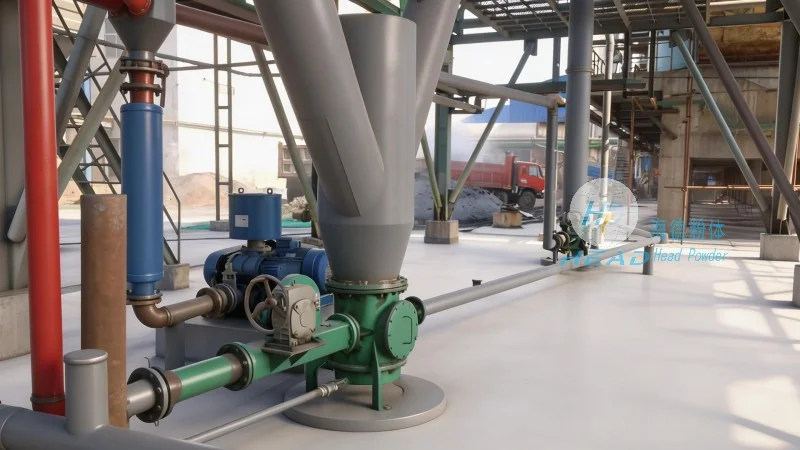
Understanding Fine Powder Pneumatic Conveying Systems
Fine powder pneumatic conveying systems are designed to transport powders with particle sizes typically ranging from 10 microns to 500 microns. These materials often present challenges in handling due to their fine nature, which can lead to issues like dust accumulation, caking, and difficulty in maintaining consistent flow. Pneumatic conveying offers a solution by using air to suspend and transport the powder particles, ensuring a clean and efficient process. The core components of such systems include a feeder, a conveying line, a separator, and a receiver. The choice of conveying mode—positive or negative pressure—determines how air is introduced and managed within the system.
Positive Pressure Conveying Mode: Principles and Applications
Positive pressure conveying systems operate by blowing air into the conveying line, creating a pressure higher than the ambient air pressure. This method forces the powder particles to move through the pipeline under the pressure of the air stream. The air is typically introduced at the inlet of the conveying line, and the material is carried along by the high-velocity air. This mode is particularly effective for conveying fine powders over long distances and for handling materials that are prone to caking or agglomeration. The positive pressure system ensures that the entire pipeline is under pressure, preventing the ingress of contaminants and maintaining product integrity. Shandong HeadPowder Engineering Co., Ltd. specializes in designing and manufacturing positive pressure systems tailored to the needs of various industries, including pharmaceuticals, food processing, and chemical manufacturing.

Negative Pressure Conveying Mode: Principles and Applications
Negative pressure conveying, also known as suction or vacuum conveying, operates by creating a vacuum at the inlet of the conveying line. This vacuum draws the powder particles into the pipeline along with the air. The air is then drawn through the system, carrying the powder to the receiver. This mode is often preferred for short to medium-distance conveying and for materials that are less prone to caking. Negative pressure systems are particularly useful when the material needs to be collected from a hopper or a storage bin, as the vacuum can effectively draw the powder into the conveying line. However, they may require more careful management of air flow and pressure to prevent system inefficiencies or material blockages.
Key Differences Between Positive and Negative Pressure Conveying
When comparing positive and negative pressure conveying modes, several factors come into play. First, the pressure differential: positive pressure systems maintain a higher pressure than the environment, while negative pressure systems create a vacuum. This affects the energy consumption and the overall system design. Positive pressure systems generally consume more energy due to the need to generate and maintain higher air pressures, whereas negative pressure systems may require more sophisticated vacuum equipment. Second, the material handling capabilities: positive pressure systems are better suited for abrasive or cohesive powders that can cause wear or blockages, as the high-pressure air helps to keep the material in suspension. Negative pressure systems are more suitable for non-abrasive powders and when the material is less likely to agglomerate. Third, the system complexity: positive pressure systems are often more complex due to the need for pressure vessels and robust seals, while negative pressure systems may involve more intricate vacuum pumps and filtration systems. Shandong HeadPowder Engineering Co., Ltd. evaluates these factors for each client to recommend the most appropriate conveying mode based on the specific powder characteristics and operational requirements.

Factors Influencing the Choice of Conveying Mode
The decision between positive and negative pressure conveying modes depends on several key factors. The first is the distance and layout of the conveying system. Positive pressure systems are ideal for long-distance conveying, as they can maintain pressure over extended pipelines without significant loss. Negative pressure systems are more suitable for shorter distances, as maintaining a vacuum over long distances can be challenging and may require additional vacuum boosters. The second factor is the nature of the powder being conveyed. Powders that are fine, cohesive, or have high moisture content may benefit from positive pressure systems, as the high-pressure air helps to prevent caking and maintain flow. In contrast, powders that are non-abrasive and free-flowing may perform well in negative pressure systems. The third factor is the environmental considerations. Positive pressure systems are generally more environmentally friendly, as they do not require external suction that could draw in ambient air and contaminants. Negative pressure systems may need additional filtration to prevent dust from escaping into the environment. Finally, the operational costs and maintenance requirements must be considered. Positive pressure systems may have higher initial costs due to the need for pressure vessels and robust components, but they often have lower maintenance costs compared to negative pressure systems, which may require more frequent filter changes and vacuum pump maintenance.

Case Studies and Practical Applications
Shandong HeadPowder Engineering Co., Ltd. has successfully implemented both positive and negative pressure conveying systems in various industrial applications. For example, in a pharmaceutical manufacturing plant, a positive pressure system was used to transport fine active pharmaceutical ingredients (APIs) over a distance of 200 meters. The system was designed to maintain a pressure of 0.5 bar above ambient, ensuring that the API particles remained in suspension and preventing any cross-contamination. The positive pressure mode was chosen because the API was highly cohesive and prone to caking, and the system required a closed environment to meet regulatory standards. In another case, a negative pressure system was used in a food processing facility to convey fine flour from a storage bin to a mixer. The system operated at a vacuum of 0.8 bar below ambient, effectively drawing the flour into the pipeline without the need for mechanical feeding. The negative pressure mode was selected due to the short distance (approximately 50 meters) and the non-abrasive nature of the flour, which did not require high-pressure air to maintain flow.
Conclusion: Selecting the Right Conveying Mode for Fine Powders
In conclusion, the choice between positive and negative pressure conveying modes for fine powder systems is a critical decision that impacts system efficiency, operational costs, and product quality. Positive pressure systems offer advantages in long-distance conveying and handling of cohesive or abrasive powders, while negative pressure systems are better suited for short distances and non-abrasive materials. Shandong HeadPowder Engineering Co., Ltd. provides comprehensive technical analysis and system design services to help clients select the most appropriate conveying mode based on their specific requirements. By understanding the principles and applications of both modes, industrial operators can optimize their material handling processes, reduce downtime, and improve overall productivity. Whether you are dealing with pharmaceuticals, food products, or chemical powders, the right choice of pneumatic conveying mode can make a significant difference in the success of your operations.