

Choosing Between Positive Pressure and Negative Pressure for Fly Ash Pneumatic Conveying? How to Dis
Fly ash, a byproduct of coal combustion in thermal power plants, requires efficient and reliable transport methods to ensure proper utilization and environmental compliance. Pneumatic conveying systems have become a cornerstone in managing fly ash, offering a dust-free, low-maintenance alternative to traditional methods. The choice between positive pressure and negative pressure systems is a critical decision for facility operators, as each approach has distinct advantages and applications. This article explores the fundamental differences between these two types of pneumatic conveying systems, providing insights into how to select the most suitable option for fly ash handling operations.

Understanding Positive Pressure Pneumatic Conveying for Fly Ash
Positive pressure pneumatic conveying operates by pressurizing the entire conveying line with air or gas, typically at pressures above atmospheric levels. The system uses a blower or compressor to generate the necessary pressure, which propels the fly ash particles through the pipeline. This method is often preferred for long-distance or complex conveying routes, as it can maintain consistent flow rates and handle varying particle sizes effectively. Positive pressure systems are also suitable for applications where the receiving end is at a lower elevation than the source, as the pressure can drive the material uphill. However, they require robust sealing and pressure control mechanisms to prevent air leakage and maintain system efficiency. The equipment used in positive pressure systems, such as rotary lobe blowers or positive displacement blowers, is designed to handle high pressures and ensure reliable operation over extended periods.
Understanding Negative Pressure Pneumatic Conveying for Fly Ash
Negative pressure pneumatic conveying, also known as vacuum conveying, operates by creating a vacuum in the conveying line, which draws the fly ash particles from the source into the system. The vacuum is generated by a vacuum pump, and the material is then transported through the pipeline to the receiving container. This approach is ideal for short-distance conveying, typically up to a few hundred meters, and is commonly used when the source and destination are at the same or slightly different elevations. Negative pressure systems are particularly advantageous for collecting fly ash from multiple points or from low-level hoppers, as the vacuum can effectively capture and transport the material without the need for complex pressure management. The main advantage of negative pressure systems is their simplicity and lower initial cost compared to positive pressure systems. However, they may be less efficient for long distances and can be affected by external factors like wind or temperature, which can impact the vacuum level and material flow.

Key Factors to Consider When Choosing Between Positive and Negative Pressure Systems
The decision between positive and negative pressure pneumatic conveying for fly ash handling depends on several key factors. The most significant consideration is the distance between the source and the destination. Positive pressure systems are generally more suitable for longer distances due to their ability to maintain pressure and flow over extended pipelines. Conversely, negative pressure systems are better suited for shorter distances where the vacuum can effectively transport the material without significant pressure loss. Another critical factor is the material characteristics of the fly ash, including particle size, moisture content, and abrasiveness. Coarser or more abrasive fly ash may require positive pressure systems with higher pressure capabilities to prevent blockages or equipment wear. Additionally, the number of collection points and the layout of the conveying network influence the choice. If the fly ash is collected from multiple sources, a negative pressure system with multiple inlets may be more practical. Conversely, a single, long-distance transport route may necessitate a positive pressure system. Cost is also a major consideration, as positive pressure systems often involve higher initial investments due to the need for high-pressure equipment and robust seals. Maintenance requirements and operational complexity are also important, as positive pressure systems may require more frequent checks on pressure levels and equipment wear, while negative pressure systems are generally simpler to maintain.
Application Scenarios for Positive Pressure Systems
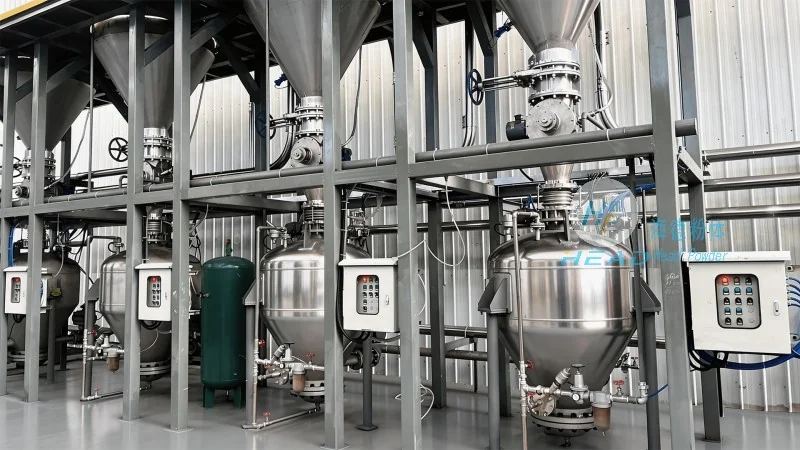
Positive pressure pneumatic conveying is commonly used in scenarios where the fly ash needs to be transported over long distances, such as from a power plant to a disposal or utilization facility located several kilometers away. This method is also suitable for conveying fly ash through complex networks with multiple branches or changes in elevation. For example, a power plant may use a positive pressure system to transport fly ash from multiple boiler units to a central storage silo, even if the silo is at a higher elevation than the source. The ability of positive pressure systems to maintain consistent flow rates and handle varying particle sizes makes them ideal for continuous operation in industrial settings. Additionally, positive pressure systems are preferred when the receiving end requires a high degree of control over the material flow, such as in processes where the fly ash is used as a raw material in cement production or other industrial applications.
Application Scenarios for Negative Pressure Systems
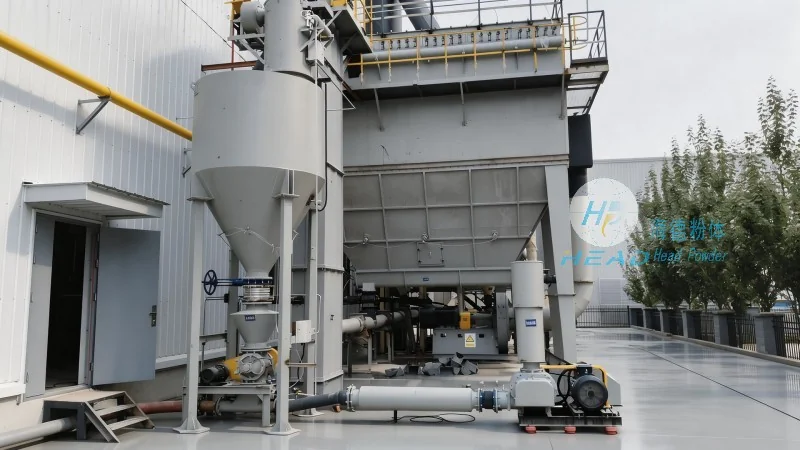
Negative pressure pneumatic conveying is typically applied in short-distance conveying applications, such as transporting fly ash from a hopper or collection bin to a storage container within a few hundred meters. This method is particularly useful when the source and destination are at the same or slightly different elevations, as the vacuum can effectively draw the material without the need for uphill transport. Negative pressure systems are also advantageous in situations where the fly ash is collected from multiple points, such as from several ash silos or collection hoppers within a power plant. The simplicity of negative pressure systems makes them suitable for small-scale or intermittent operations, where the cost and complexity of a positive pressure system would be unnecessary. For example, a small-scale power plant with a single boiler unit may use a negative pressure system to transport fly ash from the boiler to a nearby storage tank. The system's ability to handle small volumes of material and its lower maintenance requirements make it a practical choice for such applications.
The Role of Shandong HeadPowder Engineering Co., Ltd. in Fly Ash Pneumatic Conveying Solutions
Shandong HeadPowder Engineering Co., Ltd., a leading provider of engineering solutions for fly ash handling, offers comprehensive expertise in designing and implementing both positive and negative pressure pneumatic conveying systems. With a strong presence in China, the company leverages its local knowledge and technical capabilities to deliver tailored solutions that meet the specific needs of power plants and industrial facilities. HeadPowder's engineers work closely with clients to assess their operational requirements, including conveying distance, material characteristics, and budget constraints, to recommend the most appropriate system type. The company provides customized system designs, including the selection of appropriate blower or vacuum pump equipment, pipeline layout, and control systems, ensuring optimal performance and efficiency. Additionally, HeadPowder offers installation, commissioning, and maintenance services to support the long-term operation of the conveying systems. By combining technical expertise with practical experience, Shandong HeadPowder Engineering Co., Ltd. helps clients achieve reliable and cost-effective fly ash transport, contributing to the sustainable management of fly ash as a valuable resource.