

Pneumatic Conveying for Iron Concentrate: Choosing Positive Pressure vs. Negative Pressure - How to
Pneumatic conveying is a critical technology in the handling and transportation of iron concentrate, a key raw material in the steel industry. As industries strive for efficient and reliable material transport, understanding the nuances between positive pressure and negative pressure systems becomes essential. This article explores the fundamental differences between these two pneumatic conveying methods, helping to clarify the distinctions and guide the selection process for optimal performance in iron concentrate handling.
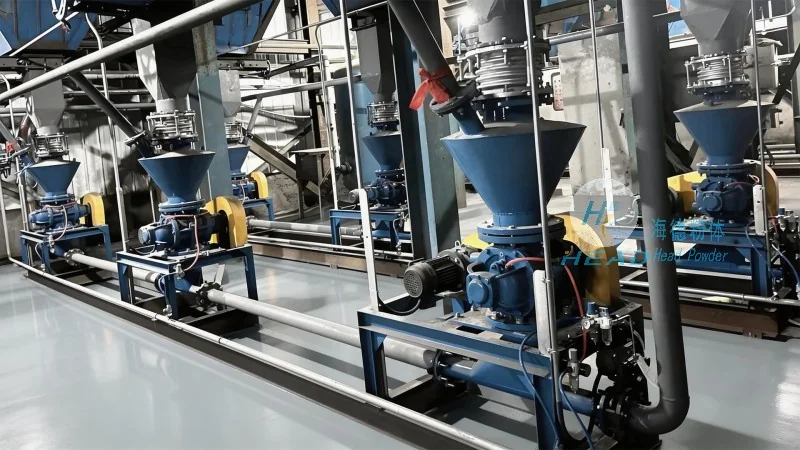
Understanding Positive Pressure Pneumatic Conveying
Positive pressure pneumatic conveying systems operate by blowing air or gas into the conveying line, creating a pressure higher than the ambient atmosphere. This method is particularly effective for transporting iron concentrate over longer distances or through complex network configurations. The pressurized air propels the material through the pipeline, ensuring consistent flow and minimal material degradation. A key advantage of positive pressure systems is their ability to handle abrasive materials like iron concentrate without excessive wear on the equipment. Additionally, these systems are often more suitable for applications requiring high material throughput, as they can maintain steady pressure and flow rates.
Key Characteristics of Positive Pressure Conveying
When considering positive pressure pneumatic conveying for iron concentrate, several key characteristics stand out. First, the system operates under a pressure that is higher than the surrounding environment, which helps maintain the integrity of the material being transported. This is especially important for iron concentrate, which may contain fine particles that could be susceptible to agglomeration or degradation under vacuum conditions. Second, positive pressure systems are generally more robust and can handle higher material loads, making them ideal for large-scale industrial applications. The pressurized environment also reduces the risk of dust leakage and contamination, as the material is contained within a sealed pipeline. Furthermore, these systems are often easier to integrate with existing infrastructure, as they can connect directly to existing air compressors or other pressure sources.

Applications of Positive Pressure Pneumatic Conveying
Positive pressure pneumatic conveying is widely used in various industrial settings for iron concentrate handling. For instance, in mining operations, it is commonly employed to transport iron concentrate from ore processing plants to storage facilities or processing units. The ability to handle long distances and complex layouts makes it suitable for large-scale mining operations where material transport over several kilometers is required. In steel mills, positive pressure systems are used to move iron concentrate from storage silos to the sintering or pelletizing plants, ensuring a continuous supply of raw material. Additionally, these systems are utilized in recycling facilities where iron concentrate is recovered from waste streams and transported to processing centers. The consistent flow and high throughput capabilities of positive pressure systems make them ideal for applications where reliability and efficiency are paramount.

Understanding Negative Pressure Pneumatic Conveying
Negative pressure pneumatic conveying, also known as vacuum conveying, operates by creating a vacuum in the conveying line, drawing material from the source into the system. This method is typically used for shorter distances and for materials that are less abrasive or require gentler handling. The vacuum pulls the iron concentrate into the pipeline, using the pressure differential to move the material. A key advantage of negative pressure systems is their ability to handle fine powders and granules with minimal degradation, as the material is drawn rather than pushed through the line. This can be beneficial for iron concentrate that may contain delicate particles or is sensitive to high pressure.
Key Characteristics of Negative Pressure Conveying
When evaluating negative pressure pneumatic conveying for iron concentrate, several characteristics are important to consider. First, the system operates under a pressure lower than the ambient atmosphere, which creates a suction effect that draws the material into the pipeline. This method is generally more energy-efficient for short distances, as it requires less power to maintain the vacuum compared to pressurizing the entire system. Second, negative pressure systems are often more compact and can be installed in smaller spaces, making them suitable for applications with limited room for equipment. The vacuum environment also helps in containing dust and preventing it from escaping into the surrounding environment, which is a critical consideration in industrial settings. Furthermore, these systems are less likely to cause material degradation due to the gentle suction action, which is particularly important for iron concentrate that may be prone to agglomeration or particle breakage under high pressure.