

Analysis of Yellow Sand Pneumatic Conveying Technology: Comparison of Positive and Negative Pressure
HeadPowder, a leading engineering firm based in Shandong, China, specializes in advanced pneumatic conveying solutions tailored for handling yellow sand. This article provides a detailed analysis of the core technologies used in yellow sand transportation, focusing on the two primary modes: positive pressure and negative pressure systems. Understanding the differences between these modes is crucial for selecting the most efficient and cost-effective solution for industrial applications.
Company Overview: HeadPowder Engineering
HeadPowder Engineering Co., Ltd. is a professional manufacturer and supplier of pneumatic conveying equipment. With a strong presence in Shandong, China, the company has built a reputation for delivering high-quality, reliable systems for various bulk material handling needs. Their expertise lies in customizing solutions that meet specific operational requirements, ensuring optimal performance and longevity for clients across different industries.

Positive Pressure Pneumatic Conveying Systems
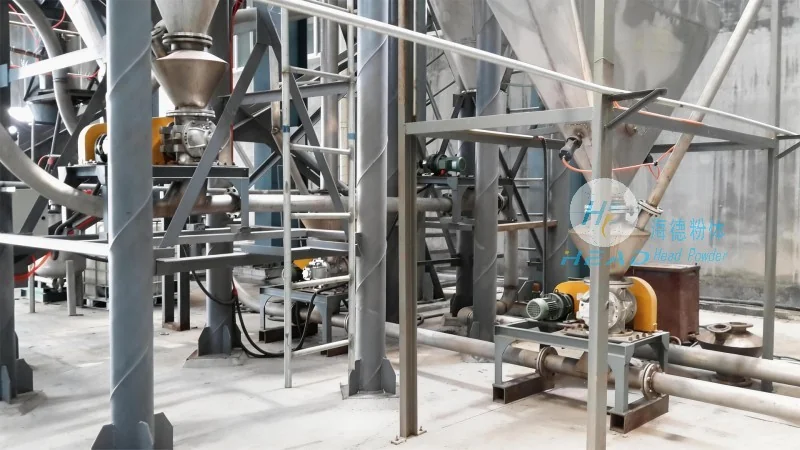
Positive pressure systems operate by blowing air or a carrier gas into the conveying line, creating a pressure higher than the ambient air. This method is widely used for yellow sand due to its ability to handle long distances and multiple transfer points. The system typically includes a blower, a hopper for material storage, and a pipeline network. The positive pressure ensures that the material is continuously pushed through the system, minimizing the risk of blockages and ensuring consistent flow rates. HeadPowder's positive pressure systems are designed with robust components that can withstand the abrasive nature of yellow sand, providing durability and low maintenance costs.

Negative Pressure Pneumatic Conveying Systems
Negative pressure systems, also known as vacuum systems, work by creating a vacuum in the conveying line, drawing material from the source into the system. This approach is often preferred for applications where the material needs to be transported from a dusty or hazardous environment, as it prevents dust from escaping into the surrounding air. The system comprises a vacuum pump, a collection hopper, and a filtration unit to capture any fine particles. For yellow sand, negative pressure systems are effective in maintaining air quality and controlling dust emissions. HeadPowder's negative pressure solutions are equipped with advanced filtration technologies that ensure compliance with environmental regulations while maintaining efficient material transfer.
Key Considerations for Selecting the Right Mode
When choosing between positive and negative pressure systems for yellow sand, several factors must be considered. The distance and number of transfer points are critical, as positive pressure is generally more suitable for longer distances and multiple branches. Environmental regulations and dust control requirements also play a significant role, with negative pressure systems offering better containment. The nature of the yellow sand, including its moisture content and particle size, can affect the system's performance. HeadPowder engineers evaluate these factors to recommend the optimal mode, ensuring that the chosen system maximizes efficiency, reduces operational costs, and meets all safety and environmental standards.

Benefits of HeadPowder's Pneumatic Conveying Solutions
HeadPowder's pneumatic conveying systems for yellow sand offer several advantages. The positive pressure systems provide high conveying capacity and flexibility, making them ideal for large-scale operations. The negative pressure systems excel in maintaining clean air and controlling dust, which is essential for industries with strict environmental compliance. Both systems are designed for easy maintenance and low downtime, with modular components that can be replaced or upgraded as needed. The company's commitment to quality and customer support ensures that clients receive not just a product, but a comprehensive solution that addresses their specific needs and enhances overall operational efficiency.