

Common Methods for Rare Earth Ore Powder Conveying
Shandong HeadPowder Engineering Co., Ltd. specializes in providing advanced solutions for the handling and conveying of rare earth ore powder. With years of experience in the industry, the company understands the unique challenges associated with processing these materials, such as their fine particle size, abrasive nature, and potential for dust generation. This article outlines the common methods used for rare earth ore powder conveying, focusing on the technical aspects and practical considerations to help businesses select the most suitable system for their operations.

1. Air-Driven Pneumatic Conveying Systems
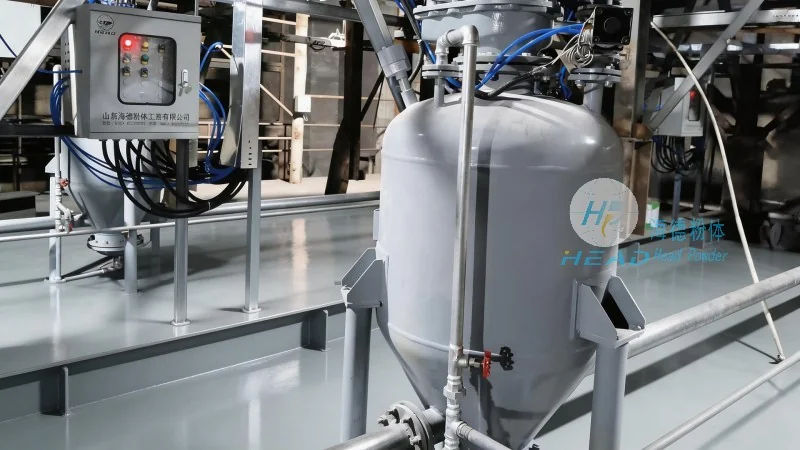
Pneumatic conveying is a widely used method for transporting rare earth ore powder due to its ability to handle fine powders and minimize dust exposure. This system utilizes compressed air to move the material through a pipeline. There are two main types: pressure and vacuum systems. Pressure systems push the material forward using positive pressure, while vacuum systems draw the material using negative pressure. The choice between them depends on the distance, material characteristics, and system layout. For rare earth ore powder, which is often fine and abrasive, pressure systems are commonly preferred as they provide better control and can handle longer distances without significant pressure loss. The equipment typically includes a hopper, a rotary valve, a filter, and a receiver. The hopper stores the ore powder, the rotary valve controls the flow into the pipeline, the filter removes dust from the air, and the receiver collects the material at the destination. This method is particularly effective for applications where dust control is critical, such as in processing plants or where the material needs to be transported to a processing unit without exposure to the environment.
2. Screw Conveyors
Screw conveyors, also known as auger conveyors, are another common method for conveying rare earth ore powder. These systems use a rotating screw (auger) inside a trough to move the material forward. The screw's rotation creates a pushing action that transports the powder from the inlet to the outlet. Screw conveyors are suitable for horizontal or slight incline applications and are particularly effective for handling dry, free-flowing materials like rare earth ore powder. They are relatively simple in design, requiring less maintenance compared to pneumatic systems. The key components include the screw, the housing, and the drive mechanism. The screw is made of materials resistant to corrosion and wear, such as stainless steel or high-grade alloys, to withstand the abrasive nature of the ore powder. The housing is typically made of metal or plastic, depending on the application. Screw conveyors are often used in batching systems or for feeding materials into other processing equipment. They provide a continuous and controlled flow, which is beneficial for maintaining consistent material handling rates.
3. Belt Conveyors
Belt conveyors are widely used in bulk material handling, including rare earth ore powder, due to their ability to transport large quantities over long distances. These systems consist of a continuous belt that moves over rollers or idlers, carrying the material from the loading point to the discharge point. Belt conveyors are particularly effective for horizontal or slightly inclined applications and can handle a wide range of material sizes and moisture contents. The belt is typically made of durable materials like rubber or synthetic fabrics, designed to resist wear and tear from the ore powder. The rollers support the belt and ensure smooth movement, while the idlers provide tension to keep the belt taut. Belt conveyors are often used in open-air or semi-enclosed environments, such as in mining operations or processing plants. They can be equipped with various accessories, such as feeders, chutes, and control systems, to enhance their functionality. For rare earth ore powder, belt conveyors are suitable for applications where large volumes need to be transported efficiently and with minimal dust generation. They offer a reliable and cost-effective solution for long-distance material transport.

Conclusion
Choosing the right conveying method for rare earth ore powder is essential for optimizing operational efficiency and ensuring product quality. Each method has its own advantages and limitations, and the selection depends on factors such as material characteristics, distance, and environmental considerations. Shandong HeadPowder Engineering Co., Ltd. offers a range of conveying solutions tailored to meet the specific needs of clients, ensuring reliable and efficient material handling for rare earth ore powder applications.