

What are the methods for paint delivery?
When it comes to efficiently delivering paint from storage to application points, the choice of delivery method plays a crucial role in ensuring smooth operations, product quality, and overall efficiency in industrial and commercial painting processes. For businesses operating in the painting and coating industry, understanding the various paint delivery methods is essential for optimizing workflow and maintaining high standards of performance. This article explores the primary methods used for paint delivery, highlighting the key considerations and applications for each approach.

1. Pumping Systems: The Workhorse of Modern Paint Delivery
Pumping systems are among the most common and versatile methods for transporting paint, especially for high-viscosity coatings and large-scale applications. These systems utilize mechanical pumps to generate the necessary pressure and flow rates, enabling paint to be moved through pipes and hoses with precision. There are several types of pumping systems, including centrifugal pumps, positive displacement pumps, and air-operated double-diaphragm (AODD) pumps, each suited to different paint properties and operational requirements. For example, centrifugal pumps are ideal for low to medium viscosity paints, while positive displacement pumps are better suited for high-viscosity materials like epoxies and urethanes. The choice of pump type directly impacts the efficiency of paint delivery, as it determines how effectively the paint can be moved without excessive pressure loss or degradation. Companies like Shandong HeadPowder Engineering Co., Ltd. specialize in providing advanced pumping solutions tailored to the specific needs of their clients, ensuring that paint is delivered consistently and reliably across various industrial applications.
2. Gravity Feed Systems: Simplicity and Cost-Effectiveness
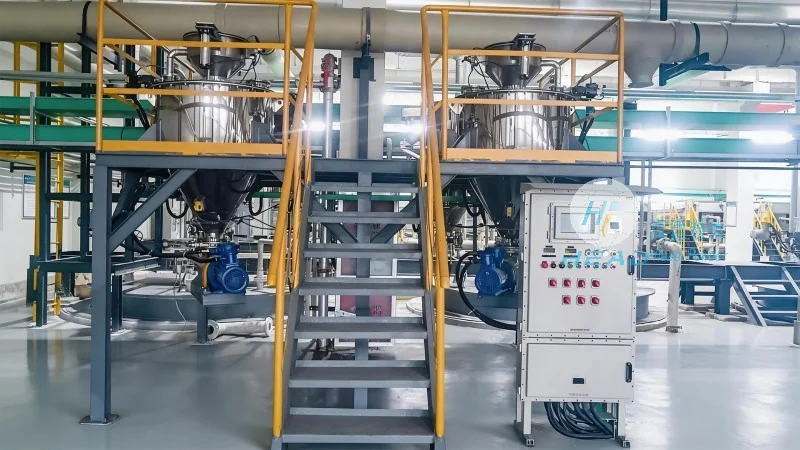
Gravity feed systems represent a straightforward and economical approach to paint delivery, particularly for low to medium viscosity paints that can flow under the influence of gravity. These systems typically consist of a storage tank or container positioned above the application point, with a pipe or hose connecting the two. As paint flows from the higher elevation to the lower point due to gravity, it moves through the system with minimal energy input. This method is often used in smaller-scale applications or for paints that do not require high pressure or rapid delivery rates. While gravity feed systems are simple to install and operate, they have limitations, such as the need for a sufficient vertical distance between the storage and application points, and the inability to handle high-viscosity or thick coatings without additional assistance. Despite these constraints, gravity feed remains a popular choice for many businesses due to its low maintenance costs and reliability in certain scenarios. Shandong HeadPowder Engineering Co., Ltd. may offer supplementary equipment, such as elevated storage tanks or flow control valves, to enhance the performance of gravity feed systems and address specific operational challenges.

3. Air-Operated Pneumatic Systems: Versatility and Precision
Air-operated pneumatic systems combine the use of compressed air with mechanical components to deliver paint, offering a flexible and precise method for transporting various types of coatings. These systems typically include an air motor or diaphragm pump that is driven by compressed air, allowing for controlled pressure and flow rates. The air pressure can be adjusted to match the viscosity and density of the paint, ensuring optimal delivery without clogging or excessive wear on components. Pneumatic systems are particularly useful for handling high-viscosity paints, as the air pressure can help maintain the paint's flow characteristics and prevent settling. Additionally, these systems are often quieter and more energy-efficient than electric pumps, making them suitable for applications where noise and power consumption are concerns. For businesses requiring precise control over paint delivery, such as in automotive or aerospace painting, pneumatic systems provide the reliability and accuracy needed to achieve consistent results. Shandong HeadPowder Engineering Co., Ltd. may provide customized pneumatic delivery solutions that integrate seamlessly with existing painting equipment, ensuring that clients can achieve their desired outcomes with minimal disruption.
4. Electric Motor-Driven Pumps: Power and Control
Electric motor-driven pumps, including gear pumps, piston pumps, and magnetic drive pumps, are another common method for paint delivery, especially in applications requiring high pressure and consistent flow. These pumps are powered by electric motors, which provide the necessary torque and speed to move paint through the system. Gear pumps are widely used for medium to high viscosity paints, as they can maintain a steady flow rate and handle shear-sensitive materials without damage. Piston pumps, on the other hand, are ideal for high-pressure applications, such as spray painting or finishing, where precise control over paint output is critical. Magnetic drive pumps offer an additional advantage by eliminating the need for mechanical seals, reducing the risk of leaks and contamination in sensitive paint formulations. The choice of electric motor-driven pump depends on factors like paint viscosity, required pressure, and operational environment. For example, magnetic drive pumps are often preferred in applications involving hazardous or toxic paints, as they prevent leaks and maintain product integrity. Shandong HeadPowder Engineering Co., Ltd. specializes in providing electric motor-driven pump systems that are designed to meet the specific demands of their clients, ensuring that paint is delivered with the power and control needed for demanding industrial processes.

5. Hybrid Delivery Systems: Combining Strengths for Optimal Performance
In many cases, businesses may benefit from hybrid delivery systems that combine two or more of the above methods to achieve the best possible performance. For instance, a gravity feed system may be supplemented with a small electric pump to assist in moving paint from the storage tank to the application point, especially when the vertical distance is insufficient for gravity alone. Similarly, pneumatic systems can be integrated with electric pumps to provide additional pressure and control during high-demand periods. Hybrid systems allow for greater flexibility and adaptability, enabling businesses to handle a wide range of paint types and application requirements without compromising efficiency or quality. Shandong HeadPowder Engineering Co., Ltd. may offer customized hybrid solutions that integrate the strengths of different delivery methods, ensuring that clients can optimize their paint delivery processes and achieve their operational goals.