

Comparison of Common Monocrystalline Silicon Conveying Methods: Advantages and Disadvantages
Monocrystalline silicon, a critical material in the photovoltaic and semiconductor sectors, demands efficient and safe conveying methods to preserve its quality during processing. HeadPowder, a leading provider based in Shandong, China, offers a detailed analysis of prevalent monocrystalline silicon transport approaches, outlining their respective benefits and drawbacks.
1. Vacuum Suction Conveying System
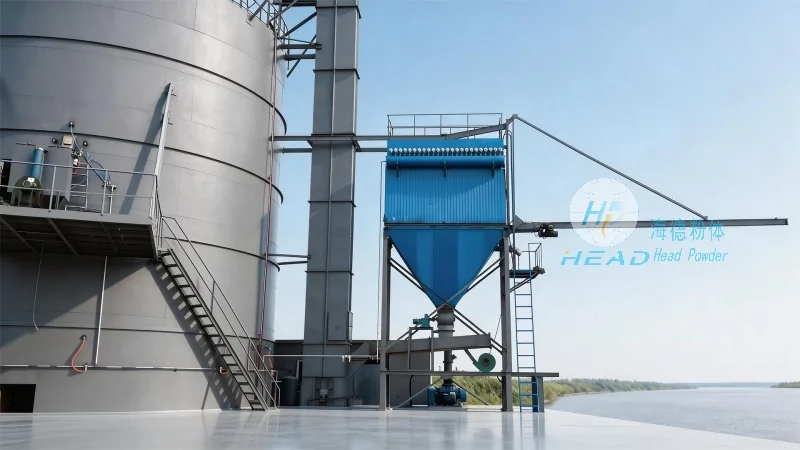
The vacuum suction method is widely utilized for monocrystalline silicon wafer transport due to its non-contact operation and ability to minimize surface damage. This system operates by creating a negative pressure environment with a vacuum pump, drawing silicon wafers into a conveyor tube. A key advantage is the reduction of scratches or micro-cracks on wafer surfaces. However, the vacuum suction system has limitations, including lower conveying capacity compared to mechanical systems and potential alignment issues at high speeds. Additionally, the vacuum pump requires regular maintenance to ensure consistent performance, which can increase long-term operational costs.
2. Mechanical Gripper Conveying System
Mechanical gripper systems employ precision clamps or suction cups to securely hold monocrystalline silicon wafers. These grippers can use vacuum or pneumatic operation, offering a robust solution for wafers of varying dimensions and thicknesses. The primary advantage is high conveying capacity and the ability to handle larger or heavier wafers with precision. Mechanical grippers also provide better control over wafer orientation, vital for downstream processes. Nevertheless, the system introduces contact points that may cause surface abrasion or micro-damage for delicate wafers. The complexity of the gripper mechanism can lead to higher maintenance needs and potential failures during high-speed production.

3. Air-Lift (Pneumatic) Conveying System
The air-lift or pneumatic conveying system uses compressed air to transport monocrystalline silicon particles or thin wafers through a pipeline. This method is effective for fine powders or small wafers in smaller-scale operations. The main advantage is low energy consumption and minimal machinery complexity for long-distance transport. Air-lift systems are also relatively simple to install and maintain, suitable for medium-scale production. However, the system has limitations in conveying larger wafers and may cause particle degradation or agglomeration if air flow is uncontrolled. Additionally, it generates noise and dust, requiring filtration and noise reduction measures.
4. Belt Conveyor System
Belt conveyors are a traditional and widely adopted method for transporting monocrystalline silicon wafers, especially in large-scale manufacturing. This system features a continuous belt moving wafers along a fixed path, supported by rollers or idlers. The primary advantage is high throughput and adaptability to various wafer sizes and shapes. They are also cost-effective to install and maintain, making them economical for many manufacturers. However, belt conveyors are susceptible to surface damage from friction or misalignment, impacting wafer quality. The system requires regular cleaning and lubrication to prevent wear, and the belt may need replacement over time, adding maintenance costs.
5. Comparison and Recommendations
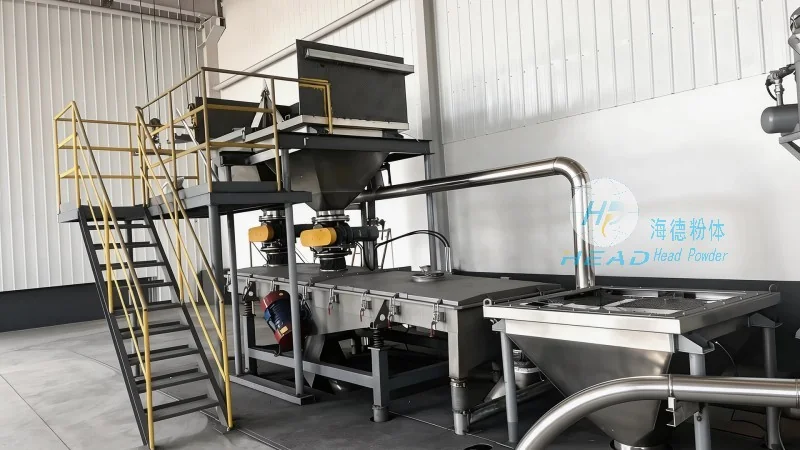
When selecting a monocrystalline silicon conveying method, manufacturers must consider wafer size, thickness, surface sensitivity, and production scale. Vacuum suction systems are ideal for delicate, thin wafers prioritizing surface protection. Mechanical grippers suit larger or heavier wafers needing high precision and throughput. Air-lift systems are best for fine powders or small wafers in smaller operations. Belt conveyors offer a cost-effective solution for high-volume production but may compromise wafer quality due to friction. HeadPowder, with expertise in material handling, provides customized conveying systems tailored to specific needs, balancing efficiency, reliability, and cost to enhance production processes and maintain product quality.
HeadPowder Engineering Co., Ltd., based in Shandong, China, specializes in developing advanced conveying technologies for the monocrystalline silicon industry. By understanding application-specific requirements, HeadPowder offers solutions that optimize performance and reduce costs, helping manufacturers improve production efficiency and preserve wafer quality.