

What is a Refractory Powder Conveying Line? And What Are Its Design Principles?
Refractory powder conveying lines are essential industrial systems designed to transport refractory materials efficiently and safely. These systems are critical in various manufacturing processes, particularly in the production of refractory products, where the handling of powders is a common requirement. Understanding the components and design principles of such lines is crucial for optimizing performance and ensuring operational reliability.

Introduction to Refractory Powder Conveying Lines
Refractory powder conveying lines, also known as refractory material handling systems, are engineered to move powders such as raw materials, additives, or finished refractory products from one location to another within a production facility. The primary goal of these systems is to achieve efficient, dust-free, and controlled transportation of refractory powders, which are often fine and can be challenging to handle due to their properties like low bulk density and potential for dust generation.
Key Components of a Refractory Powder Conveying Line
The design of a refractory powder conveying line typically involves several key components that work in tandem to ensure smooth operation. These components include feeders, conveyors, dust collection systems, and control units. Each component plays a vital role in the overall functionality of the system.
Feeders are responsible for uniformly feeding the refractory powder into the conveying system. They can be designed as screw feeders, vibratory feeders, or rotary valves, depending on the material characteristics and flow requirements. The feeder ensures a consistent flow rate, preventing overloading or underloading of the conveyor, which could lead to system inefficiencies or equipment damage.
Conveyors are the core of the powder conveying line, responsible for transporting the powder through the system. Common types of conveyors used in refractory powder handling include pneumatic conveyors (air-assisted systems) and mechanical conveyors (such as belt conveyors or bucket elevators). Pneumatic conveyors use air pressure to move the powder, which is ideal for handling fine powders and minimizing dust exposure. Mechanical conveyors, on the other hand, use mechanical forces like gravity or motor-driven mechanisms to move the material, often suitable for bulkier or heavier powders.
Dust collection systems are integral to maintaining a safe and clean working environment. These systems capture and filter the dust generated during the conveying process, preventing it from being released into the air and ensuring compliance with environmental regulations. Effective dust collection is crucial for both worker safety and operational efficiency.

Control units manage the operation of the entire conveying line, monitoring parameters such as flow rate, pressure, and temperature. They ensure that the system operates within safe and optimal parameters, providing alerts or automatic shutdowns if any issues arise. Advanced control systems may also include features like remote monitoring and data logging, enhancing operational management and troubleshooting capabilities.
Design Principles for Refractory Powder Conveying Lines
The design of a refractory powder conveying line follows specific principles to ensure efficiency, reliability, and safety. These principles are tailored to the unique properties of refractory materials, which can vary widely in terms of particle size, moisture content, and chemical composition.
One of the fundamental design principles is the minimization of material degradation. Refractory powders are often sensitive to handling, and excessive friction or impact can cause agglomeration or degradation of the material. Therefore, the design of the conveying system emphasizes smooth, low-friction surfaces and gentle handling mechanisms to preserve the quality of the powder.
Another key principle is the prevention of dust accumulation and explosion hazards. Refractory powders can be combustible under certain conditions, and the accumulation of dust can lead to fire or explosion risks. The design incorporates explosion-proof components and proper ventilation to mitigate these risks. Additionally, the system is designed to maintain a negative pressure in the conveying line to prevent dust from escaping into the environment.
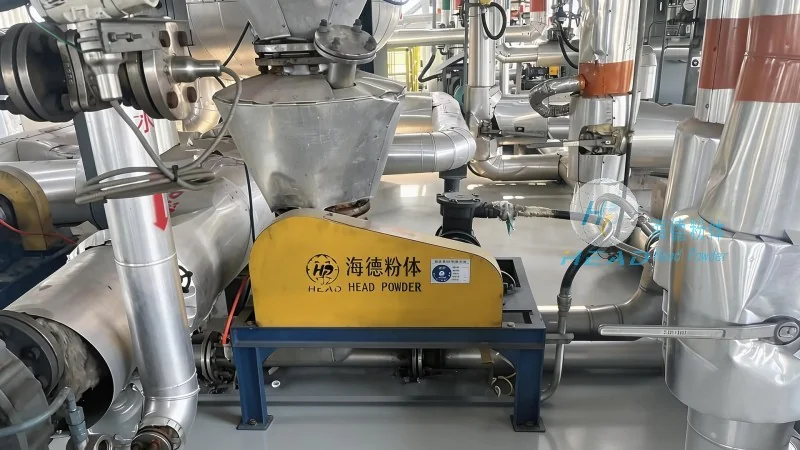
Efficiency and energy conservation are also critical design considerations. The conveying line is designed to minimize energy consumption while maintaining the required flow rate. This involves optimizing the size and speed of the conveyor, as well as the design of the feeder and control system. Efficient energy use not only reduces operational costs but also contributes to environmental sustainability.
Reliability and durability are essential for long-term operation. The components of the conveying line are constructed from materials that can withstand the harsh conditions of refractory powder handling, such as high temperatures, corrosive substances, and abrasive particles. The system is designed to be robust and low-maintenance, ensuring minimal downtime and maximum productivity.
Applications and Benefits of Refractory Powder Conveying Lines
Refractory powder conveying lines are widely used in various industries, including ceramics, steel, and foundries. They are essential for processes such as raw material handling, additive mixing, and product packaging. The benefits of using these systems include improved productivity, reduced labor costs, and enhanced safety.
By automating the powder handling process, these systems reduce the need for manual labor, which can be hazardous due to dust exposure and heavy lifting. This not only improves worker safety but also increases operational efficiency by allowing workers to focus on other tasks. Additionally, the consistent flow of powder ensures that production processes run smoothly, minimizing downtime and waste.
The use of refractory powder conveying lines also contributes to environmental sustainability. By effectively capturing and filtering dust, these systems reduce the environmental impact of powder handling. This compliance with environmental regulations is increasingly important as industries strive to operate more sustainably.