

Lightweight Aggregate Material Handling Systems: Exploring Their Function and Design Principles
Lightweight aggregate material handling systems represent a specialized category of industrial equipment designed to efficiently transport and manage lightweight aggregate materials. These systems are integral to various industrial processes, particularly in construction, manufacturing, and material processing sectors. The primary objective of such systems is to ensure the smooth and safe movement of lightweight aggregates, which are often used as raw materials in concrete production, insulation applications, and other construction-related tasks. HeadPowder, a leading manufacturer based in Shandong, China, specializes in the design and production of high-quality lightweight aggregate material handling systems, catering to the diverse needs of industrial clients worldwide.
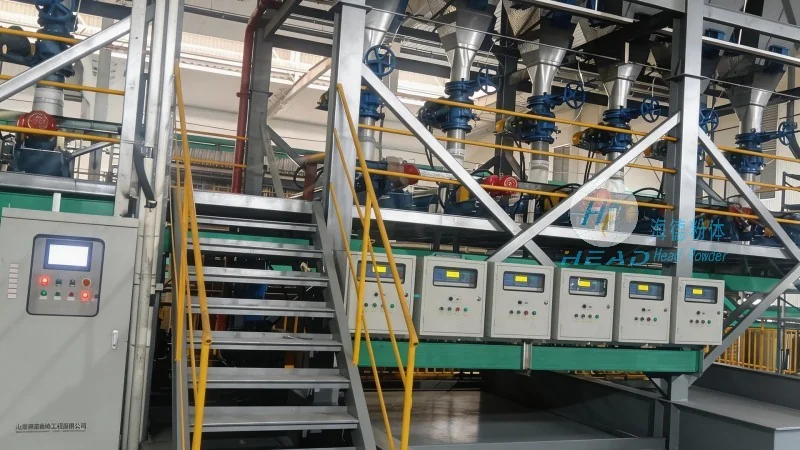
Understanding the Core Components of Lightweight Aggregate Material Handling Systems
At the heart of a lightweight aggregate material handling system are several key components that work in tandem to achieve optimal performance. These components typically include feeders, conveyors, storage silos, and control systems. Feeders are responsible for regulating the flow of lightweight aggregates from storage to the conveyor system, ensuring a consistent and controlled feed rate. Conveyors, often in the form of belt conveyors or pneumatic systems, transport the aggregates through the system. Storage silos provide bulk storage capacity, allowing for large volumes of material to be held and released as needed. Control systems, equipped with sensors and automation technology, monitor and adjust the operation of the entire system to maintain efficiency and safety.

The Design Principles Underpinning Lightweight Aggregate Material Handling Systems
The design of lightweight aggregate material handling systems is guided by several critical principles aimed at maximizing efficiency, safety, and cost-effectiveness. One of the primary principles is the minimization of material degradation during transport. Lightweight aggregates are often fragile and can be easily damaged by excessive impact or friction, so the system design prioritizes gentle handling mechanisms. This is achieved through the use of smooth conveyor surfaces, reduced belt speeds, and proper spacing between components. Another key principle is the optimization of material flow and storage. The system is designed to minimize bottlenecks and ensure a continuous, unobstructed flow of material from the storage silo to the processing or discharge point. This involves careful consideration of the system layout, including the placement of feeders, conveyors, and storage silos to create an efficient workflow.

Key Features and Advantages of Lightweight Aggregate Material Handling Systems
Lightweight aggregate material handling systems offer several advantages that make them indispensable in industrial applications. One of the most significant advantages is their ability to handle large volumes of material with high efficiency. The automated control systems and robust conveyor mechanisms allow for continuous operation, reducing downtime and increasing productivity. Additionally, these systems are designed for durability and reliability, with components built to withstand the rigors of continuous material handling. The gentle handling mechanisms also help preserve the quality of the lightweight aggregates, ensuring that the material remains in optimal condition for its intended use. Furthermore, the modular design of many systems allows for easy integration with existing industrial setups, making them a versatile solution for various material processing needs.
Applications and Industries Utilizing Lightweight Aggregate Material Handling Systems
Lightweight aggregate material handling systems are widely used across multiple industries, primarily in construction and manufacturing. In the construction industry, these systems are essential for transporting lightweight aggregates used in concrete production, where they serve as a replacement for traditional aggregates to reduce the weight and improve the thermal insulation properties of concrete. They are also used in the production of lightweight concrete blocks, panels, and other precast concrete products. In manufacturing, these systems are employed in the processing of lightweight aggregates for insulation materials, such as expanded polystyrene or vermiculite, which are used in building insulation and industrial applications. The systems are also utilized in the production of decorative and structural elements that incorporate lightweight aggregates.

Conclusion: The Importance of Efficient Lightweight Aggregate Material Handling Systems
In conclusion, lightweight aggregate material handling systems are critical components in modern industrial operations, providing efficient and reliable solutions for transporting and managing lightweight aggregates. The design principles and components of these systems are carefully engineered to ensure optimal performance, safety, and material preservation. As industries continue to rely on lightweight aggregates for their construction and manufacturing needs, the importance of these systems will only grow. By understanding the functionality and design of these systems, businesses can enhance their operational efficiency and ensure the quality of their products. The continued development and improvement of lightweight aggregate material handling systems will undoubtedly play a vital role in the future of industrial material processing.