

Nickel Cobalt Aluminum Lithium (NCA) Powder Conveying Methods: An Overview of the Advantages and Features of Pneumatic Conveying
For manufacturers and processing facilities dealing with Nickel Cobalt Aluminum Lithium (NCA) powders, selecting the right material handling and conveying system is crucial. NCA is a critical component in lithium-ion battery production, and its efficient, safe, and reliable transport is essential to maintain production efficiency and product quality. This article will delve into the various NCA powder conveying methods available and highlight the advantages of pneumatic conveying as a leading solution.

Conveying NCA powders requires systems that can handle the material's properties, such as its fine particle size, electrostatic charge, and potential dust explosion risks. Traditional methods like belt conveyors or screw conveyors may not be suitable due to the risk of material degradation, contamination, or equipment damage. Pneumatic conveying, on the other hand, offers a more controlled and efficient approach to moving NCA powders, making it a preferred choice for many industries.
Understanding NCA Powder Characteristics and Conveying Challenges
Before discussing the conveying methods, it's important to understand the unique characteristics of NCA powders. NCA is a lithium nickel manganese cobalt oxide (NMC) variant with a higher nickel content, which makes it a key material for high-energy-density batteries. The powder typically has a fine particle size, often ranging from 1 to 10 microns, and can be prone to generating electrostatic charges during handling. These characteristics pose challenges for traditional bulk material handling systems, as they may lead to material agglomeration, equipment wear, or safety hazards like dust explosions.
Consequently, the choice of conveying system must address these challenges. For instance, the material's fine particle size necessitates equipment that can handle low bulk densities and prevent particle segregation. The electrostatic charge requires anti-static measures to prevent static discharge, which could ignite dust clouds. Additionally, the need for a clean and contamination-free environment in battery production demands conveyors that minimize product contamination and ensure a sterile handling process.
Pneumatic Conveying: A Superior Solution for NCA Powder Transport
Pneumatic conveying, also known as air conveying, uses compressed air to transport dry powders through a pipeline system. This method is particularly well-suited for NCA powders due to its ability to handle fine, abrasive, and electrostatically charged materials with minimal risk of degradation or contamination. There are two main types of pneumatic conveying systems: pressure and vacuum. Pressure systems use compressed air to push the material through the pipeline, while vacuum systems use a vacuum to pull the material from the source to the destination.

For NCA powder applications, pressure pneumatic conveying is often preferred because it offers higher conveying rates and can handle longer distances. The system typically consists of a hopper, a rotary airlock valve, a conveying line, and a receiver. The NCA powder is fed into the hopper, then discharged through the rotary airlock valve into the conveying line. Compressed air is then introduced to push the powder through the pipeline to the receiver. This process is efficient and can handle large volumes of NCA powder while maintaining a consistent flow rate.
One of the key advantages of pneumatic conveying for NCA powders is its ability to maintain product integrity. The enclosed pipeline system prevents exposure to air, moisture, or contaminants, which could affect the powder's chemical properties or cause agglomeration. Additionally, the system can be equipped with anti-static devices, such as ionizers or grounding electrodes, to control electrostatic charges and prevent static discharge. This ensures a safe and reliable handling process, reducing the risk of dust explosions or material degradation.
Another advantage is the flexibility of pneumatic conveying systems. They can be designed to handle different material flow rates and distances, making them suitable for various production setups. The system can be integrated with other processing equipment, such as mixers, classifiers, or packaging machines, to create a seamless material handling workflow. This integration improves overall production efficiency and reduces downtime, as the system can be operated continuously without the need for manual intervention.

Key Features and Benefits of Pneumatic Conveying for NCA Powders
When considering pneumatic conveying for NCA powder transport, several key features and benefits stand out. First, the system offers high conveying efficiency, with the ability to move large volumes of material quickly and reliably. This is particularly important in battery production, where consistent supply of NCA powder is critical to maintaining production schedules.
Second, pneumatic conveying provides excellent control over the material flow. The system can be adjusted to handle different particle sizes and flow rates, ensuring that the powder is conveyed at the optimal speed to prevent degradation or equipment wear. This control also allows for precise dosing and metering of the NCA powder, which is essential for achieving consistent battery performance.
Third, the system is highly hygienic and clean. The enclosed pipeline design prevents contamination from external sources, and the materials used in the construction of the system are often food-grade or corrosion-resistant, ensuring that the NCA powder remains pure and free from contaminants. This is crucial for battery production, where even minor impurities can affect the battery's performance and lifespan.
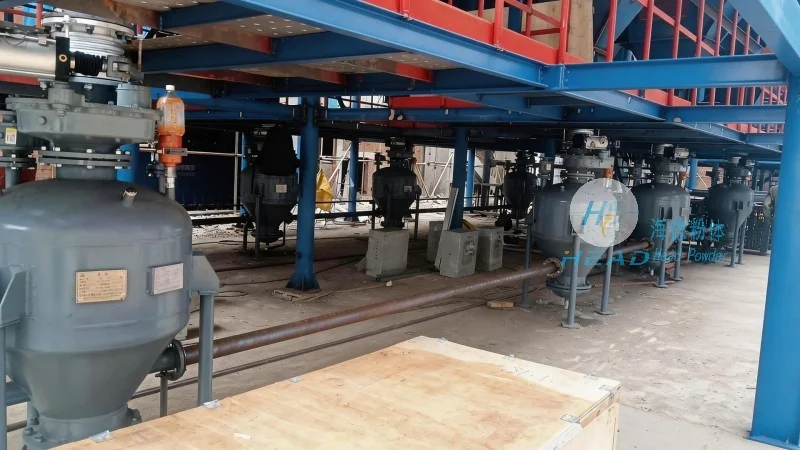
Fourth, pneumatic conveying is energy-efficient compared to other bulk material handling methods. The system uses compressed air, which can be generated from the facility's existing air supply, reducing the need for additional energy sources. Additionally, the system's low maintenance requirements and long service life contribute to lower operational costs over time.
Conclusion: Choosing the Right Conveying System for NCA Powder Handling
In conclusion, selecting the appropriate conveying system for Nickel Cobalt Aluminum Lithium (NCA) powders is a critical decision for manufacturers aiming to optimize production efficiency and ensure product quality. While various methods exist, pneumatic conveying emerges as a superior solution due to its ability to handle the unique challenges posed by NCA powders, including fine particle size, electrostatic charge, and contamination risks.
By leveraging the advantages of pneumatic conveying, such as high efficiency, product integrity maintenance, and flexibility, manufacturers can streamline their material handling processes and improve overall production performance. The system's ability to integrate with other processing equipment and its low maintenance requirements further enhance its appeal as a long-term solution for NCA powder transport.
For companies seeking reliable and efficient NCA powder conveying solutions, Shandong HeadPowder Engineering Co., Ltd., a leading provider of material handling systems, offers specialized equipment tailored to the needs of the battery industry. With a focus on quality, safety, and innovation, HeadPowder provides systems that meet the stringent requirements of NCA powder handling, ensuring that manufacturers can achieve their production goals while maintaining the highest standards of product quality and safety.