

Pneumatic Conveying of Hydrated Lime Powder: Exploring Design Principles
For industrial applications involving the handling of fine powders like hydrated lime, pneumatic conveying systems offer a reliable and efficient method to transport materials. This technology involves the use of air or gas to move solid particles through a pipeline, eliminating the need for mechanical components such as buckets or belts. The process is particularly advantageous for materials that are prone to dust, require minimal contamination, or need to be transported over moderate distances. In this article, we will delve into the fundamental aspects of pneumatic conveying for hydrated lime powder, focusing on its design principles and operational considerations.

Understanding Hydrated Lime Powder and Its Handling Challenges
Hydrated lime, also known as slaked lime, is a calcium hydroxide product derived from the reaction of quicklime with water. It is widely used in various industries, including construction, water treatment, and chemical manufacturing, due to its alkaline properties and ability to neutralize acids. When handling hydrated lime powder, several challenges arise that necessitate specialized conveying solutions. The material is often fine, with a particle size typically ranging from 0.1 to 100 microns, making it susceptible to agglomeration and dust generation. Additionally, it can be hygroscopic, absorbing moisture from the air, which affects its flowability and handling characteristics. These factors make traditional bulk material handling methods, such as belt conveyors or screw conveyors, less suitable, as they may cause material degradation, blockages, or increased dust exposure.
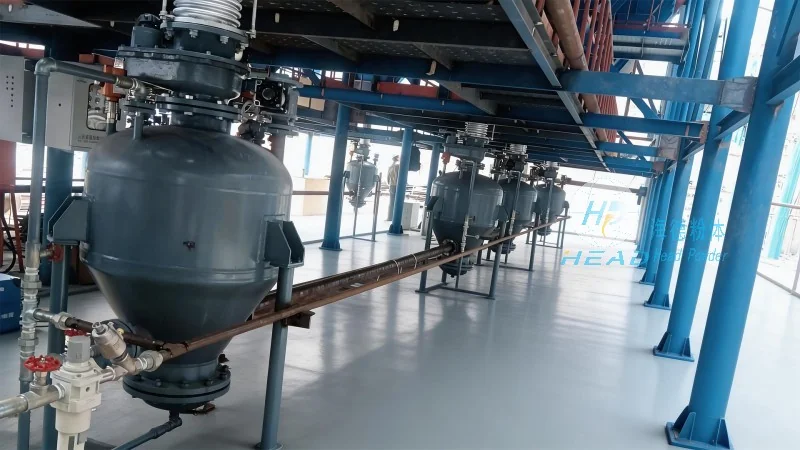
Pneumatic Conveying Systems: Types and Selection Criteria
Pneumatic conveying systems are categorized into two main types: dilute-phase and dense-phase. Dilute-phase systems operate at higher air velocities, typically 20-30 m/s, and are suitable for transporting materials over longer distances and at higher speeds. They are ideal for fine powders like hydrated lime, as the high air velocity prevents particle settling and ensures consistent flow. Dense-phase systems, on the other hand, use lower air velocities (5-15 m/s) and higher material-to-air ratios, which result in a more controlled and gentle transport. This method is beneficial for materials that are sensitive to impact or require minimal pressure drops. The selection of a pneumatic conveying system depends on several factors, including the material's properties (particle size, density, moisture content), the required conveying distance, the desired flow rate, and the system's capacity. For hydrated lime powder, a dilute-phase system is often preferred due to its efficiency and ability to handle fine particles without excessive pressure loss.

Design Principles of Pneumatic Conveying for Hydrated Lime Powder
The design of a pneumatic conveying system for hydrated lime powder involves several key components and principles to ensure optimal performance. The primary components include the material feed system, the conveying pipeline, the air supply system, and the material discharge system. The material feed system must be designed to handle the fine, hygroscopic nature of hydrated lime, often incorporating a hopper with a vented lid to prevent material bridging and maintain consistent flow. The hopper may also include a vibratory feeder or a rotary valve to control the material discharge rate. The conveying pipeline is typically made of stainless steel or other corrosion-resistant materials to prevent chemical reactions with the lime powder. The pipeline design must consider the material's particle size distribution and flow characteristics to minimize pressure drop and prevent blockages. The air supply system uses a blower or a compressor to generate the necessary air pressure and flow rate. The system's pressure drop is a critical design parameter, as it directly impacts the energy consumption and overall efficiency of the conveying process. For hydrated lime powder, the pressure drop is influenced by factors such as the pipeline length, diameter, and the material's frictional properties. Proper sizing of the blower and the pipeline diameter is essential to maintain the required air velocity and ensure smooth material transport.