

What is the Pneumatic Conveying Equipment for Reduced Iron Powder Material? What is Its Design Princ
Reduced iron powder is a vital material in numerous industrial sectors, including steel production, metallurgy, and chemical processing. The efficient and safe transportation of this fine powder is crucial for maintaining production efficiency and product quality. Pneumatic conveying equipment has become a preferred solution for handling reduced iron powder due to its ability to transport materials without mechanical contact, reducing contamination and wear. This article examines the pneumatic conveying equipment specifically designed for reduced iron powder, detailing its design principles and operational benefits.

HeadPowder: A Leading Manufacturer of Pneumatic Conveying Systems
Shandong HeadPowder Engineering Co., Ltd., commonly referred to as HeadPowder, is a reputable company based in China. With a strong commitment to engineering excellence and customer satisfaction, HeadPowder specializes in the design, manufacturing, and supply of pneumatic conveying systems tailored to the unique requirements of industrial clients. The company's expertise lies in understanding the physical properties of materials like reduced iron powder and translating them into effective conveying solutions. HeadPowder's dedication to quality and innovation has positioned it as a trusted partner in the industry, delivering reliable equipment that meets stringent performance standards.
Design Principles of Pneumatic Conveying Equipment for Reduced Iron Powder
The design of pneumatic conveying equipment for reduced iron powder is guided by several key principles to ensure optimal performance and material integrity. The primary design considerations include the material's particle size, density, and flow characteristics, as well as the required conveying distance and throughput. HeadPowder's engineers employ a systematic approach to design, starting with an analysis of the material's properties and the operational needs of the client. This analysis informs the selection of the appropriate conveying system type—either positive pressure or negative pressure—based on factors such as the material's dustiness, the need for enclosed transport, and the environmental regulations in the operating region.

Positive pressure systems, also known as pressure conveying, utilize a blower or compressor to generate air pressure that propels the material through a sealed pipeline. This method is particularly effective for transporting fine powders like reduced iron powder over longer distances and is often preferred when the material is highly dust-sensitive or requires a closed system to prevent environmental contamination. The design of positive pressure systems involves careful consideration of the air velocity, which must be sufficient to prevent material settling in the pipeline but not so high as to cause excessive wear or energy consumption. HeadPowder's engineers use advanced computational fluid dynamics (CFD) simulations to optimize the air velocity and pipeline dimensions, ensuring efficient material transport while minimizing energy costs.
Negative pressure systems, or vacuum conveying, employ a vacuum pump to create a suction that draws the material into the pipeline. This method is suitable for shorter conveying distances and when the material is less dusty or when the process requires a lower air volume. The design of negative pressure systems focuses on maintaining a stable vacuum level and preventing material blockages, which can occur due to the fine particle size of reduced iron powder. HeadPowder's equipment incorporates features such as cyclone separators and filter systems to ensure that the material is efficiently conveyed and that the air is properly filtered before being released into the environment. The company's engineers also consider the impact of the material's moisture content and potential for agglomeration, designing the system with appropriate moisture control and de-agglomeration mechanisms to maintain material flowability.
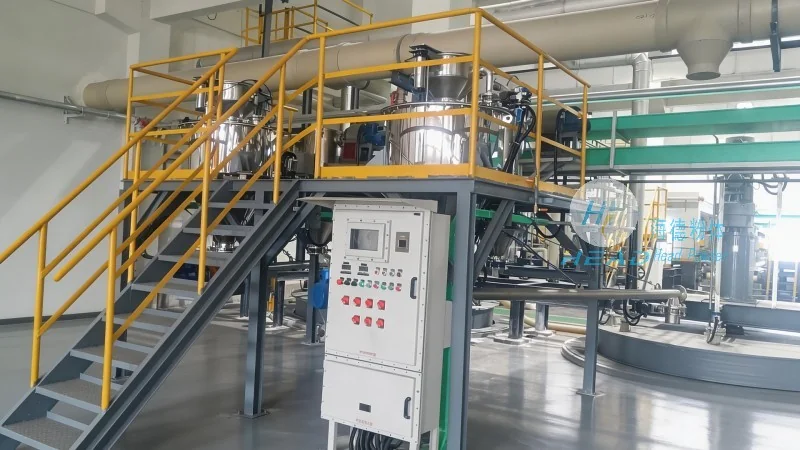
Key Components and Operational Advantages
The pneumatic conveying equipment for reduced iron powder typically consists of several key components, each playing a critical role in the overall system performance. These components include the air source (blower or vacuum pump), the conveying pipeline (usually made of stainless steel or other corrosion-resistant materials to handle the fine powder), and the material feed and discharge systems. HeadPowder's systems are designed with high-quality materials to withstand the abrasive nature of reduced iron powder and to ensure long service life. The feed system, which may include a hopper or feeder, is engineered to provide a consistent flow of material into the pipeline, preventing blockages and ensuring smooth operation. The discharge system, often equipped with a rotary valve or other controlled discharge mechanism, allows for precise material release at the destination, minimizing spillage and contamination.
One of the significant advantages of pneumatic conveying systems for reduced iron powder is their ability to maintain material integrity. Unlike mechanical conveying methods, which can cause particle attrition and contamination, pneumatic systems transport the material in a closed environment, reducing the risk of dust exposure and product degradation. This is particularly important for reduced iron powder, which is often used in applications where purity and particle size distribution are critical, such as in the production of high-quality steel or specialized chemical products. HeadPowder's equipment is designed with features that minimize particle breakage, such as smooth pipeline surfaces and controlled air velocities, ensuring that the material's physical properties are preserved throughout the conveying process.

Another advantage is the flexibility and scalability of pneumatic conveying systems. HeadPowder's solutions can be customized to handle varying throughput requirements, from small-scale laboratory applications to large-scale industrial production lines. The modular design of the equipment allows for easy expansion or modification as production needs change. Additionally, the systems are relatively easy to install and integrate with existing production lines, reducing downtime and installation costs. HeadPowder's engineers work closely with clients to understand their specific operational needs and design a system that meets their requirements, ensuring optimal performance and efficiency.
Conclusion
Pneumatic conveying equipment for reduced iron powder is a sophisticated and effective solution for transporting this critical material in industrial applications. The design principles, which consider the material's physical properties and operational requirements, ensure that the equipment operates efficiently and safely. HeadPowder, with its expertise in engineering and manufacturing, provides high-quality pneumatic conveying systems that meet the demanding needs of industrial clients. By leveraging advanced design techniques and high-quality materials, HeadPowder's equipment delivers reliable performance, maintains material integrity, and offers flexibility for various industrial applications. For companies dealing with reduced iron powder, investing in a well-designed pneumatic conveying system from HeadPowder can enhance production efficiency, improve product quality, and reduce operational costs.