

Working Principle and Characteristics of Molybdenum Oxide Pneumatic Conveying
In industrial production, molybdenum oxide (Molybdenum Oxide) as an important chemical raw material, its efficient and safe conveying method is crucial for production efficiency and quality control. As an advanced material conveying technology, pneumatic conveying shows significant advantages in the transmission of molybdenum oxide. This article will detail the working principle and characteristics of molybdenum oxide pneumatic conveying to help readers fully understand this technology.
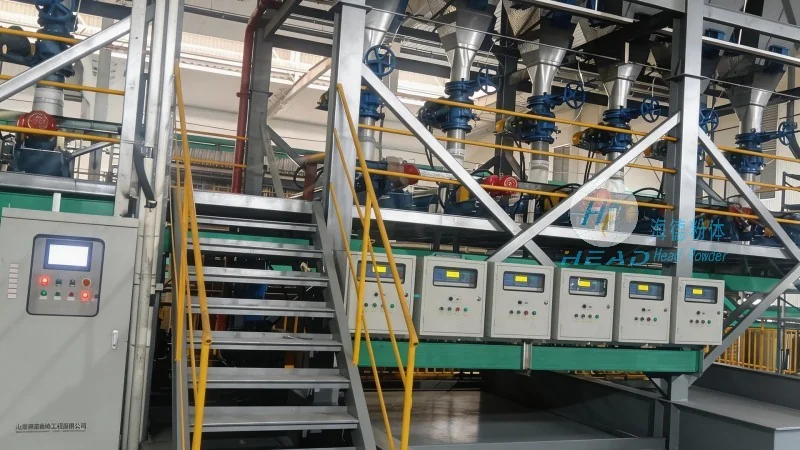


Working Principle Analysis: The Operating Mechanism of Molybdenum Oxide Pneumatic Conveying
The core of molybdenum oxide pneumatic conveying is to transport solid particle materials (such as molybdenum oxide powder) from the source to the destination through airflow. Its working principle mainly involves several key steps: first, high-pressure airflow is generated by a fan or compressor to form the airflow power in the conveying pipeline. Then, the material is added to the pipeline and moves with the airflow under the push of the airflow. The reasonable control of airflow velocity and pressure is the key to ensuring stable material conveying. Finally, the material is separated from the airflow by separation equipment (such as cyclone separators or bag filters) at the destination to complete the conveying task. Throughout the process, the pneumatic conveying system achieves continuous, non-contact conveying of molybdenum oxide through the interaction between airflow and material, effectively avoiding material contamination and wear that may occur in traditional mechanical conveying.
Main Features Overview: The Advantages of Molybdenum Oxide Pneumatic Conveying
Compared with traditional mechanical conveying methods, molybdenum oxide pneumatic conveying has many significant characteristics, making it occupy an important position in industrial applications. First, efficiency is its core advantage. The pneumatic conveying system can achieve continuous and large-scale material conveying, greatly improving the efficiency of production lines. Secondly, in terms of environmental protection, pneumatic conveying avoids direct contact between materials and the external environment, reducing dust flying and environmental pollution, which meets the green production requirements of modern industry. In addition, flexibility is also an important characteristic, the system can adjust the conveying volume, distance and path according to production needs, adapting to different production scenarios. At the same time, the pneumatic conveying system has a relatively simple structure and low maintenance cost, reducing the operating cost of enterprises. For molybdenum oxide, which is easily affected by the environment, the sealing design of pneumatic conveying effectively prevents material leakage, ensuring production safety and environmental quality. In general, molybdenum oxide pneumatic conveying provides a reliable material conveying solution for industrial production through its efficient, environmentally friendly and flexible characteristics.