

Common Micropowder Conveying Methods and the Advantages of HeadPowder's Pneumatic Conveying System
Microbeads and fine powders are integral to numerous industrial processes, from manufacturing to pharmaceuticals. However, their unique properties—such as low density, fine particle size, and potential for dust generation—pose significant challenges when it comes to material handling and transportation. The choice of conveying method is critical to ensuring efficiency, safety, and product integrity. This article explores common micropowder conveying methods and highlights the advantages of HeadPowder's pneumatic conveying technology, a solution developed by Shandong HeadPowder Engineering Co., Ltd., based in China.
Common Micropowder Conveying Methods: An Overview
Several conventional methods are employed for micropowder transportation, each with distinct characteristics and applications. Understanding these methods helps in selecting the most suitable approach for specific operational needs.
1. Gravity Conveying
Gravity conveying relies on the natural force of gravity to move materials from a higher to a lower elevation. This method is often used for bulk materials with sufficient flowability, such as coarse powders or granules. For micropowders, gravity systems may struggle due to their low density and tendency to settle slowly. The primary advantage is low energy consumption and minimal equipment complexity. However, it is unsuitable for fine powders that tend to create dust or require precise control over flow rates.
2. Mechanical Conveying (Screw and Belt Conveyors)
Mechanical conveyors, including screw and belt conveyors, use mechanical components to transport materials. Screw conveyors are particularly effective for powders with moderate flowability, as the rotating screw pushes material forward. Belt conveyors, on the other hand, use a continuous belt to move materials horizontally or at a slight incline. Both systems are widely used in industries like food processing and chemical manufacturing. However, they have limitations when handling very fine or light powders. These materials can easily fall through the gaps in the conveyor or cause blockages, leading to operational inefficiencies and increased maintenance costs.

3. Pneumatic Conveying: The Preferred Solution for Micropowders
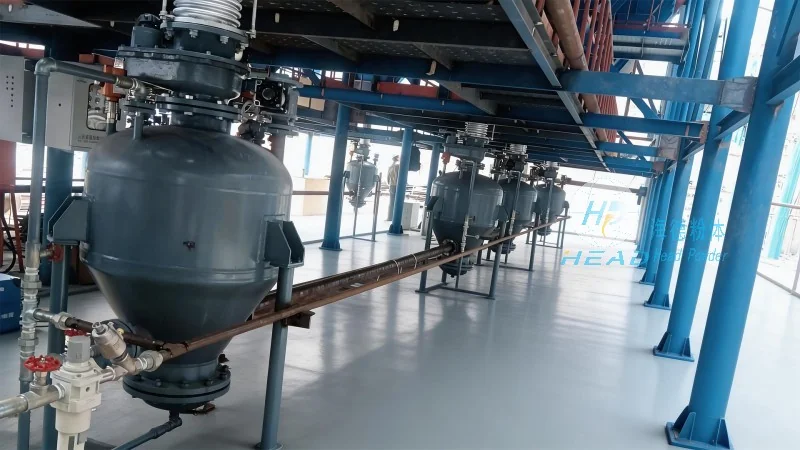
Pneumatic conveying uses air or gas to transport powders through a pipeline. It is widely regarded as the most effective method for micropowders due to its ability to handle fine, light, and dusty materials without the need for mechanical parts that can cause contamination or wear. There are two main types of pneumatic conveying: suction (or vacuum) and pressure systems. Suction systems draw material from a source using a vacuum, while pressure systems force material through a pipeline using compressed air.
HeadPowder's Pneumatic Conveying System: Advantages and Features
Shandong HeadPowder Engineering Co., Ltd. specializes in designing and manufacturing advanced pneumatic conveying systems tailored for micropowder applications. Their technology offers several key advantages that set it apart from traditional methods.
1. High Efficiency and Uniform Flow
HeadPowder's pneumatic conveying systems are engineered to ensure consistent and efficient material flow. The system uses precise air pressure control to maintain uniform particle velocity, preventing segregation or agglomeration of micropowders. This uniformity is crucial for processes that require homogeneous material distribution, such as in pharmaceutical manufacturing or food processing. The result is improved process stability and reduced variability in product quality.
2. Low Energy Consumption and Environmental Benefits
Compared to mechanical conveyors, pneumatic systems typically consume less energy while delivering higher throughput. HeadPowder's designs incorporate energy-efficient components, such as variable frequency drives and optimized air flow paths, to minimize power usage. Additionally, the enclosed pipeline system significantly reduces dust emissions, enhancing workplace safety and compliance with environmental regulations. This makes the system not only cost-effective but also environmentally responsible.

3. Customization and Adaptability
Each micropowder has unique characteristics, including particle size, moisture content, and flowability. HeadPowder's engineers work closely with clients to develop customized solutions that address these specific requirements. The system can be adjusted to handle a wide range of micropowders, from ultra-fine particles to larger granules, and can be integrated with existing production lines without major modifications. This adaptability ensures that the system remains effective even as production needs evolve.
4. Low Maintenance and Durability
HeadPowder's pneumatic conveying systems are built with high-quality materials and robust components, minimizing the risk of wear and tear. The absence of moving parts in the pipeline reduces the likelihood of mechanical failures, leading to lower maintenance costs and extended equipment lifespan. The system is also designed for easy cleaning and maintenance, with accessible components that can be serviced quickly. This reliability is essential for continuous production operations, where downtime can be costly.
Conclusion: Choosing the Right Conveying Solution for Micropowders
When selecting a conveying method for micropowders, it is essential to consider the material's properties, operational requirements, and long-term cost implications. While gravity and mechanical conveyors have their place in certain applications, pneumatic conveying, particularly from HeadPowder, offers superior performance for handling fine, light, and dusty powders. The advantages of HeadPowder's system—efficiency, energy savings, environmental benefits, and customization—make it an ideal choice for industries that demand high-quality, consistent material handling. As a leading provider of micropowder handling solutions, Shandong HeadPowder Engineering Co., Ltd. continues to innovate, ensuring that their pneumatic conveying technology meets the evolving needs of modern industrial processes.