

Principle and Working Scene Characteristics of Stearic Acid Sodium Material Pneumatic Conveying Equi
Stearic acid sodium, a widely used chemical additive, often requires efficient and reliable material handling solutions for industrial applications. The pneumatic conveying equipment designed for stearic acid sodium material processing represents a critical component in modern chemical processing facilities. This article explores the fundamental principles behind such equipment and highlights the key characteristics of its working scenes, providing insights into how these systems enhance operational efficiency and safety in material transport.

Company Profile: HeadPowder Engineering
HeadPowder Engineering, a leading provider in the field of material handling solutions, specializes in the design, manufacturing, and installation of advanced pneumatic conveying systems. With a strong commitment to quality and innovation, the company has established itself as a trusted partner for industries dealing with various chemical and bulk materials. HeadPowder Engineering is headquartered in Shandong, China, and serves clients globally with tailored solutions that meet specific operational requirements.
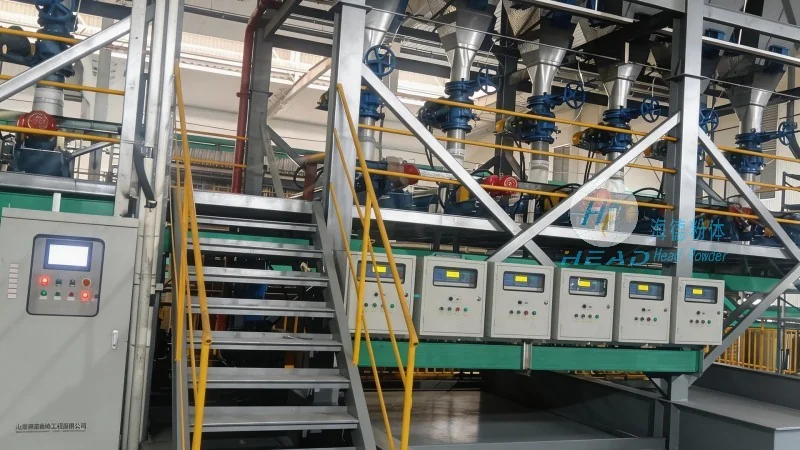
Principle of Pneumatic Conveying for Stearic Acid Sodium
The core principle of pneumatic conveying systems involves the use of air or gas to transport bulk materials through a pipeline network. In the case of stearic acid sodium, which is typically a fine powder or granular substance, the equipment operates by creating a pressure differential that propels the material along the conveying line. This process can be categorized into two main types: pressure and vacuum systems. Pressure systems utilize compressed air to push the material forward, while vacuum systems employ suction to draw the material from the source to the destination. The selection of the appropriate system depends on factors such as material properties, distance, and the need for dust control. For stearic acid sodium, which is sensitive to moisture and requires low dust emissions, a well-designed pressure system with appropriate filtration and sealing mechanisms is often preferred. The equipment typically includes components like a hopper for material storage, a rotary valve for controlled discharge, a conveying line with appropriate diameter and material, and a receiver for the material at the destination. The air flow is managed by a blower or compressor, ensuring consistent pressure and flow rates to maintain material transport efficiency. The design of the conveying line, including bends and elbows, is crucial to minimize pressure loss and prevent material degradation or blockages. Proper filtration of the air to remove particulates is also essential to protect downstream equipment and maintain product quality.

Working Scene Characteristics of Stearic Acid Sodium Pneumatic Conveying Equipment
The working scenes where stearic acid sodium pneumatic conveying equipment is applied exhibit distinct characteristics that influence system design and performance. These scenes are typically found in industrial settings such as chemical plants, pharmaceutical manufacturing facilities, and food processing industries, where the material is used as an additive or processing aid. The key characteristics of these working scenes include the need for precise material dosing, minimal contamination, and efficient integration with existing production lines. In chemical plants, for example, stearic acid sodium may be used as a lubricant or stabilizer in the production of other chemicals. The conveying equipment must be capable of handling varying material flow rates and maintaining consistent quality, as any fluctuations can impact the final product's properties. The working environment often involves strict hygiene and safety standards, necessitating equipment that is easy to clean and maintain, with sealed components to prevent dust leakage. The distance between the source and destination points can vary, from short-distance intra-facility transport to longer-distance transfers between different production units or even between different facilities. The equipment must be adaptable to these varying distances, with options for adjustable conveying speeds and pressure levels. Additionally, the working scenes may require integration with other process equipment, such as mixers or reactors, where the material needs to be delivered in a controlled manner to ensure optimal reaction conditions. The characteristics of the working scene also include considerations for material handling efficiency and energy consumption, as operators seek to minimize operational costs while maintaining high throughput. The design of the system must account for these factors, ensuring that the equipment operates at peak efficiency with minimal energy waste. Furthermore, the working scenes may involve the need for material storage and buffering, where the conveying equipment is used to transfer material from storage silos to processing units. In such cases, the equipment must be capable of handling large volumes of material and maintaining a steady flow rate to avoid bottlenecks in the production process. The characteristics of the working scene also highlight the importance of system reliability and maintenance, as downtime can significantly impact production schedules and costs. Therefore, the equipment is designed with robust components and easy access points for maintenance, ensuring long-term operational performance.

Key Features and Advantages of Stearic Acid Sodium Pneumatic Conveying Systems
The pneumatic conveying systems for stearic acid sodium material offer several key features and advantages that make them suitable for demanding industrial applications. One of the primary advantages is the ability to transport material in a closed system, which minimizes dust emissions and protects the material from contamination and moisture. This is particularly important for stearic acid sodium, as it is sensitive to environmental factors that can affect its performance. The closed system also enhances safety by preventing the release of hazardous particles into the workplace, aligning with regulatory requirements for industrial safety. Another key feature is the flexibility in system design, allowing for customization based on specific operational needs. The equipment can be configured to handle different material types, flow rates, and distances, making it adaptable to various production scenarios. The use of pressure systems enables high material transport speeds, reducing the time required for material transfer and increasing overall production efficiency. This is especially beneficial in high-throughput manufacturing environments where rapid material handling is critical. The systems also offer energy efficiency, as the air flow can be optimized to minimize energy consumption while maintaining the required transport capacity. This is achieved through the use of efficient blowers and compressors, along with proper system design that reduces pressure losses. The equipment is designed for easy integration with existing production lines, minimizing the need for extensive modifications and reducing installation time and costs. The components are also designed for durability and long service life, with high-quality materials and robust construction that can withstand the demands of continuous operation. Maintenance is simplified with accessible components and clear operational indicators, allowing for quick troubleshooting and repairs. The systems also provide precise control over material flow, enabling accurate dosing and dosing consistency, which is crucial for maintaining product quality and meeting regulatory standards. The closed system design ensures that the material remains in a controlled environment throughout the transport process, preventing any exposure to external contaminants that could affect its properties. This is particularly important for stearic acid sodium, which is used in applications where purity is essential, such as in pharmaceutical or food processing industries. The advantages of these systems extend to improved operational safety, as the closed design reduces the risk of dust explosions and other hazards associated with open material handling. The systems also contribute to better workplace conditions by minimizing dust and airborne particles, creating a healthier environment for workers. Overall, the pneumatic conveying systems for stearic acid sodium material represent a reliable and efficient solution for material handling in modern industrial settings, offering a combination of performance, safety, and adaptability.