

Operation Process and Working Principle of Fiber Material Pneumatic Conveying Systems
HeadPowder, a leading provider in the field of pneumatic conveying technology, specializes in the design, manufacturing, and implementation of systems tailored for handling fiber materials. This article delves into the operational process and underlying principles of such systems, offering insights into their efficiency and reliability for industrial applications. Based in Shandong, China, HeadPowder Engineering Co., Ltd. has established itself as a trusted partner for businesses seeking advanced material handling solutions.

Understanding the Core Components and Functionality
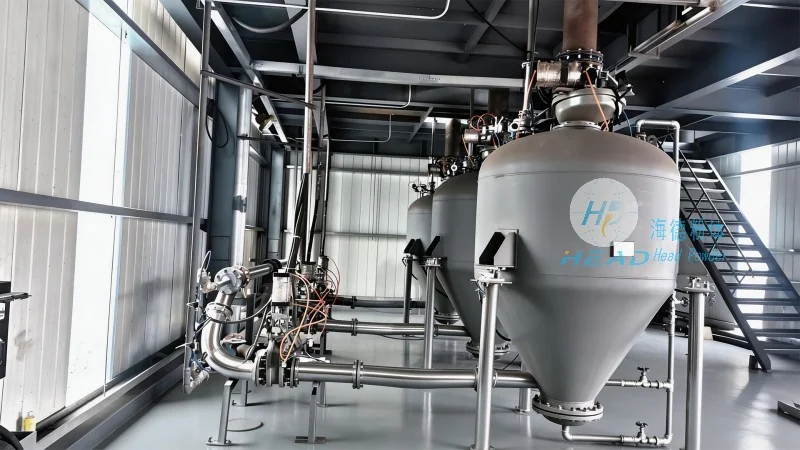
The pneumatic conveying system for fiber materials typically consists of several key components that work in concert to transport material from a source to a destination. These components include a material hopper, a conveying line (often equipped with a venturi or other air-moving devices), a control system, and a receiving hopper or silo. The material hopper is designed to store the fiber material, ensuring a consistent feed rate into the system. The conveying line, which may be of the positive or negative pressure type, uses compressed air to move the fibers through the system. The control system regulates the air flow and material feed, maintaining optimal operating conditions to prevent blockages or inefficiencies.

The Operational Process: From Loading to Delivery
The operation of a fiber material pneumatic conveying system begins with the loading of the fiber material into the source hopper. As the material is fed into the system, a controlled amount of compressed air is introduced into the conveying line. The air flow, often generated by a blower or compressor, creates a pressure differential that propels the fibers forward. The venturi or other air-moving devices within the line enhance the air velocity, ensuring that the fibers are carried efficiently without excessive pressure loss. The material travels through the conveying line, which may include bends, expansions, or other components to guide the flow. Upon reaching the receiving hopper, the material is deposited, and the air is filtered and recycled back into the system to maintain energy efficiency.
Working Principle: Air-Flow Dynamics and Material Transport
The fundamental working principle of a fiber material pneumatic conveying system revolves around the interaction between air flow and the material being transported. In positive pressure systems, compressed air is forced through the conveying line, pushing the fibers along the path. The air velocity must be sufficient to overcome the gravitational force and any frictional resistance within the line. In negative pressure systems, the air is drawn through the line, creating a vacuum that pulls the fibers into the system. The design of the system, including the size of the conveying line, the air velocity, and the material feed rate, is critical to achieving optimal performance. Proper sizing ensures that the air flow is adequate to transport the material without causing excessive wear on components or energy consumption.
Advantages and Applications in Industrial Settings
Fiber material pneumatic conveying systems offer several advantages over traditional mechanical conveying methods. These include reduced maintenance requirements, as there are fewer moving parts, and the ability to handle materials that are difficult to transport by other means, such as those with high moisture content or abrasive properties. The systems are also versatile, capable of transporting various types of fibers, including wood, paper, and textile fibers, across different industries. Applications range from manufacturing facilities that process raw fibers to recycling plants that handle waste materials, providing a reliable and efficient means of material transport.

Conclusion: Ensuring Efficiency and Reliability
HeadPowder's expertise in pneumatic conveying technology ensures that fiber material systems are designed and implemented to meet the specific needs of industrial applications. By understanding the operational process and working principles, users can optimize the performance of these systems, reducing downtime and improving overall productivity. The combination of advanced engineering and careful system design allows for efficient material transport, contributing to the success of various industrial operations.