

Common Polysilicon Conveying Methods: Advantages and Features of HeadPowder's Polysilicon Pneumatic Conveying System
Polysilicon, a critical material in the photovoltaic industry, requires efficient and reliable transportation methods to ensure smooth production processes. Various conveying techniques are employed in the industry, each with its own set of advantages and limitations. This article explores common polysilicon conveying methods and highlights the superior features of HeadPowder's pneumatic conveying system for polysilicon material handling.

Overview of Polysilicon Conveying Methods
In the polysilicon processing sector, material transportation is a key operational step that impacts overall production efficiency and product quality. Traditional conveying methods include screw conveyors, belt conveyors, and bucket elevators. These systems are widely used due to their simplicity and relatively low initial investment. However, they often face challenges such as material degradation, high energy consumption, and limited flexibility in handling fine powders like polysilicon. For instance, screw conveyors may cause friction and heat generation, potentially affecting the purity of the polysilicon. Belt conveyors, while effective for bulk material transport, can suffer from material spillage and require frequent maintenance to prevent contamination.
Introduction to Pneumatic Conveying Technology
Pneumatic conveying, also known as air conveying, utilizes compressed air to transport solid materials through a pipeline system. This method offers several advantages over traditional mechanical conveyors, making it particularly suitable for handling fine and sensitive materials like polysilicon. The core principle involves creating a pressure differential to move material from the source to the destination. There are two main types of pneumatic conveying: pressure and vacuum systems. Pressure systems use compressed air to push material through the pipeline, while vacuum systems create a negative pressure to draw material in. Both types can be further classified into dilute phase and dense phase conveying, depending on the material flow rate and particle size.

HeadPowder's Polysilicon Pneumatic Conveying System: Key Advantages
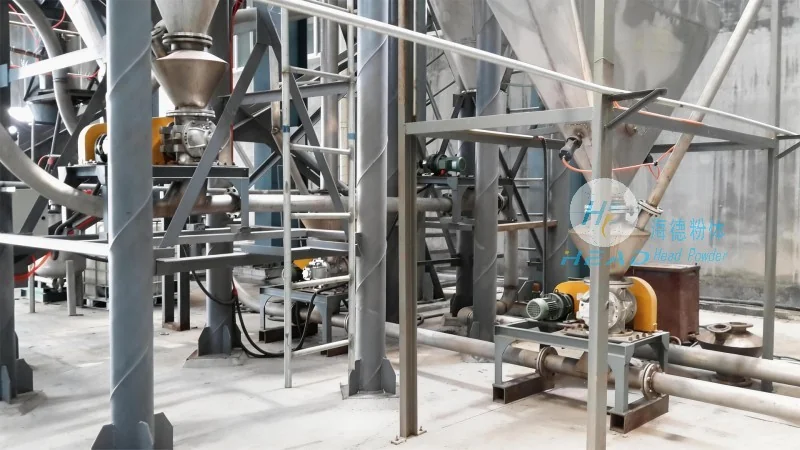
Shandong HeadPowder Engineering Co., Ltd., a leading manufacturer based in Shandong, China, has developed a specialized pneumatic conveying system tailored for polysilicon applications. The system incorporates advanced design elements that address the unique challenges of polysilicon material handling. One of the primary advantages is its high efficiency in material transport. By utilizing compressed air, the system can move polysilicon quickly and with minimal energy consumption compared to mechanical conveyors. This efficiency is crucial for maintaining production throughput in polysilicon manufacturing plants.
Another significant feature is the system's ability to minimize material loss and degradation. Unlike mechanical conveyors that rely on physical contact and friction, pneumatic conveying reduces direct contact between the material and the conveying components. This helps preserve the purity and quality of the polysilicon, which is essential for downstream processes such as solar cell production. The system also incorporates advanced filtration and cleaning mechanisms to prevent dust accumulation and contamination, ensuring consistent material quality.
Environmental and Operational Benefits
The HeadPowder pneumatic conveying system offers substantial environmental benefits, aligning with the industry's push for sustainable operations. By eliminating the need for mechanical parts that generate friction and heat, the system reduces energy consumption and lowers carbon emissions. Additionally, the enclosed pipeline design prevents dust emissions, contributing to a cleaner working environment and compliance with environmental regulations. This is particularly important in regions with strict air quality standards.

Operational flexibility is another key advantage. The system can be easily integrated into existing production lines and adapted to varying production volumes. Its modular design allows for scalability, enabling manufacturers to expand their conveying capacity as their production needs grow. This adaptability reduces downtime and maintenance costs, as the system can be adjusted or upgraded without major overhauls.
Conclusion
While traditional conveying methods have their place in the polysilicon industry, pneumatic conveying systems like HeadPowder's offer superior performance in terms of efficiency, material preservation, and environmental impact. For manufacturers seeking to optimize their polysilicon production processes, investing in a specialized pneumatic conveying system can provide long-term benefits in terms of productivity, cost savings, and sustainability. With its advanced technology and proven track record, HeadPowder's polysilicon pneumatic conveying system stands out as a reliable solution for modern polysilicon processing facilities.