

Operation Process and Working Principle of Dye Powder Pneumatic Conveying System
Efficient and reliable transportation of dye powders is crucial in the chemical and textile industries, where maintaining product quality and minimizing material loss are paramount. The pneumatic conveying system for dye powders offers a solution that utilizes air as the conveying medium. This article explores the operation process and working principle of such a system, highlighting its advantages and the role of Shandong HeadPowder Engineering Co., Ltd. as a leading provider in the field.
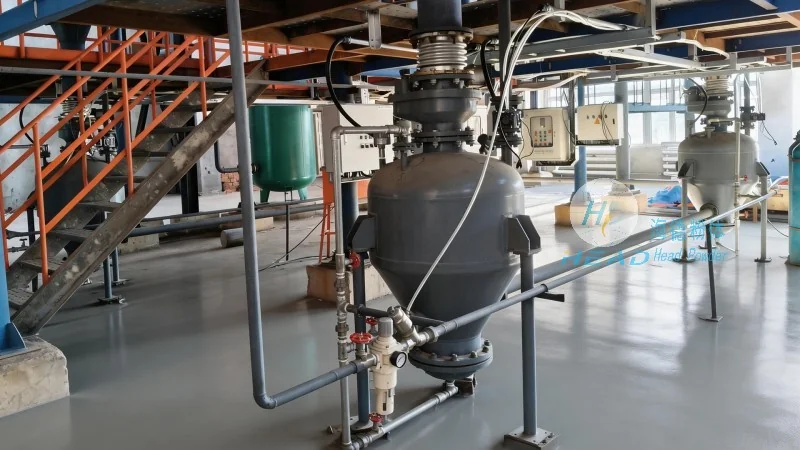
Introduction to Dye Powder Pneumatic Conveying Systems
Pneumatic conveying systems are widely employed in industries dealing with fine powders, including dyes, due to their ability to transport materials over long distances with minimal degradation. Unlike traditional mechanical conveying methods, which may cause particle attrition or contamination, pneumatic systems use compressed air to move powders through pipelines. This method is particularly advantageous for sensitive materials like dyes, as it prevents exposure to external elements and reduces the risk of caking or agglomeration.
About Shandong HeadPowder Engineering Co., Ltd.
HeadPowder, a prominent player in the powder handling industry, specializes in the design, manufacturing, and installation of advanced pneumatic conveying systems. With headquarters in Shandong, China, the company has established itself as a trusted partner for businesses seeking efficient and cost-effective solutions for their material handling needs. The company's expertise lies in tailoring systems to meet specific operational requirements, ensuring optimal performance and durability for clients in the dye and other chemical sectors.

The Operation Process of the Dye Powder Pneumatic Conveying System
The operation process of a dye powder pneumatic conveying system involves several key steps, each designed to ensure smooth and continuous material transport. The system typically starts with the loading of the dye powder into a hopper or storage silo. From there, the powder is drawn into the conveying line by a vacuum or pressure source, depending on the system configuration. The compressed air or vacuum creates a flow that carries the powder particles through the pipeline to the destination point, such as a processing unit or storage tank.
During operation, the system maintains a consistent flow rate by controlling the air pressure or vacuum level. This control is crucial for preventing blockages or uneven distribution of the powder. The system also includes components like cyclones or filters to separate the powder from the air at the receiving end, ensuring that the material is deposited accurately and without contamination. Additionally, safety features such as pressure relief valves and air filtration systems are integrated to protect the equipment and the environment.

The Working Principle of the Dye Powder Pneumatic Conveying System
The working principle of the pneumatic conveying system is based on the fundamental physics of fluid dynamics and particle motion. When air is introduced into the conveying line, it creates a low-pressure or high-pressure environment that draws the powder particles into the flow. The air velocity is maintained above the minimum fluidization velocity of the powder, which prevents the particles from settling and ensures a stable suspension. This suspension allows the powder to be transported efficiently through the pipeline, with minimal energy consumption compared to mechanical conveying methods.
In a typical system, the powder is introduced into the conveying line at the loading point, where it is mixed with the air stream. The mixture then travels through the pipeline, with the air providing the necessary force to move the powder. At the discharge point, the air and powder are separated, often using a cyclone separator or a filter. The separated powder is then collected in a container, while the air is either recirculated or released to the atmosphere after being filtered to remove any residual powder particles.
Key Components and Their Functions
Several critical components work together to ensure the efficient operation of the dye powder pneumatic conveying system. These include the hopper or silo for material storage, the air compressor or vacuum pump for generating the conveying pressure, the conveying pipeline, the cyclone separator or filter for material separation, and the control system for regulating the operation. Each component plays a vital role in maintaining the system's performance and reliability. For example, the hopper ensures a consistent supply of powder, while the air compressor provides the necessary pressure to move the material. The cyclone separator efficiently separates the powder from the air, preventing clogging and ensuring clean air discharge.

Benefits of Using a Dye Powder Pneumatic Conveying System
Implementing a pneumatic conveying system for dye powders offers numerous benefits for businesses. These include improved product quality by reducing exposure to contaminants, increased operational efficiency through automated material transport, and cost savings by minimizing material loss and downtime. The system also allows for flexible and scalable solutions, as it can be easily expanded or modified to accommodate changing production needs. Additionally, the use of pneumatic systems reduces the need for manual handling, enhancing workplace safety and reducing the risk of accidents.
Conclusion
Understanding the operation process and working principle of a dye powder pneumatic conveying system is essential for optimizing material handling in the dye and chemical industries. By leveraging advanced technology and expert design, companies like Shandong HeadPowder Engineering Co., Ltd. provide reliable and efficient solutions that meet the specific needs of their clients. The integration of proper components and control systems ensures that the system operates smoothly, delivering high-quality results and contributing to the overall success of the business.