

Operation Process and Working Principle of Carbon Black Material Pneumatic Conveying Lines
HeadPowder, a leading engineering company based in Shandong, China, specializes in the design, manufacturing, and installation of advanced pneumatic conveying systems for various industrial applications, including the efficient handling of carbon black materials. This article provides a detailed overview of the operation process and working principles of carbon black material pneumatic conveying lines, highlighting the key components, operational procedures, and technical advantages of such systems.
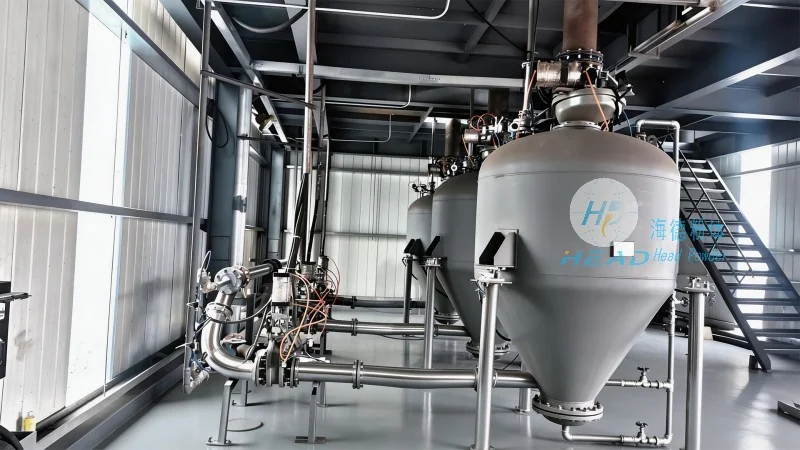


Key Components of Carbon Black Pneumatic Conveying Systems
Carbon black material pneumatic conveying lines are engineered with a range of specialized components to ensure optimal performance and reliability. The material hopper, often equipped with a rotary valve or screw feeder, ensures a consistent and controlled feed of carbon black powder into the system. This component is designed to prevent material bridging or caking, which can occur with carbon black due to its fine particle size. The blower or air compressor is a critical component, providing the necessary pressure and airflow to move the material through the pipeline. Different types of blowers, such as centrifugal or positive displacement blowers, are used depending on the specific requirements of the conveying system. The pipeline system is typically constructed from stainless steel or other corrosion-resistant materials to withstand the abrasive nature of carbon black and maintain consistent airflow. The pipeline may include bends, elbows, and expansion joints to accommodate changes in direction and elevation, ensuring smooth material transport. The control valve, often a butterfly or ball valve, regulates the air flow and material discharge, allowing for precise control over the conveying process. The receiver or discharge unit is designed to collect the carbon black material at the destination point, with features such as a dust filter or cyclone separator to ensure clean material collection. These components work together to form a cohesive system that efficiently handles carbon black material transportation.