

Operation Process and Working Principle of Pneumatic Conveying Equipment for Metal Silicon Materials
HeadPowder, a leading enterprise based in Shandong, China, specializes in the design, manufacturing, and supply of advanced pneumatic conveying equipment tailored for industrial applications, including the handling of metal silicon materials. The company's focus on innovation and quality ensures its products meet the rigorous demands of modern material processing industries.

Pneumatic Conveying Equipment for Metal Silicon Materials: Efficient and Reliable Material Handling Systems
The pneumatic conveying equipment developed by HeadPowder is engineered to efficiently transport metal silicon materials over long distances with minimal loss and maximum reliability. These systems are specifically designed to accommodate the unique properties of metal silicon, such as its density, particle size, and flow characteristics, ensuring optimal performance in industrial settings. The equipment is constructed with high-quality materials and advanced technology to withstand continuous operation in demanding environments.
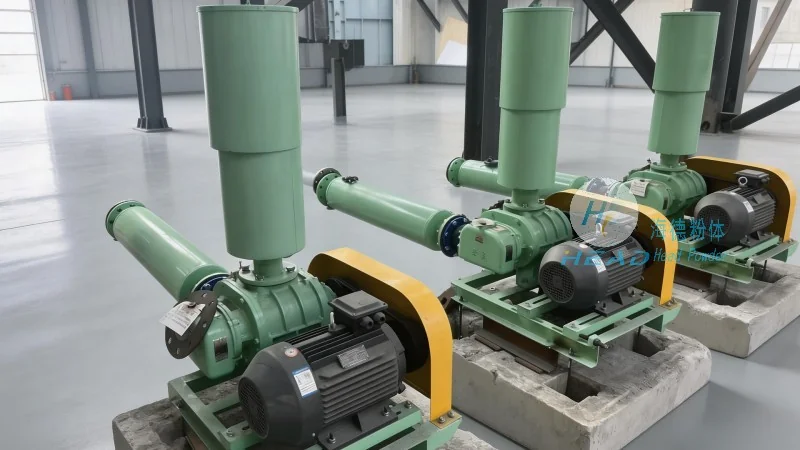
Operation Process of the Pneumatic Conveying System
The operation of the pneumatic conveying system for metal silicon materials involves several key steps. Initially, the metal silicon is loaded into the hopper or feeding hopper of the system. The material is then drawn into the conveying line by a high-pressure air stream generated by the blower or compressor. As the material travels through the pipeline, it is propelled by the air flow, which can be either positive pressure or negative pressure, depending on the system design. The conveying process ensures that the metal silicon is transported from the source to the destination without mechanical components like belts or buckets, reducing maintenance and operational costs.

Working Principle of the Pneumatic Conveying Equipment
The working principle of the pneumatic conveying equipment for metal silicon materials is based on using air as a medium to transport solid particles. The system operates by creating a pressure differential between the inlet and outlet of the conveying line. In positive pressure systems, compressed air is introduced into the conveying line, pushing the metal silicon particles forward. In negative pressure systems, a vacuum is created at the outlet, drawing the material into the pipeline. The design of the system, including the type of blower, pipeline layout, and material feed mechanisms, is crucial to achieving efficient and consistent material transport. HeadPowder's equipment incorporates advanced control systems to regulate air flow and pressure, ensuring stable and reliable operation.
Key Features and Advantages
HeadPowder's pneumatic conveying equipment for metal silicon materials offers advantages over traditional mechanical conveying methods. These include reduced labor costs due to automated operation, lower maintenance requirements as there are fewer moving parts, and improved safety by eliminating manual material handling. Additionally, the equipment minimizes product contamination and degradation, preserving the quality of metal silicon during transport. The systems are highly flexible, allowing easy integration into existing production lines and adaptation to changing production demands.

Application Scenarios
The pneumatic conveying equipment is widely used in industrial applications involving metal silicon materials. These include transporting metal silicon from storage silos to processing units like furnaces or reactors in the metallurgical industry. The equipment is also suitable for chemical plants where metal silicon is used as a raw material in silicon-based compound production. In addition, the system can be applied in research and development laboratories for handling small quantities of metal silicon for experimental purposes. The versatility of the equipment makes it an essential component in many industrial processes requiring efficient and reliable material handling solutions.