

Introduction to the Structure and Principle of Adipic Acid Pneumatic Conveying System
Adipic acid, a key chemical intermediate widely used in the production of nylon and other polymers, requires efficient and reliable material handling solutions for industrial applications. The pneumatic conveying system designed by Shandong HeadPowder Engineering Co., Ltd. offers an advanced method for transporting adipic acid, ensuring safety, efficiency, and minimal product degradation. This article provides an overview of the system's structure and operational principles, highlighting its key components and functional mechanisms.
Company Overview: HeadPowder Engineering
Shandong HeadPowder Engineering Co., Ltd., based in Shandong, China, specializes in the design, manufacturing, and integration of pneumatic conveying systems tailored to the chemical and pharmaceutical industries. With a focus on precision engineering and customer-specific solutions, HeadPowder has established itself as a trusted provider of material handling equipment for handling sensitive chemicals like adipic acid. The company's expertise lies in developing systems that meet stringent safety and performance standards, ensuring optimal operation in industrial settings.
System Structure of the Adipic Acid Pneumatic Conveying System
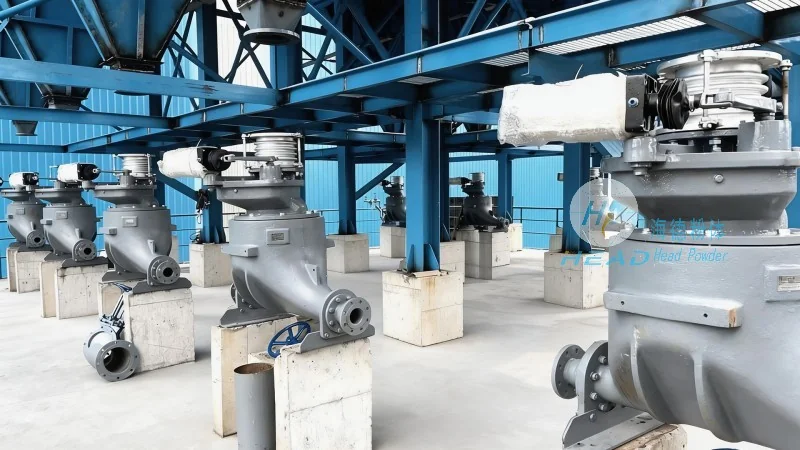
The adipic acid pneumatic conveying system consists of several critical components that work in concert to facilitate the transport of the chemical. The primary components include a hopper for material storage, a rotary valve for controlled discharge, a conveying pipeline network, a positive displacement blower or air compressor for generating the conveying air, and a dust collection system for maintaining air quality and preventing product loss. The system is designed with stainless steel or corrosion-resistant materials to handle the acidic nature of adipic acid and ensure durability over long-term operation.

Operational Principle: How the System Works
The pneumatic conveying process for adipic acid operates on the principle of air flow and pressure differentials. Material is first fed into the hopper from a storage silo. A rotary valve then regulates the flow of adipic acid into the conveying pipeline, ensuring a consistent and controlled feed rate. The positive displacement blower generates high-pressure air, which is introduced into the pipeline, creating a flow that propels the adipic acid particles through the system. The air and material mixture travels through the pipeline to the destination point, such as a storage tank or processing unit. At the receiving end, a cyclone separator or filter separates the air from the product, allowing the adipic acid to be discharged while the air is recirculated or vented. This closed-loop system minimizes product exposure to the environment and reduces the risk of contamination.

Key Advantages of the Adipic Acid Pneumatic Conveying System
Implementing a pneumatic conveying system for adipic acid offers several advantages over traditional methods like belt conveyors or bucket elevators. Firstly, the system provides a dust-free and enclosed environment, which is crucial for handling a fine powder like adipic acid, as it prevents airborne dust from contaminating the product and the surrounding area. Secondly, the system offers high efficiency in terms of material transport, with minimal product degradation due to the gentle handling of particles. The enclosed design also enhances safety by reducing the risk of accidental spills or exposure to personnel. Additionally, the system's flexibility allows for easy integration with existing production lines and can be scaled to accommodate varying production volumes. The use of corrosion-resistant materials ensures long-term reliability, reducing maintenance costs and downtime.
Application and Integration in Industrial Settings
The adipic acid pneumatic conveying system is particularly suitable for industrial applications where large quantities of adipic acid need to be transported between different stages of production, such as from storage to reaction vessels or from processing units to packaging facilities. The system can be customized to fit the specific layout and requirements of a facility, ensuring seamless integration with existing equipment and infrastructure. HeadPowder Engineering's team of engineers works closely with clients to assess their operational needs and design a system that optimizes material flow, reduces energy consumption, and enhances overall production efficiency. The company's commitment to quality and customer satisfaction ensures that the delivered system meets or exceeds industry standards and provides reliable performance over its service life.