

Design Considerations for a Titanium Ore Powder Pneumatic Conveying System
When designing a pneumatic conveying system for titanium ore powder, several critical factors must be addressed to ensure efficient, reliable, and safe operation. This article outlines key design considerations that professionals in the field should consider, with a focus on practical applications and system optimization.
System Type Selection: Positive Pressure vs. Negative Pressure
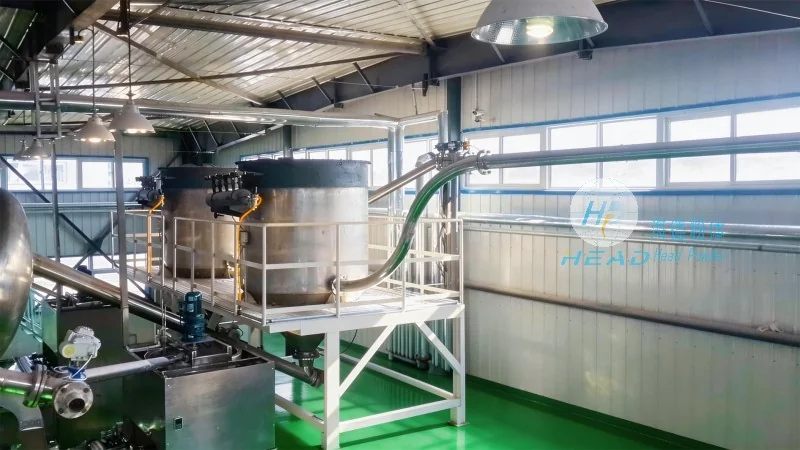
The choice between positive pressure and negative pressure systems is a fundamental decision in pneumatic conveying design. Positive pressure systems, where air is blown into the system to move material, are often preferred for titanium ore powder due to their ability to handle abrasive and corrosive materials. These systems typically feature a high-pressure blower and a closed pipeline network, minimizing dust emissions and ensuring consistent material flow. Negative pressure systems, on the other hand, draw material into the system using a vacuum, which can be more suitable for applications requiring low noise levels or where material is collected from multiple points. However, they may pose challenges with dust containment and material buildup in the pipeline.
Flow Rate and Pressure Requirements
Accurately determining the required flow rate and pressure is essential for system performance. The flow rate depends on the material's bulk density, particle size distribution, and the desired conveying distance. For titanium ore powder, which often has a high bulk density and fine particle size, higher air velocities are typically required to prevent particle settling and blockages. Engineers must calculate the necessary air velocity using the "minimum conveying velocity" formula, which accounts for particle size, density, and pipeline diameter. The pressure required is directly related to the conveying distance, elevation changes, and pipeline friction losses. A pressure drop of approximately 0.5 to 1.0 bar per 100 meters of pipeline is common, and this must be factored into the blower selection.

Pipeline Design and Layout
The layout of the conveying pipeline significantly impacts system efficiency and maintenance. Straight, unobstructed runs are preferred to minimize pressure losses and reduce the risk of blockages. Elbows, bends, and vertical lifts should be minimized or designed with smooth transitions to prevent material accumulation. For titanium ore powder, which can be abrasive, pipeline materials such as stainless steel or special alloys are recommended to withstand wear and corrosion. The pipeline should also be equipped with appropriate fittings, such as check valves, airlocks, and isolation valves, to control flow and prevent backflow. Proper sealing of joints is crucial to maintain system pressure and prevent dust leakage.
Equipment Selection: Blowers and Airlocks
The selection of the blower and airlock is critical to the system's performance. Positive pressure systems commonly use centrifugal blowers, which provide high airflow at moderate pressure. These blowers are suitable for long-distance conveying and can handle high volumes of material. For short-distance or low-pressure applications, rotary lobe blowers may be more appropriate. The airlock, typically a rotary valve or a star valve, is used to feed material into the pipeline and prevent air from escaping through the feed hopper. The airlock must be matched to the material's flow characteristics and the system's pressure to ensure smooth material transfer without clogging.
Safety and Maintenance Considerations
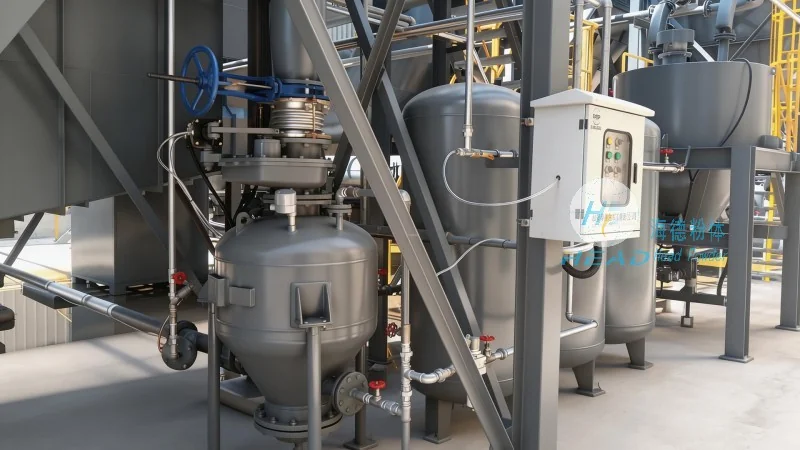
Safety is paramount in pneumatic conveying systems, especially when handling titanium ore powder, which may contain hazardous particles or be prone to dust explosions. The system should include explosion-proof components, such as blowers and airlocks, and be equipped with dust collection and filtration systems to prevent airborne dust. Regular maintenance is essential to ensure system reliability. This includes checking for wear in the pipeline and equipment, cleaning filters, and inspecting seals for leaks. A well-designed maintenance schedule can extend the system's lifespan and reduce downtime.
Case Study: Application by Shandong HeadPowder Engineering Co., Ltd.
Shandong HeadPowder Engineering Co., Ltd., a leading provider of pneumatic conveying solutions, has successfully implemented titanium ore powder pneumatic conveying systems for clients in China. By leveraging their expertise in material handling and system design, they have optimized conveying efficiency and reduced operational costs. Their approach includes thorough site assessments, material characterization, and customized system design to meet specific client requirements. The company's commitment to quality and safety has earned them a reputation for delivering reliable and efficient pneumatic conveying solutions in the industry.