

Design Considerations for Desulfurization Gypsum Pneumatic Conveying System Solutions
Desulfurization gypsum, a byproduct of flue gas desulfurization processes in power plants and industrial facilities, requires efficient and reliable handling systems for its transport from the desulfurization unit to storage or processing locations. Pneumatic conveying systems offer a viable solution for this application, providing advantages such as reduced labor costs, minimized dust emissions, and improved safety compared to traditional mechanical conveying methods. This article outlines key design considerations for implementing an effective desulfurization gypsum pneumatic conveying system, focusing on the technical and operational aspects that ensure optimal performance and longevity.

Company Overview: Shandong HeadPowder Engineering Co., Ltd.
HeadPowder, a leading engineering and technology company based in Shandong, China, specializes in the design, manufacturing, and installation of advanced material handling systems. With a strong commitment to innovation and customer satisfaction, HeadPowder has established itself as a trusted partner for industries seeking efficient solutions for bulk material transport. The company's expertise in pneumatic conveying technology, combined with its deep understanding of industrial processes, enables it to deliver customized systems that meet the unique requirements of each client.
Key Design Considerations for Desulfurization Gypsum Pneumatic Conveying Systems
The successful implementation of a desulfurization gypsum pneumatic conveying system depends on several critical design factors. These considerations span from material properties and system layout to equipment selection and operational parameters. By addressing these aspects comprehensively, engineers can ensure that the system operates efficiently, safely, and cost-effectively.
1. Material Properties and Handling Characteristics
Desulfurization gypsum is a fine, dry powder with specific physical properties that influence the design of the pneumatic conveying system. Key characteristics include particle size distribution, bulk density, moisture content, and flowability. The particle size is typically in the range of 10 to 200 microns, which can affect the air velocity required for transport and the selection of appropriate equipment such as rotary valves and cyclone separators. Bulk density of desulfurization gypsum is usually around 800 to 1200 kg/m³, which impacts the required air volume and pressure. Moisture content is generally low, but it can vary depending on the source and environmental conditions, potentially affecting the system's performance and the need for drying or conditioning steps. Flowability is crucial for ensuring consistent material feed into the system, and factors such as cohesion and stickiness must be considered to prevent blockages or agglomeration.

2. System Layout and Configuration
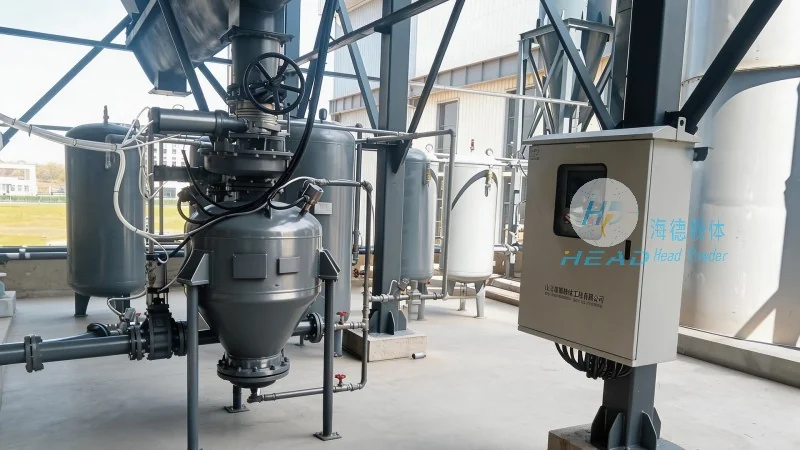
The layout of a desulfurization gypsum pneumatic conveying system is a critical design element that affects its efficiency and reliability. The system typically consists of a material feed hopper, a rotary valve for controlled discharge, a conveying line with appropriate pipe diameter and length, and a receiver or storage silo. The configuration can be either positive pressure (air blowing) or negative pressure (air sucking), with each having its own advantages and limitations. Positive pressure systems are often preferred for long-distance transport and for applications where dust control is paramount, as they prevent external air from entering the system and contaminating the material. Negative pressure systems, on the other hand, are suitable for short-distance transport and for handling materials that are less dusty. The choice of layout also depends on the available space, the location of the desulfurization unit and the storage facility, and the need to minimize material handling steps.
3. Equipment Selection and Sizing
Proper selection of equipment is essential for the optimal performance of a desulfurization gypsum pneumatic conveying system. Key equipment includes the rotary valve, air compressor or blower, conveying line, cyclone separator, and receiver. The rotary valve is responsible for controlling the flow of gypsum from the feed hopper, and its selection depends on the material's flowability and the required discharge rate. Common types include star valves, rotary airlock valves, and slide gates, each with different characteristics in terms of capacity, pressure drop, and wear resistance. The air compressor or blower must be sized to provide sufficient air volume and pressure to overcome the system's resistance and ensure reliable transport. The conveying line diameter is determined based on the required air velocity and the material's particle size, with larger diameters reducing pressure drop and energy consumption. Cyclone separators are used to separate the gypsum from the air stream, and their design must be optimized to achieve high separation efficiency while minimizing pressure drop. The receiver or storage silo should be designed to handle the volume of gypsum and provide adequate space for storage and discharge.
4. Air Velocity and Pressure Considerations
Air velocity and pressure are critical parameters that directly impact the performance of a pneumatic conveying system. The air velocity must be high enough to lift and transport the gypsum particles but low enough to prevent excessive wear on the equipment and to minimize energy consumption. Typical air velocities for desulfurization gypsum range from 20 to 30 m/s in positive pressure systems and from 15 to 25 m/s in negative pressure systems. The pressure required to maintain this velocity depends on the system's length, the number of bends and fittings, and the characteristics of the material. Proper sizing of the air compressor or blower is essential to ensure that the system operates at the desired pressure and velocity, avoiding under- or over-pressurization that could lead to system inefficiencies or damage.
5. Dust Control and Environmental Considerations
Desulfurization gypsum is a fine powder that can generate significant dust during handling and transport. Effective dust control measures are essential to comply with environmental regulations and to ensure the safety of personnel. The pneumatic conveying system should incorporate features such as sealed hoppers, rotary valves with dust-tight designs, and cyclone separators with efficient dust collection. Additionally, the system may include dust collection systems such as baghouses or cartridge filters to capture any airborne particles and prevent their release into the environment. Proper ventilation and filtration of the air stream are also important to maintain a safe working environment and to protect equipment from dust accumulation.
6. System Maintenance and Operational Efficiency
Regular maintenance is crucial for ensuring the long-term performance and reliability of a desulfurization gypsum pneumatic conveying system. Key maintenance tasks include inspecting and cleaning the rotary valve, checking the condition of the conveying line and fittings, monitoring the air compressor or blower performance, and cleaning the cyclone separator and receiver. Proper maintenance schedules and procedures should be established to prevent equipment failure and to minimize downtime. Operational efficiency can be enhanced by monitoring system parameters such as air pressure, flow rate, and material discharge rate, and by making adjustments as needed to optimize performance. Training of personnel on the proper operation and maintenance of the system is also essential to ensure its safe and efficient use.
Conclusion
Designing an effective desulfurization gypsum pneumatic conveying system requires a comprehensive approach that considers the material properties, system layout, equipment selection, and operational parameters. By addressing these key design considerations, engineers can develop a system that meets the specific needs of the client, ensuring efficient and reliable transport of desulfurization gypsum. HeadPowder, with its expertise in material handling systems, offers customized solutions that incorporate these considerations to deliver high-performance pneumatic conveying systems for desulfurization gypsum applications.