

Choosing Between Positive Pressure and Negative Pressure for Metal Powder Handling: How to Distingui
When it comes to metal powder handling, selecting the right conveying method is crucial for efficiency, safety, and operational longevity. Two primary approaches dominate the industry: positive pressure and negative pressure systems. Understanding the nuances of each, along with the factors that influence their suitability, is essential for making an informed decision. This article explores the key differences between positive and negative pressure conveying for metal powders, helping you distinguish between the two and choose the optimal solution for your application.

Understanding Positive Pressure Conveying
Positive pressure conveying systems operate by forcing air or gas through the material, creating a pressure higher than the ambient environment. This method is often referred to as "blow" or "pressure" conveying. In a positive pressure setup, a blower or compressor generates the necessary airflow, pushing the metal powder through the pipeline. The primary advantage of this approach is its ability to handle abrasive and heavy materials effectively, as the high pressure helps to maintain the flow and minimize particle degradation. Additionally, positive pressure systems are generally more straightforward to install and maintain, with fewer components compared to negative pressure systems. They are particularly well-suited for applications where the material is dense and requires consistent, high-volume transport, such as in the production of metal powders for 3D printing, aerospace, or automotive industries.
Understanding Negative Pressure Conveying
Negative pressure conveying, also known as "suction" or "vacuum" conveying, works by creating a lower pressure inside the system compared to the ambient air. This pressure differential draws the metal powder into the pipeline. The system typically uses a vacuum pump to create the suction force, pulling the material from the source. One of the main benefits of negative pressure systems is their ability to handle fine powders and dust without the need for high-pressure components. This makes them ideal for applications where the material is light and easily entrained by the air flow, such as in the handling of aluminum or copper powders. However, negative pressure systems are more susceptible to clogging and can be less efficient with very abrasive or large particles, as the low pressure may not provide sufficient force to maintain consistent flow.

Key Differences Between Positive and Negative Pressure Systems
The fundamental difference between positive and negative pressure conveying lies in the direction of air flow and the pressure relationship to the environment. Positive pressure systems push material through the pipeline, while negative pressure systems pull it. This distinction has significant implications for system design, maintenance, and performance. For instance, positive pressure systems are generally more robust and can handle higher particle loads, making them suitable for heavy-duty applications. In contrast, negative pressure systems are more sensitive to particle size and moisture content, as these factors can affect the air flow and suction efficiency. Another critical difference is the impact on system components. Positive pressure systems may experience higher wear on pipes and valves due to the abrasive nature of metal powders, whereas negative pressure systems are more prone to dust accumulation and require more frequent cleaning to prevent blockages. From an operational standpoint, positive pressure systems often require more energy to operate, as they rely on compressors, while negative pressure systems use vacuum pumps, which can be more energy-efficient for certain applications.
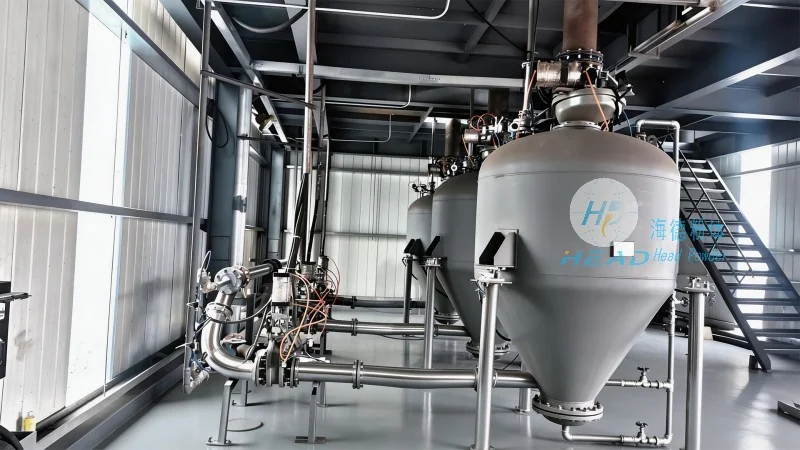
Practical Considerations for Metal Powder Handling
When deciding between positive and negative pressure conveying for metal powders, several practical factors must be considered. The first is the physical properties of the material itself. The particle size, density, and abrasiveness of the metal powder will heavily influence the choice. For example, coarse, abrasive powders like stainless steel or tungsten carbide are better suited for positive pressure systems due to their higher density and resistance to flow. Conversely, fine, light powders such as aluminum or magnesium are more effectively handled by negative pressure systems. Another key consideration is the system layout and distance between the source and destination. Positive pressure systems are often preferred for longer conveying distances, as they can maintain pressure and flow over greater distances without significant loss. Negative pressure systems, however, are more suitable for shorter distances or when the material needs to be collected from multiple points. Additionally, the environmental and safety requirements of the facility play a role. Positive pressure systems may require additional filtration and dust control measures to prevent airborne contamination, while negative pressure systems are generally safer for handling hazardous materials due to their enclosed nature. The cost of installation and maintenance is also a critical factor. Positive pressure systems may have higher upfront costs due to the need for robust components like blowers and high-pressure pipes, but they can be more cost-effective in the long run for high-volume applications. Negative pressure systems, while potentially cheaper to install, may incur higher maintenance costs due to the need for more frequent cleaning and component replacement.
Conclusion
Choosing between positive and negative pressure conveying for metal powder handling is a decision that requires careful evaluation of the material properties, system requirements, and operational constraints. Positive pressure systems offer robustness and efficiency for heavy-duty applications, while negative pressure systems excel in handling fine powders and providing a safer, more enclosed environment. By understanding the key differences in pressure operation, material handling capabilities, and maintenance needs, you can select the optimal conveying method for your specific metal powder application. Whether you are working with abrasive stainless steel powders or fine aluminum powders, the right choice will enhance productivity, ensure safety, and extend the lifespan of your conveying system. For expert guidance on selecting the best metal powder conveying solution, contact Shandong HeadPowder Engineering Co., Ltd., a leading provider of specialized conveying systems tailored to the unique needs of the metal powder industry.