

Design of Clay Ash Pneumatic Conveying Equipment
Clay ash, a byproduct of industrial processes, often requires efficient and reliable transportation systems to manage its handling and distribution. The design of a pneumatic conveying system for clay ash is crucial for optimizing material flow, reducing operational costs, and ensuring environmental compliance. This article explores the key considerations and technical aspects involved in the design of such a system, with a focus on the capabilities and expertise of Shandong HeadPowder Engineering Co., Ltd. (referred to as HeadPowder), a leading provider in the field.
Overview of Pneumatic Conveying Systems for Clay Ash
Pneumatic conveying systems utilize air or gas to transport bulk materials like clay ash through a pipeline network. These systems offer several advantages over traditional mechanical conveying methods, including reduced equipment wear, lower maintenance requirements, and the ability to handle materials with varying particle sizes and moisture content. The design of a clay ash pneumatic conveying system must account for the specific properties of clay ash, such as its density, flowability, and potential for dust generation, to ensure optimal performance and longevity.
Key Design Considerations for Clay Ash Pneumatic Conveying
Several critical factors influence the successful design of a clay ash pneumatic conveying system. First, the material's physical characteristics, including particle size distribution, bulk density, and moisture content, must be thoroughly analyzed. This information is essential for determining the appropriate air velocity, pressure, and pipeline dimensions to prevent blockages and ensure smooth material transport. Second, the system's layout and configuration need to be optimized based on the plant's layout, the distance to be covered, and the number of discharge points. HeadPowder employs advanced computational fluid dynamics (CFD) and simulation tools to model these parameters and predict system performance under various operating conditions.

Components and Technology in Clay Ash Pneumatic Conveying Systems
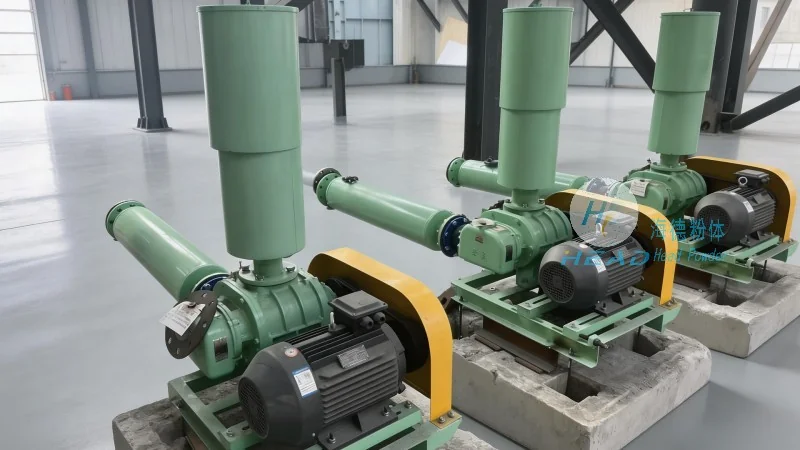
A typical clay ash pneumatic conveying system consists of several key components, each playing a vital role in the overall operation. The system typically includes a material feeder, a blower or air compressor, a pipeline network, and a receiver or discharge unit. The material feeder is responsible for introducing clay ash into the system at a controlled rate, while the blower provides the necessary air pressure to move the material through the pipeline. The pipeline design, including the use of straight and curved sections, elbows, and expansion joints, is critical to maintaining air velocity and preventing pressure losses. HeadPowder utilizes high-quality materials, such as stainless steel or corrosion-resistant alloys, for the pipeline and components to withstand the abrasive nature of clay ash and ensure long-term durability.
Advantages of HeadPowder's Clay Ash Pneumatic Conveying Solutions
HeadPowder, with its extensive experience and engineering expertise, offers tailored pneumatic conveying solutions for clay ash applications. The company's designs are optimized for efficiency, reliability, and cost-effectiveness, addressing the unique challenges posed by clay ash handling. By leveraging advanced design methodologies and high-quality components, HeadPowder's systems minimize downtime, reduce energy consumption, and enhance overall operational performance. The company's commitment to customer satisfaction and technical support ensures that clients receive not only a well-designed system but also comprehensive after-sales service and maintenance solutions.

Application and Case Studies
HeadPowder's clay ash pneumatic conveying systems have been successfully implemented in various industrial settings, including power plants, cement factories, and mining operations. These systems have demonstrated their effectiveness in transporting clay ash from storage silos to processing units or disposal sites, improving material handling efficiency and reducing environmental impact. For example, a client in Shandong, China, implemented a HeadPowder-designed system to transport clay ash from a power plant's ash handling facility to a nearby disposal site, achieving significant improvements in operational efficiency and reduced labor costs. Such case studies highlight the practical benefits and reliability of HeadPowder's solutions in real-world applications.
Conclusion and Future Directions
The design of a clay ash pneumatic conveying system requires a comprehensive approach that considers material properties, system layout, and operational requirements. With its expertise in engineering and material handling, Shandong HeadPowder Engineering Co., Ltd. provides innovative and reliable solutions tailored to the specific needs of clients. By focusing on efficiency, durability, and customer support, HeadPowder continues to be a trusted partner in the development of advanced pneumatic conveying systems for clay ash applications. As industrial processes evolve, the demand for efficient material handling solutions will remain high, and HeadPowder is positioned to meet these challenges with cutting-edge technology and engineering excellence.