

Types and Practical Applications of Pneumatic Conveying Systems for Soap Granule Transport
HeadPowder, a leading engineering company based in Shandong, China, specializes in the design and implementation of advanced pneumatic conveying systems tailored for the transportation of soap granules. This article explores the various types of pneumatic conveying systems used in soap granule transport and their practical applications, highlighting the technical advantages and operational benefits these systems offer to the soap manufacturing industry.
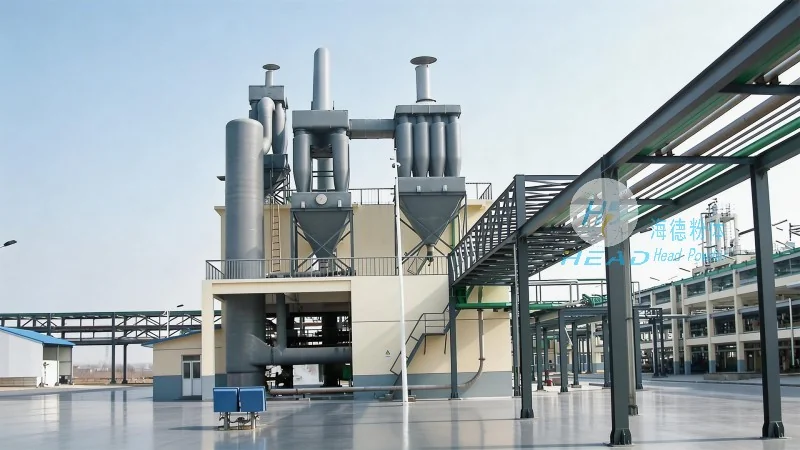
Introduction to Pneumatic Conveying Systems for Soap Granule Transport
Pneumatic conveying systems are widely utilized in the soap manufacturing sector to efficiently transport soap granules from production lines to storage facilities or processing units. These systems rely on the principles of air flow to move bulk materials, offering a flexible and cost-effective solution compared to traditional mechanical conveyors. The choice of system type depends on factors such as material characteristics, distance, and throughput requirements. HeadPowder Engineering Co., Ltd., with its extensive experience in industrial engineering, provides customized solutions that meet the specific needs of soap manufacturers.
Types of Pneumatic Conveying Systems for Soap Granule Transport
There are primarily two types of pneumatic conveying systems used for soap granule transport: dilute-phase and dense-phase systems. Each type has distinct characteristics and is suitable for different operational scenarios.
Dilute-Phase Pneumatic Conveying Systems
Dilute-phase systems operate by transporting material particles suspended in a high-velocity air stream. This method is ideal for short to medium distances and low to moderate material loads. The system typically uses a positive displacement blower or a high-pressure compressor to generate the necessary air pressure. For soap granules, which are often light and have good flowability, dilute-phase systems can achieve efficient transport with minimal pressure drop. HeadPowder's dilute-phase solutions are designed to handle granules with particle sizes ranging from 0.5 to 5 mm, ensuring stable and consistent conveying performance.

Dense-Phase Pneumatic Conveying Systems
Dense-phase systems, also known as low-pressure or slugging systems, transport material in a more concentrated form, where particles are carried in a dense slug of material mixed with air. This method is particularly effective for longer distances and higher material loads, as it reduces the risk of material degradation and blockages. Dense-phase systems are suitable for transporting soap granules that may have varying moisture content or are more prone to agglomeration. HeadPowder Engineering Co., Ltd. offers dense-phase solutions that can handle material loads up to 100 kg per hour over distances of up to 100 meters, providing reliable transport even in challenging conditions.
Practical Applications of Pneumatic Conveying Systems in Soap Manufacturing
The practical applications of pneumatic conveying systems in soap manufacturing are diverse and critical to the overall efficiency of the production process. These systems are commonly used in several key stages of soap production:
1. Material Transfer from Production Lines to Storage
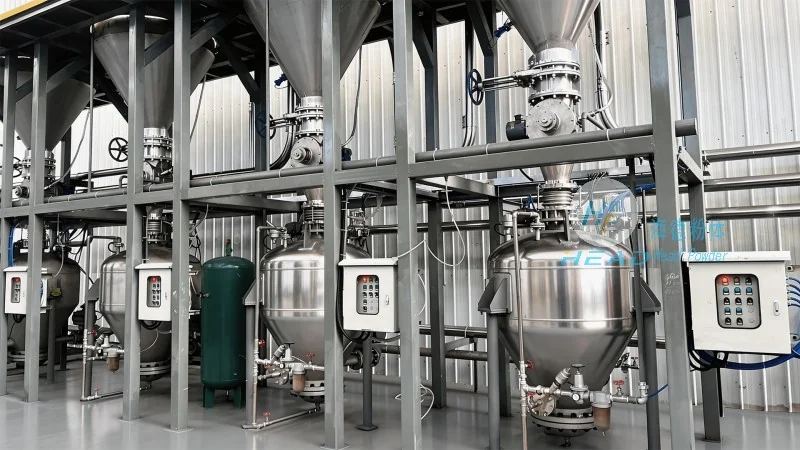
After soap granules are produced, they need to be transferred to storage silos or bulk containers. Pneumatic conveying systems provide a clean and hygienic method for this transfer, minimizing the risk of contamination and ensuring that the material remains in its original state. HeadPowder's systems are designed with stainless steel components and advanced filtration to maintain the purity of soap granules, which is essential for maintaining product quality.

2. Feeding into Processing Equipment
Soap granules are often fed into processing equipment such as mixers, granulators, or extruders. Pneumatic conveying systems can deliver material directly to these units, eliminating the need for manual handling and reducing labor costs. The systems can be integrated with control panels that monitor flow rates and pressure, ensuring consistent feeding rates and preventing equipment downtime.
3. Transfer Between Production Facilities
In larger soap manufacturing plants, there may be a need to transfer soap granules between different production units or even between different facilities. Pneumatic conveying systems offer a flexible solution for this, as they can be easily reconfigured to accommodate changes in production layout or scale. HeadPowder Engineering Co., Ltd. has successfully implemented such systems in multi-facility operations, enabling seamless material flow and improving overall operational efficiency.
Advantages of Using Pneumatic Conveying Systems for Soap Granule Transport
Implementing pneumatic conveying systems for soap granule transport offers several advantages over traditional methods. These include:
1. Enhanced Hygiene and Cleanliness
Pneumatic systems are enclosed, reducing the risk of dust and contamination. This is particularly important in the soap manufacturing industry, where product purity is a top priority. HeadPowder's systems are constructed with food-grade materials and can be easily cleaned and sanitized, meeting stringent hygiene standards.
2. Reduced Maintenance and Downtime
Compared to mechanical conveyors, pneumatic systems have fewer moving parts, leading to lower maintenance requirements and longer service intervals. This results in reduced downtime and lower operational costs. HeadPowder's systems are designed with durable components and include predictive maintenance features to minimize unexpected failures.
3. Improved Material Handling Efficiency
Pneumatic conveying systems can handle a wide range of material characteristics, including varying particle sizes and moisture content. They can also transport materials over longer distances with minimal pressure loss, ensuring consistent flow rates and preventing material degradation. HeadPowder Engineering Co., Ltd. optimizes system design to maximize efficiency, ensuring that soap granules are transported at optimal speeds and pressures.
Conclusion
Pneumatic conveying systems are a vital component in modern soap manufacturing, providing efficient, hygienic, and cost-effective solutions for soap granule transport. HeadPowder Engineering Co., Ltd., with its expertise in industrial engineering, offers tailored pneumatic conveying systems that address the specific needs of soap manufacturers. By leveraging the advantages of both dilute-phase and dense-phase systems, these solutions enhance production efficiency, maintain product quality, and reduce operational costs. For soap manufacturers seeking to improve their material handling processes, pneumatic conveying systems from HeadPowder are a reliable and effective choice.