

Principle of Gray Calcium Pneumatic Conveying Equipment
Gray calcium, also known as calcium carbonate, is a widely used industrial material in sectors such as construction, chemical manufacturing, and food processing. The efficient transportation of this material is vital for maintaining production efficiency and reducing operational costs. Pneumatic conveying equipment offers a solution by utilizing air flow to transport bulk materials like gray calcium. This article details the working principle of gray calcium pneumatic conveying equipment, covering its key components, operational mechanisms, and practical applications.
Key Components of Gray Calcium Pneumatic Conveying Systems
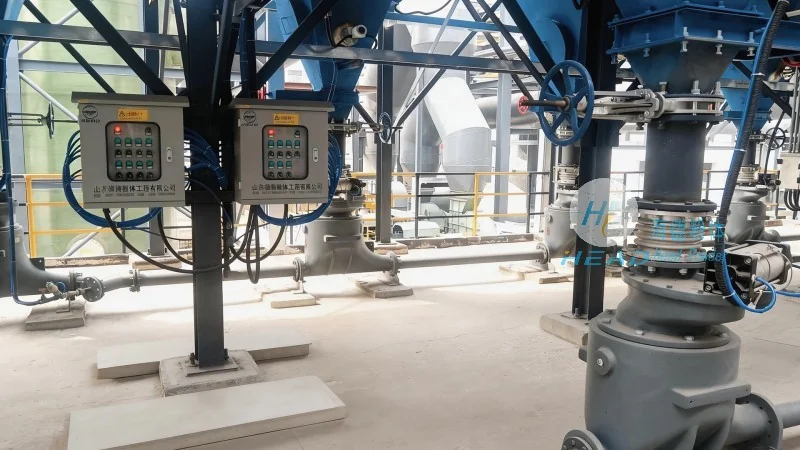
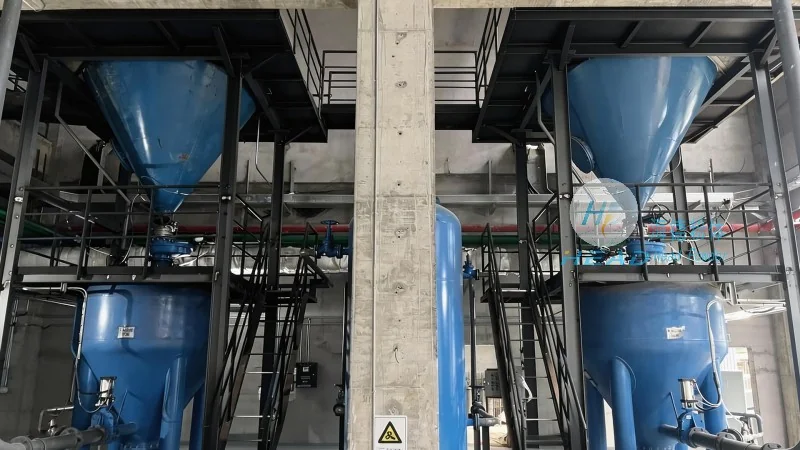
A typical gray calcium pneumatic conveying system includes essential components working in unison. These components are a material hopper, a feeder, a conveying line, a receiver, and a vacuum or pressure system. The hopper serves as the storage container for gray calcium, providing a continuous supply to the feeder. The feeder, often a rotary valve or screw type, regulates material flow from the hopper into the conveying line. The conveying line, constructed from metal or plastic, is where material is propelled by air flow. The receiver is the final deposition point for the conveyed material. The vacuum or pressure system generates the necessary air flow to move material through the line, either via suction (vacuum system) or pressure (pressure system).
Working Principle of Pneumatic Conveying for Gray Calcium
The core principle involves using air to create a flow that transports material particles. For gray calcium, the system operates by introducing air into the conveying line at a specific velocity. The air flow generates a drag force that lifts and moves calcium carbonate particles along the line. The air velocity must be sufficient to overcome gravitational forces and maintain particle suspension in the air stream. This is achieved by adjusting air pressure/vacuum levels and line diameter. The system can operate in dilute phase (particles suspended in air) or dense phase (more compacted movement), with dilute phase suited for longer distances and higher flow rates, while dense phase is better for shorter distances and materials prone to segregation.
Advantages of Using Pneumatic Conveying for Gray Calcium
Pneumatic conveying offers several advantages over traditional methods like belt or bucket elevators. A key benefit is the closed system, which prevents dust contamination and environmental pollution—critical for gray calcium’s fine particles that pose health risks. The closed system also reduces material loss and enhances workplace safety. Flexibility in layout and integration with existing lines is another advantage. It handles varying particle sizes and moisture content, making it versatile for diverse applications. Compared to mechanical conveyors, pneumatic systems have lower maintenance costs due to fewer moving parts and reduced wear.
Applications of Gray Calcium Pneumatic Conveying Equipment
Gray calcium pneumatic conveying equipment is widely used across industries. In construction, it transports raw materials for cement production, ensuring consistent delivery to grinding mills. In chemical manufacturing, it moves gray calcium as a filler or raw material to processing units. The food industry uses it as a food additive, transporting it hygienically to processing lines. Other applications include the pharmaceutical industry (as an excipient) and paper manufacturing (as a filler). The equipment’s adaptability and efficiency make it indispensable in these sectors.

Installation and Maintenance Considerations
Proper installation and regular maintenance are crucial for optimal performance. During installation, ensure the conveying line is aligned and connections are secure to prevent air leaks. Check for obstructions or blockages. Regular maintenance includes cleaning hoppers/feeder to avoid buildup, inspecting air filters/compressors for wear, and verifying pressure/vacuum levels. Follow manufacturer guidelines and use high-quality replacement parts to ensure long-term efficiency.
Conclusion
Gray calcium pneumatic conveying equipment is essential for efficient material transport in industrial processes. Understanding its components, operational principles, and benefits helps users make informed decisions about implementation. With proper installation and maintenance, these systems deliver long-term benefits in productivity, safety, and cost-effectiveness. As gray calcium demand grows, advanced pneumatic conveying technology remains critical for meeting production needs and maintaining market competitiveness.