

What is Glass Bead Pneumatic Conveying? And What Are Its Design Principles?
Glass bead pneumatic conveying is a specialized method used in material handling and processing industries to transport fine particles like glass beads through a pipeline using air or gas as the conveying medium. This technology offers a clean, efficient, and flexible solution for moving materials, especially in applications where traditional mechanical conveying systems may not be suitable. The process involves creating a flow of air that lifts and transports the glass beads through the pipeline, ensuring minimal contamination and efficient material transfer.

The Core Design Principles of Glass Bead Pneumatic Conveying Systems
The design principles of glass bead pneumatic conveying systems are centered around several key factors that ensure optimal performance and reliability. These include the selection of appropriate air velocity, the configuration of the pipeline system, and the use of suitable components such as airlocks, cyclones, and filters. The air velocity must be sufficient to overcome the gravitational forces acting on the glass beads and to maintain a stable flow within the pipeline. Typically, higher air velocities are required for lighter particles, while lower velocities may suffice for heavier materials. The pipeline design, including the length, diameter, and bends, also plays a crucial role in determining the system's efficiency and energy consumption.
Typical Operation and Key Components
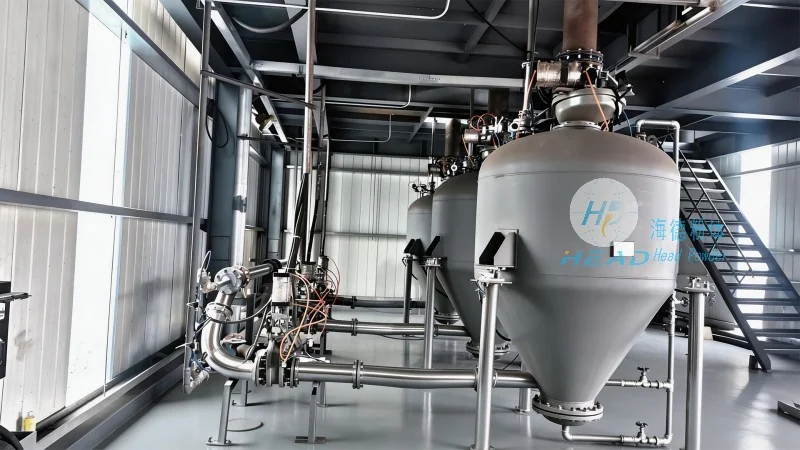
In a typical glass bead pneumatic conveying system, the process begins with the material being fed into a hopper or feeder. The feeder then introduces the glass beads into the pipeline, where they are entrained by the air flow. The air and glass beads mixture travels through the pipeline to the discharge point, where the air is separated from the material using a cyclone or other separation device. The separated glass beads are then collected, while the air is either filtered and recirculated or released to the atmosphere, depending on the system's design and environmental requirements.
Component Selection and Material Compatibility
The components used in glass bead pneumatic conveying systems are carefully selected to ensure durability and compatibility with the material being conveyed. For instance, the pipeline and associated fittings are often made from materials resistant to abrasion and corrosion, such as stainless steel or specialized plastics. Airlocks and feeders are designed to handle the fine glass beads without causing blockages or damage to the material. Filters and cyclones are essential for maintaining air quality and preventing the buildup of particles in the system, which can affect performance and efficiency.

Advantages Over Traditional Conveying Methods
The advantages of glass bead pneumatic conveying over traditional methods, such as mechanical screw conveyors or belt conveyors, are significant. These systems offer a cleaner and more hygienic environment, as they are enclosed and do not expose the material to external contaminants. They also provide greater flexibility in terms of layout and installation, as the pipeline can be routed around obstacles and in various configurations. Additionally, pneumatic conveying systems can handle a wide range of particle sizes and densities, making them suitable for diverse applications in industries like glass manufacturing, pharmaceuticals, and food processing.

Engineering and System Optimization
The design of a glass bead pneumatic conveying system involves a detailed analysis of the material properties, such as particle size, density, and moisture content, as well as the system's operational parameters. Engineers from companies like Shandong HeadPowder Engineering Co., Ltd. (commonly known as headpowder) use advanced computational fluid dynamics (CFD) and empirical data to optimize the system design. This ensures that the system operates at the most efficient air velocity, minimizing energy consumption and maximizing material throughput.
Conclusion: The Role of Specialized Engineering in Glass Bead Pneumatic Conveying
In conclusion, glass bead pneumatic conveying is a sophisticated and effective method for transporting fine particles. Its design principles, which focus on air velocity, pipeline configuration, and component selection, are critical to achieving optimal performance. Companies like Shandong HeadPowder Engineering Co., Ltd. specialize in designing and manufacturing these systems, providing tailored solutions for various industrial applications. By understanding and applying these design principles, industries can enhance their material handling processes, improve efficiency, and ensure the quality of their products.