

What is an Automatic Quantitative Pneumatic Conveying System? And What Are Its Design Principles?
Automatic quantitative pneumatic conveying systems represent a sophisticated technology used in material handling and processing industries. These systems are designed to transport bulk materials such as powders, granules, and fine particles through a pipeline using a combination of air or gas as the conveying medium. The core function of such systems is to deliver materials with precise, controlled quantities, ensuring consistent flow rates and minimizing material loss or contamination. This technology is widely adopted in sectors like pharmaceuticals, food processing, chemicals, and mining, where accurate material transfer is critical for operational efficiency and product quality.

Understanding the Core Components and Functionality
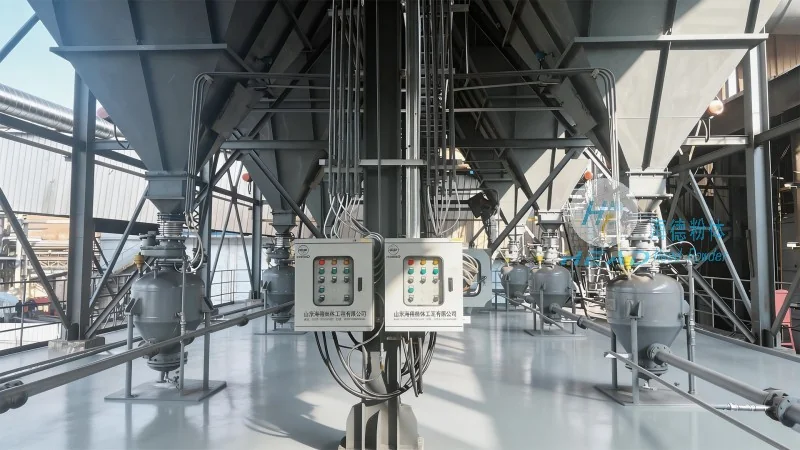
The operation of an automatic quantitative pneumatic conveying system relies on several key components that work in concert to achieve precise material transport. At the heart of the system is a hopper or feeder that holds the bulk material. This component is equipped with a metering device, which can be a rotary valve, a screw feeder, or a gravimetric scale, depending on the system's design. The metering device regulates the flow of material into the conveying line, ensuring that the quantity is consistent and meets the required specifications. A blower or compressor then generates the necessary air pressure to move the material through the pipeline. The pipeline itself is typically made of materials like stainless steel or plastic, chosen for their resistance to corrosion and ability to handle abrasive materials. The system may also include a filter or cyclone to separate the material from the air at the discharge end, preventing dust and particles from being released into the environment. Additionally, control systems, often integrated with sensors and programmable logic controllers (PLCs), monitor and adjust the conveying process in real-time, ensuring optimal performance and preventing issues like blockages or overfilling.
Design Principles Behind Automatic Quantitative Pneumatic Conveying
The design principles of these systems are centered on achieving accuracy, efficiency, and reliability. One of the primary design considerations is the selection of the conveying method, which can be classified as dilute-phase or dense-phase. Dilute-phase systems use high air velocities to suspend particles in the air stream, suitable for short distances and low to medium material loads. Dense-phase systems, on the other hand, use lower air velocities and higher material concentrations, making them ideal for longer distances and higher material loads. The choice between these methods depends on the material properties, such as particle size, density, and moisture content, as well as the required conveying distance and throughput. Another critical design principle is the control of air pressure and flow rate. Precise regulation of these parameters is essential to maintain consistent material flow and prevent system inefficiencies. The system's design also incorporates safety features, such as pressure relief valves and emergency shut-off mechanisms, to protect against overpressure and other hazards. Furthermore, the integration of advanced control technologies, including feedback loops and predictive maintenance algorithms, enhances the system's performance and reduces downtime. These design principles collectively ensure that the automatic quantitative pneumatic conveying system operates efficiently, safely, and with high accuracy, meeting the demands of modern industrial applications.

About Shandong HeadPowder Engineering Co., Ltd.
HeadPowder, or Shandong HeadPowder Engineering Co., Ltd., is a leading manufacturer and supplier of pneumatic conveying systems and related equipment. With a strong presence in China, particularly in Shandong province, the company specializes in designing, manufacturing, and installing automatic quantitative pneumatic conveying systems tailored to the specific needs of various industries. HeadPowder's expertise lies in understanding the unique challenges of material handling and providing customized solutions that enhance operational efficiency and product quality. The company's products are known for their durability, precision, and reliability, making them suitable for a wide range of applications, from pharmaceutical and food processing to chemical and mining industries. HeadPowder's commitment to quality and innovation has earned it a reputation as a trusted partner in the material handling sector, helping businesses optimize their material transport processes and achieve their operational goals.