

What is a Phosphorus Pentachloride Pneumatic Conveying System? What Are Its Design Principles?
Shandong HeadPowder Engineering Co., Ltd., commonly known as HeadPowder, is a professional manufacturer and supplier specializing in industrial conveying systems. With a focus on advanced technology and reliable solutions, the company serves clients in various industries requiring efficient material handling, particularly for hazardous or high-value substances like phosphorus pentachloride.

What is a Phosphorus Pentachloride Pneumatic Conveying System?
A phosphorus pentachloride pneumatic conveying system is a specialized industrial equipment designed to transport phosphorus pentachloride (PCl₅) from one location to another using air or other gas as the conveying medium. This system is crucial for handling PCl₅, a highly reactive and corrosive chemical, ensuring safe and efficient material transfer in chemical manufacturing processes. The system typically includes components such as a hopper, feeder, air compressor, pipeline, and receiver, all working in tandem to move the material through the system.

Design Principles of the Phosphorus Pentachloride Pneumatic Conveying System
The design of a phosphorus pentachloride pneumatic conveying system adheres to several key principles to ensure safety, efficiency, and reliability. First, the system must be constructed from materials resistant to corrosion and chemical attack, as PCl₅ is highly reactive and can degrade many common materials. Stainless steel or specialized alloys are commonly used for critical components like hoppers and pipelines to prevent contamination and ensure longevity. Second, the system employs a closed-loop or semi-closed-loop design to minimize exposure to the environment and prevent the release of hazardous fumes. This design includes sealed hoppers, air-tight connections, and proper ventilation systems to maintain safety standards. Third, the air flow rate and pressure are carefully controlled to achieve optimal conveying performance. The system uses positive pressure or negative pressure (air suction) methods, with positive pressure being more common for PCl₅ due to its high density and the need to maintain a safe pressure environment. The air compressor and associated controls are designed to deliver the required airflow and pressure, ensuring consistent material transport without clogging or loss of material. Fourth, the system incorporates safety features such as pressure relief valves, emergency shut-off mechanisms, and monitoring systems to detect any anomalies and prevent accidents. These features are essential for handling a hazardous chemical like PCl₅, where even small leaks or malfunctions can pose significant risks. Additionally, the system is designed to comply with relevant industrial safety regulations and standards, ensuring that it meets the required safety and operational criteria for chemical handling. The overall design aims to balance efficiency with safety, providing a reliable solution for transporting PCl₅ while minimizing risks to personnel and the environment.
Key Components of the Pneumatic Conveying System
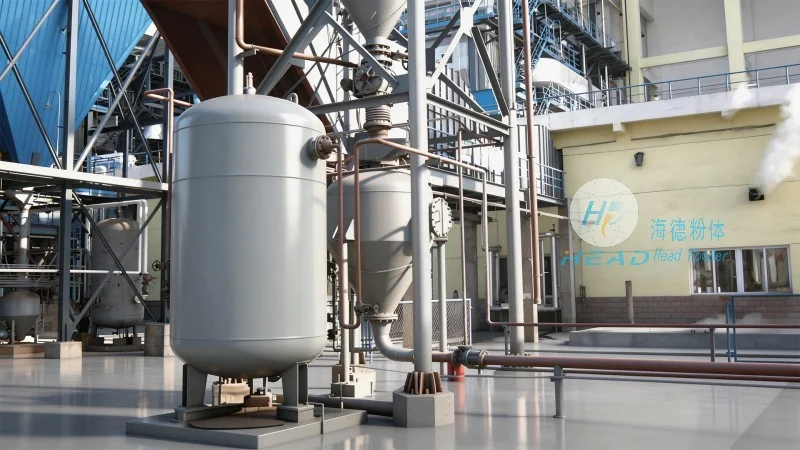
The phosphorus pentachloride pneumatic conveying system consists of several key components, each playing a vital role in the overall operation. The hopper is the primary storage container for the PCl₅, typically made of corrosion-resistant materials like stainless steel. It is designed with a sloped bottom to facilitate the flow of material into the feeder. The feeder, often a rotary valve or a screw feeder, controls the rate at which PCl₅ is released from the hopper into the conveying line. This component is critical for maintaining a consistent flow rate and preventing material buildup or clogging. The air compressor is the heart of the system, providing the necessary airflow and pressure to move the material through the pipeline. It is typically a positive displacement compressor, capable of delivering high-pressure air at the required flow rate. The pipeline is made of materials resistant to PCl₅ corrosion, such as stainless steel or PTFE-coated pipes, and is designed with appropriate bends and fittings to minimize pressure loss and ensure smooth material transport. The receiver is the final storage or processing container, where the PCl₅ is deposited after being conveyed through the system. It is also constructed from corrosion-resistant materials and may include a venting system to release any trapped air or gases. Additionally, the system may include accessories such as filters, silencers, and pressure regulators to enhance performance and safety. Filters are used to remove any dust or debris from the air, preventing clogging of the compressor and ensuring clean air for conveying. Silencers reduce the noise generated by the air compressor, making the system more user-friendly. Pressure regulators maintain a consistent pressure within the system, preventing fluctuations that could affect the conveying performance. These components work together to create a reliable and efficient system for transporting PCl₅, ensuring that the material is handled safely and effectively.
Applications and Advantages of the System
The phosphorus pentachloride pneumatic conveying system is widely used in various industrial applications where PCl₅ needs to be transported safely and efficiently. Some common applications include chemical manufacturing, pharmaceutical production, and research laboratories. In chemical manufacturing, the system is used to transfer PCl₅ between reactors, storage tanks, and processing units, ensuring a continuous and safe production process. In pharmaceutical production, the system is used to handle PCl₅ in the synthesis of pharmaceutical intermediates, where precision and safety are critical. In research laboratories, the system is used for small-scale experiments and material handling, providing a controlled environment for PCl₅ processing. The advantages of using a pneumatic conveying system for PCl₅ include improved safety, as the system is enclosed and reduces exposure to the chemical. It also offers higher efficiency compared to traditional methods like bucket elevators or belt conveyors, as it can transport material over longer distances with less energy consumption. The system is also more flexible, allowing for easy integration into existing production lines and modifications to accommodate different material quantities or processing requirements. Additionally, the system reduces labor costs and material handling time, as it automates the process of transporting PCl₅. Overall, the phosphorus pentachloride pneumatic conveying system provides a reliable and efficient solution for handling this hazardous chemical, ensuring that it is transported safely and effectively while meeting the needs of various industrial applications.