

What is a quantitative weighing pneumatic conveying equipment? What are its design principles?
Quantitative weighing pneumatic conveying equipment is a specialized system designed to transport bulk materials through an air stream while accurately measuring and controlling the weight of the material being conveyed. This technology is widely used in various industries, including food processing, pharmaceuticals, chemicals, and minerals, where precise material handling and dosing are critical for operational efficiency and product quality.

Understanding the Core Function of Quantitative Weighing Pneumatic Conveying Equipment
The primary purpose of this equipment is to ensure that bulk materials are transported from one location to another while maintaining a consistent and accurate weight. Unlike traditional pneumatic conveying systems that may rely on flow rates or pressure differentials, quantitative weighing systems incorporate load cells or other weighing mechanisms to provide real-time measurement of the material mass being conveyed. This allows for precise control over the amount of material delivered, which is essential for processes such as batching, mixing, and packaging.
The Design Principles Behind Quantitative Weighing Pneumatic Conveying Systems
The design of quantitative weighing pneumatic conveying equipment is built on several key principles that ensure both functionality and reliability. First, the system must integrate a pneumatic conveying mechanism with a weighing component. The pneumatic part typically involves a blower or compressor that generates the air flow to move the material through a pipeline. Simultaneously, the weighing component, often a load cell or a scale, is positioned at the discharge point or within the conveying line to measure the mass of the material as it passes. This integration allows for continuous monitoring and adjustment of the conveying rate to maintain the desired weight output.
Second, the system employs a closed-loop control system to regulate the conveying process. Sensors detect the weight of the material and send signals to the control unit, which adjusts the air pressure or flow rate accordingly. This feedback loop ensures that any deviations from the set weight are corrected in real time, preventing over or under-dosing and maintaining process consistency. The control system may also include features such as automatic start/stop functions and alarm systems to alert operators of any issues, enhancing safety and operational reliability.

Key Components and Their Roles in Quantitative Weighing Pneumatic Conveying Equipment
Several critical components work together to enable the operation of quantitative weighing pneumatic conveying systems. The blower or compressor is responsible for generating the necessary air pressure to move the material through the pipeline. The pipeline itself is typically made of materials like stainless steel or plastic, chosen for their durability and resistance to corrosion from the conveyed materials. At the inlet, a hopper or feeder is used to introduce the bulk material into the system, ensuring a consistent feed rate. The weighing mechanism, such as a load cell or a scale, is strategically placed to measure the material as it exits the conveying line, providing accurate weight data to the control system.
Valves and regulators are also essential components that control the air flow and material discharge. These components allow for precise adjustment of the conveying rate, ensuring that the system delivers the exact amount of material required. Additionally, filters and separators may be included to remove moisture or other contaminants from the air stream, protecting the equipment and maintaining the quality of the conveyed material. The combination of these components ensures that the quantitative weighing pneumatic conveying system operates efficiently and reliably.
Applications and Benefits of Quantitative Weighing Pneumatic Conveying Equipment
Quantitative weighing pneumatic conveying equipment is used in a wide range of applications across various industries. In the food and beverage industry, it is used for transporting powders like flour, sugar, and spices with high accuracy, ensuring consistent product quality. In the pharmaceutical sector, it is crucial for handling active pharmaceutical ingredients (APIs) and other sensitive materials, where precise dosing is critical for drug formulation. The chemical industry also benefits from this technology when handling powders like pigments, catalysts, and other chemicals, where accurate measurement and control are essential for process efficiency and product safety.
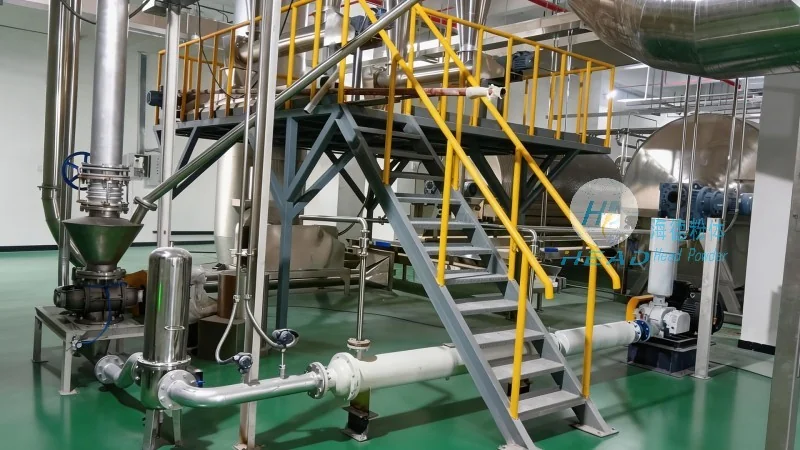
The benefits of using quantitative weighing pneumatic conveying equipment include improved process control, reduced material waste, and enhanced product quality. By ensuring that the exact amount of material is conveyed, these systems minimize over or under-dosing, which can lead to product defects or waste. Additionally, the closed-loop control system allows for real-time adjustments, adapting to changes in material properties or process conditions. This flexibility makes the equipment suitable for a variety of applications and helps maintain consistent performance over time.
Conclusion: The Importance of Quantitative Weighing Pneumatic Conveying Equipment in Modern Manufacturing
In conclusion, quantitative weighing pneumatic conveying equipment plays a vital role in modern manufacturing processes by providing accurate, reliable, and efficient material handling solutions. The integration of pneumatic conveying technology with weighing mechanisms allows for precise control over the amount of bulk material being transported, which is essential for industries where consistency and quality are paramount. The design principles and components of these systems are carefully engineered to ensure durability, accuracy, and operational efficiency, making them a valuable investment for companies seeking to optimize their material handling processes.
Shandong HeadPowder Engineering Co., Ltd., a leading manufacturer of such equipment, specializes in providing high-quality quantitative weighing pneumatic conveying systems tailored to the specific needs of various industries. With a focus on precision, reliability, and innovation, the company has established itself as a trusted partner for businesses seeking to enhance their material handling capabilities. Based in Shandong, China, HeadPowder Engineering Co., Ltd. leverages years of experience and advanced technology to deliver solutions that meet the highest standards of performance and safety.