

What is a Glass-Blasted Microsphere Pneumatic Conveying Line? And What Are Its Design Principles?
Glass-blasted microspheres are a specialized type of lightweight, spherical particles commonly used in various industrial applications. These particles are produced through a glass-blasting process, which involves the controlled impact of glass particles to create a uniform, high-quality microsphere. The resulting material exhibits excellent thermal insulation properties, low density, and high strength, making it ideal for use in construction, insulation, and other sectors. A pneumatic conveying line is a system designed to transport these microspheres through the air using pressure differentials, ensuring efficient and safe material handling. This article explores the concept of a glass-blasted microsphere pneumatic conveying line, detailing its design principles and operational aspects, with a focus on the expertise of Shandong HeadPowder Engineering Co., Ltd., a leading manufacturer based in Shandong, China.

Key Components of a Pneumatic Conveying System for Glass-Blasted Microspheres
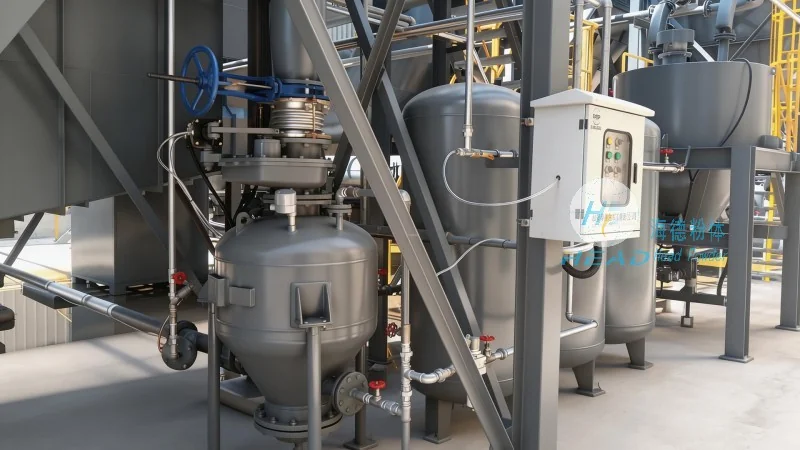
The core components of a glass-blasted microsphere pneumatic conveying line include the hopper, feeder, conveying pipeline, air compressor, and control system. The hopper serves as the storage container for the microspheres, ensuring a consistent supply of material. The feeder, typically a rotary valve or screw feeder, regulates the flow of microspheres into the pipeline. The conveying pipeline, often made of stainless steel or other corrosion-resistant materials, transports the microspheres under pressure. The air compressor generates the necessary airflow to move the particles, while the control system monitors and adjusts the pressure and flow rates to maintain optimal operation. Each component plays a critical role in ensuring the efficient and reliable transport of glass-blasted microspheres.

Design Principles for Efficient Pneumatic Conveying
The design of a glass-blasted microsphere pneumatic conveying line is based on several key principles to maximize efficiency and minimize energy consumption. First, the system must account for the physical properties of the microspheres, such as their density, size, and shape, to determine the appropriate air velocity and pressure. The air velocity is typically maintained at a level that prevents particle settling or blockage in the pipeline. Second, the system incorporates a balance of pressure and vacuum stages to ensure smooth material transport, especially for long-distance or complex routing. The use of cyclone separators or filters at the receiving end helps to separate the microspheres from the air, ensuring clean material handling. Additionally, the design considers the need for maintenance and accessibility, with components that can be easily inspected or replaced without disrupting the entire system. By adhering to these principles, the conveying line achieves high throughput while maintaining low operational costs.
Operational Considerations and Maintenance
Operational considerations for a glass-blasted microsphere pneumatic conveying line include the selection of appropriate air pressure and flow rates, as well as the prevention of particle degradation or contamination. The system must be designed to handle the specific characteristics of the microspheres, such as their tendency to aggregate or clog the pipeline. Regular maintenance is essential to ensure the longevity and reliability of the equipment. This includes cleaning the pipeline and filters, checking for wear and tear on components like the feeder and compressor, and monitoring the air quality to prevent dust accumulation. The use of advanced control systems helps to automate the maintenance process, reducing downtime and improving overall system performance. Proper maintenance not only extends the lifespan of the equipment but also ensures consistent product quality, which is critical for applications where the microspheres are used in insulation or other performance-sensitive products.
Applications and Benefits of Glass-Blasted Microsphere Pneumatic Conveying
Glass-blasted microspheres are widely used in construction, insulation, and automotive industries due to their excellent thermal insulation properties and lightweight nature. The pneumatic conveying line is particularly advantageous for transporting these microspheres to manufacturing sites or construction locations, as it eliminates the need for manual handling and reduces the risk of dust exposure. The efficiency of the conveying system allows for high-volume transport, meeting the demands of large-scale production. The benefits of using a glass-blasted microsphere pneumatic conveying line include improved safety, reduced labor costs, and enhanced product quality. The system’s ability to handle fine particles without clogging or degradation ensures that the microspheres retain their intended properties, which is essential for applications such as thermal insulation in building materials or lightweight fillers in composite products. By leveraging the design principles and operational considerations discussed, manufacturers can optimize their material handling processes and achieve better overall performance.