

What is a Gypsum Powder Pneumatic Conveyor? And What Are Its Design Principles?
For industrial applications involving the handling of gypsum powder, selecting the right material transport system is crucial for efficiency and safety. A key piece of equipment in this domain is the gypsum powder pneumatic conveyor, a system designed to transport dry powders like gypsum through a pipeline using air pressure. This article, presented by Shandong HeadPowder Engineering Co., Ltd. (headpowder), will explore what a gypsum powder pneumatic conveyor is and delve into its fundamental design principles, providing insights into how such systems operate and why they are essential in various industrial processes.

Gypsum Powder Pneumatic Conveyor: An Overview
At its core, a gypsum powder pneumatic conveyor is a type of pneumatic conveying system engineered specifically for transporting dry, fine powders, such as gypsum. Unlike traditional mechanical conveyors that rely on belts or screws, pneumatic conveyors use compressed air to move material through a sealed pipeline. This method offers several advantages, including the ability to transport materials over longer distances, navigate complex layouts, and maintain a dust-free environment, which is particularly important when handling materials like gypsum that can be hazardous if inhaled or cause respiratory issues.
Key Components of a Gypsum Powder Pneumatic Conveyor
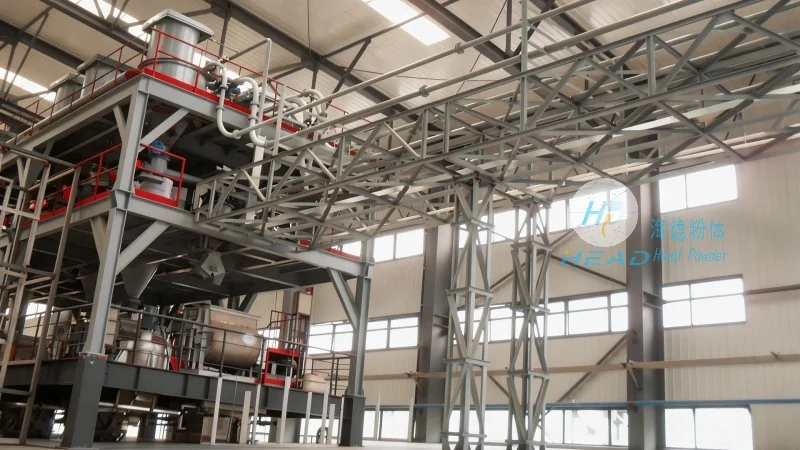
Understanding the design of a gypsum powder pneumatic conveyor requires an examination of its main components. These typically include a hopper for material storage, a feeder to control the flow of powder into the system, a compressor or blower to generate the necessary air pressure, a pipeline network to transport the material, and a receiver or collection unit to deposit the material at its destination. Each component plays a critical role in ensuring the system operates efficiently and safely.

The Design Principles Behind Gypsum Powder Pneumatic Conveyors
The design principles of a gypsum powder pneumatic conveyor are centered around optimizing material flow, maintaining system efficiency, and ensuring operational safety. One of the primary principles is the selection of appropriate air velocity. The air velocity must be high enough to lift and transport the gypsum powder particles through the pipeline but not so high that it causes excessive wear on the system components or leads to material degradation. Engineers typically calculate the required air velocity based on the particle size, density, and flow rate of the gypsum powder being handled.
Another critical design principle is the consideration of pressure. Pneumatic conveyors can operate under either positive pressure (where air is forced into the system) or negative pressure (where air is drawn out). For gypsum powder, positive pressure systems are often preferred as they are more efficient and easier to maintain, especially when dealing with large volumes of material. The pressure levels are carefully determined to ensure the material is transported without clogging the pipeline or causing excessive energy consumption.
Advantages of Using a Gypsum Powder Pneumatic Conveyor
Implementing a gypsum powder pneumatic conveyor offers numerous benefits for industrial operations. One of the most significant advantages is the reduction in dust generation compared to traditional methods. Since the material is contained within a sealed pipeline, the risk of dust exposure to workers is minimized, enhancing workplace safety. Additionally, these systems can handle materials that are difficult to transport using other methods, such as fine powders that tend to clump or agglomerate. The ability to transport gypsum powder over long distances without the need for multiple transfer points also improves overall operational efficiency.

Applications and Industries
Gypsum powder pneumatic conveyors are widely used across various industries that rely on gypsum as a raw material. These include the construction industry, where gypsum is used to produce drywall and plaster, the agricultural sector for soil amendment, and the pharmaceutical industry for certain formulations. In each of these applications, the conveyor system must be tailored to the specific requirements of the process, such as the volume of material to be transported, the distance it needs to travel, and the desired end-use quality of the gypsum powder.
Conclusion
In summary, a gypsum powder pneumatic conveyor is a sophisticated system designed to efficiently and safely transport dry gypsum powder through a sealed pipeline using compressed air. Its design is based on principles that optimize material flow, maintain system efficiency, and ensure operational safety. By understanding these principles and the components that make up the system, industries can select and implement the most appropriate pneumatic conveyor for their specific needs, ultimately improving productivity and workplace safety.