

Working Principle and Features of the Air-Driven Conveyor for Lithium-Ion Battery Nanomaterials
HeadPowder, a leading manufacturer based in Shandong, China, specializes in advanced material handling solutions tailored for the lithium-ion battery industry. This article explores the working principle and key features of the air-driven conveyor system designed specifically for transporting nanomaterials used in lithium-ion battery production.

Understanding the Working Principle of the Air-Driven Conveyor
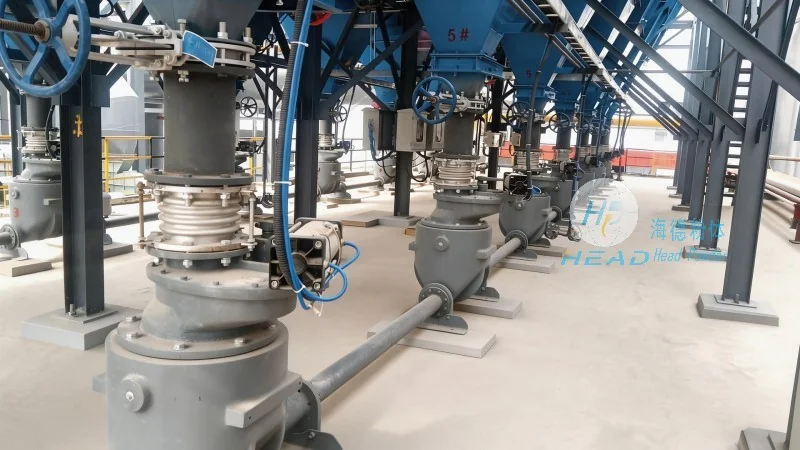
The air-driven conveyor for lithium-ion battery nanomaterials operates on the principle of pneumatic transport, utilizing compressed air to move materials through a sealed pipeline system. At its core, the system consists of a series of connected pipes, air blowers, and material feeders. The process begins with the material being fed into the inlet of the conveyor. As compressed air is introduced into the pipeline, it creates a low-pressure zone that draws the nanomaterial particles along with it. This pneumatic flow ensures efficient and continuous movement of the material from the source to the destination, minimizing the risk of material degradation or contamination.
Key components of the system include the air compressor, which generates the necessary pressure; the air distribution manifold that regulates airflow to different sections of the conveyor; and the material separation and collection units at the end of the line. The design ensures that the entire process is controlled and monitored, allowing for precise adjustment of flow rates and material handling efficiency. This pneumatic approach is particularly advantageous for handling sensitive nanomaterials, as it eliminates the need for mechanical contact that could cause particle agglomeration or damage.
Key Features of the Air-Driven Conveyor System
The air-driven conveyor system for lithium-ion battery nanomaterials offers several distinct advantages that make it an ideal choice for modern battery manufacturing facilities. First, it provides a dust-free and contamination-free environment, which is critical for maintaining the purity of nanomaterials used in high-performance batteries. The sealed pipeline design prevents exposure to external contaminants, ensuring that the material remains in a controlled state throughout the transport process.
Second, the system offers high flexibility in terms of layout and integration. The modular design allows for easy expansion or reconfiguration of the conveyor line to accommodate changes in production requirements or facility layout. This adaptability is particularly valuable in dynamic manufacturing environments where production scales or product lines may change over time.
Third, the air-driven conveyor is highly energy-efficient compared to traditional mechanical conveyors. By utilizing compressed air, the system reduces energy consumption while maintaining high material throughput. This efficiency not only lowers operational costs but also aligns with the industry's push for sustainable and eco-friendly manufacturing practices.

Fourth, the system provides excellent material handling capabilities for fine powders and nanomaterials. The low-pressure pneumatic transport minimizes particle breakage and agglomeration, preserving the integrity of the nanomaterials. This is crucial for applications where the size and distribution of particles directly impact battery performance, such as in cathode and anode materials.
Application in Lithium-Ion Battery Production
The air-driven conveyor system is specifically engineered to handle the unique challenges of transporting nanomaterials in lithium-ion battery manufacturing. These materials, often in the form of fine powders or nano-particles, require precise control to ensure uniform mixing and consistent battery performance. The conveyor's ability to maintain a controlled environment and minimize material degradation makes it essential for processes such as material blending, coating, and electrode production.
For example, in the production of lithium cobalt oxide (LCO) or lithium iron phosphate (LFP) cathode materials, the nanomaterials must be handled with extreme care to avoid particle size changes that could affect battery capacity and cycle life. The air-driven conveyor's low shear and gentle handling characteristics ensure that these sensitive materials are transported without compromising their quality.

In addition, the system's ability to integrate with other production equipment, such as mixers and coating machines, enhances overall production efficiency. The seamless transfer of materials from one process step to the next reduces downtime and improves throughput, contributing to higher overall productivity in the battery manufacturing line.
Conclusion
HeadPowder's air-driven conveyor for lithium-ion battery nanomaterials represents a sophisticated solution that combines advanced pneumatic technology with industry-specific design considerations. By understanding its working principle and key features, manufacturers can leverage this system to improve material handling efficiency, maintain product quality, and reduce operational costs. As the demand for high-performance lithium-ion batteries continues to grow, the importance of reliable and efficient material transport systems cannot be overstated, making this technology a critical component of modern battery production facilities.