

Working Principle and Features of Ammonium Chloride Powder Pneumatic Conveying System
Ammonium chloride (NH₄Cl) is a widely used chemical compound in various industrial applications, including fertilizers, pharmaceuticals, and chemical manufacturing. The efficient and reliable transportation of ammonium chloride powder is crucial for maintaining production efficiency and product quality. Pneumatic conveying systems have emerged as a preferred method for handling such powders due to their ability to transport materials in a dust-free environment, reducing contamination risks and improving operational safety. This article explores the working principle and key features of an ammonium chloride powder pneumatic conveying line, highlighting the technological advancements and practical benefits offered by such systems.

Working Principle of the Pneumatic Conveying System
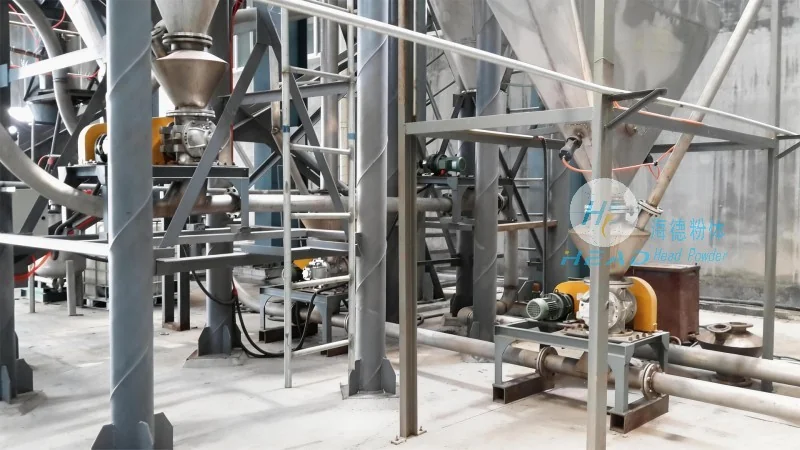
The core of an ammonium chloride powder pneumatic conveying system lies in the use of compressed air to transport the powder from a source to a destination. The process typically involves several key components, including a hopper, a rotary airlock valve, a conveying pipe, and a receiver. The system operates by first feeding the ammonium chloride powder into the hopper. The powder then passes through a rotary airlock valve, which controls the flow rate and prevents backflow. Compressed air is then introduced into the conveying pipe, creating a flow that propels the powder particles forward. The air and powder mixture travels through the pipe to the receiver, where the powder is separated from the air using a cyclone or other separation equipment. The separated air is then discharged, while the ammonium chloride powder is collected in the receiver. This continuous process ensures a steady and controlled flow of the powder, minimizing downtime and enhancing overall system efficiency.
Key Features and Advantages of the System
Several notable features distinguish ammonium chloride powder pneumatic conveying systems, making them ideal for industrial applications. Firstly, the system operates in a closed loop, which significantly reduces dust emissions and improves workplace safety. This is particularly important for ammonium chloride, as it can be a respiratory irritant if inhaled in large quantities. Secondly, the system offers high transport efficiency, with the ability to handle large volumes of powder over long distances without the need for mechanical components like conveyor belts or buckets. This reduces maintenance costs and increases operational reliability. Thirdly, the system is highly flexible, allowing for changes in the conveying route or destination without major modifications to the infrastructure. Additionally, the system can be integrated with other process equipment, such as mixers or reactors, to form a complete production line. The use of compressed air also provides a hygienic and clean environment, which is essential for pharmaceutical and food-grade applications where contamination control is critical.

Technical Specifications and Customization Options
Shandong HeadPowder Engineering Co., Ltd., a leading manufacturer of pneumatic conveying systems, offers customized solutions tailored to the specific needs of clients. The company’s systems are designed to handle various particle sizes and flow rates, with options for both positive and negative pressure conveying. The conveying distance can range from short distances within a facility to long-distance transport over several kilometers. The system can be equipped with advanced control systems, including PLC (Programmable Logic Controller) and SCADA (Supervisory Control and Data Acquisition) interfaces, enabling remote monitoring and automation. The materials used in the construction of the system components, such as the hopper and conveying pipes, are selected based on the chemical properties of ammonium chloride to ensure resistance to corrosion and wear. The company also provides comprehensive after-sales services, including installation, commissioning, and maintenance support, ensuring that the system operates at optimal performance levels throughout its service life.

Applications and Industry Impact
Ammonium chloride powder pneumatic conveying systems are widely used in various industries, including chemical manufacturing, fertilizer production, and pharmaceutical processing. In chemical manufacturing, the system is used to transport raw materials to reactors and finished products to storage tanks. In fertilizer production, it helps in the efficient handling of ammonium chloride, which is a key component in nitrogen-based fertilizers. The system’s ability to maintain product purity and prevent contamination makes it suitable for pharmaceutical applications, where even small amounts of impurities can affect the efficacy of the final product. The adoption of such systems has significantly improved production efficiency and reduced operational costs for many companies, leading to increased competitiveness in the market.