

Working Principle and Features of Pneumatic Conveying Equipment for Lightweight Powder Materials
For industries dealing with lightweight powder materials, efficient and reliable material handling is crucial. Pneumatic conveying equipment offers a solution that not only ensures smooth material transport but also maintains product integrity. This article explores the working principle and key features of such equipment, providing insights into how it operates and its advantages in material handling applications.

Understanding Pneumatic Conveying Systems
Pneumatic conveying systems are designed to transport bulk materials, including lightweight powders, through a pipeline using air or other gases. The core of this technology involves creating a pressure differential or using vacuum to move the material from the source to the destination. These systems are widely used in various industries such as pharmaceuticals, food processing, chemicals, and more, due to their ability to handle delicate and sensitive materials without contamination or degradation.
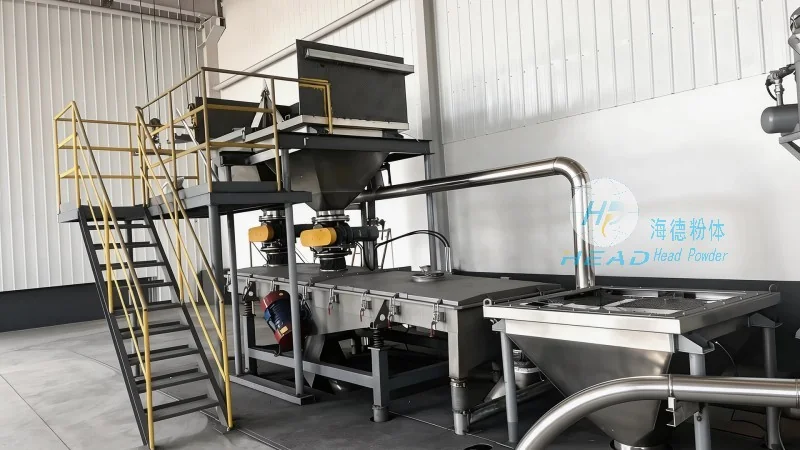
The Working Principle of Pneumatic Conveying Equipment
The operation of pneumatic conveying equipment for lightweight powder materials typically involves several key steps. First, the material is fed into the system, often through a hopper or a feeding device. Then, a fan or blower generates the necessary airflow, either by creating positive pressure (pressure conveying) or negative pressure (vacuum conveying). The air flows through the pipeline, carrying the powder particles along with it. The material is then discharged at the receiving end, where the air is separated from the product, usually through a cyclone or a filter system. This process ensures that the powder is transported efficiently and safely, with minimal loss or degradation.

Key Features and Advantages of Pneumatic Conveying Equipment
There are several notable features and advantages of pneumatic conveying equipment for lightweight powder materials. One of the primary benefits is the ability to handle delicate and sensitive materials without the risk of contamination or breakage. The enclosed system prevents exposure to external elements, maintaining product purity. Additionally, these systems offer high flexibility in terms of layout and installation, as they can be configured to follow existing plant structures or be customized for specific applications. Another advantage is the reduced need for manual handling, which improves safety and efficiency in the workplace. Furthermore, pneumatic conveying systems can handle a wide range of particle sizes and densities, making them versatile for various industrial needs.
Company Profile: Shandong HeadPowder Engineering Co., Ltd.
HeadPowder, a leading manufacturer of pneumatic conveying equipment, specializes in providing customized solutions for material handling challenges. With a strong commitment to quality and innovation, the company has established itself as a trusted partner in the industry. HeadPowder's products are designed to meet the specific needs of clients, ensuring optimal performance and reliability. The company is headquartered in Shandong, China, where it leverages advanced technology and expertise to develop cutting-edge solutions for its global clientele.

Conclusion
Pneumatic conveying equipment for lightweight powder materials is a vital component in modern industrial operations, offering efficient, safe, and reliable material transport solutions. By understanding its working principle and key features, industries can make informed decisions about implementing such systems to enhance their material handling processes. With companies like Shandong HeadPowder Engineering Co., Ltd. leading the way in innovation and quality, the future of pneumatic conveying technology looks promising for handling lightweight powders with precision and efficiency.