

Principle and Working Scene Characteristics of Bamboo Powder Pneumatic Conveying Systems
Bamboo powder, as a fine particulate material, presents unique challenges in material handling due to its light weight, high dust content, and potential for caking or agglomeration. Traditional mechanical conveying methods often struggle with these characteristics, leading to inefficiencies, equipment wear, and increased operational costs. Pneumatic conveying systems, particularly those designed for handling fine powders like bamboo powder, offer a solution by utilizing air as the primary transport medium. This approach not only enhances material flow but also improves safety and hygiene in processing environments.

Core Principles of Pneumatic Conveying for Bamboo Powder
The fundamental principle of pneumatic conveying is the use of compressed air to move particulate materials through a pipeline. For bamboo powder, the system typically operates on either pressure or vacuum principles. In pressure systems, air is introduced at the material inlet, creating a high-pressure environment that propels the powder forward. This method is suitable for short to medium distances and can handle a wide range of powder characteristics. Conversely, vacuum systems draw air and powder from the source, creating a low-pressure zone that pulls the material through the pipeline. Vacuum systems are often preferred for longer distances or when the material needs to be transported from multiple sources.
Key components in a bamboo powder pneumatic conveying system include the material hopper, which stores and feeds the powder; the air compressor or vacuum pump, which generates the necessary pressure or vacuum; the conveying line, which transports the material; and the discharge unit, which delivers the powder to the destination. The design of these components is critical to ensure efficient and reliable operation. For example, the material hopper may incorporate a pre-drying or conditioning section to prevent caking, while the conveying line is often equipped with anti-static coatings to mitigate dust explosion risks.
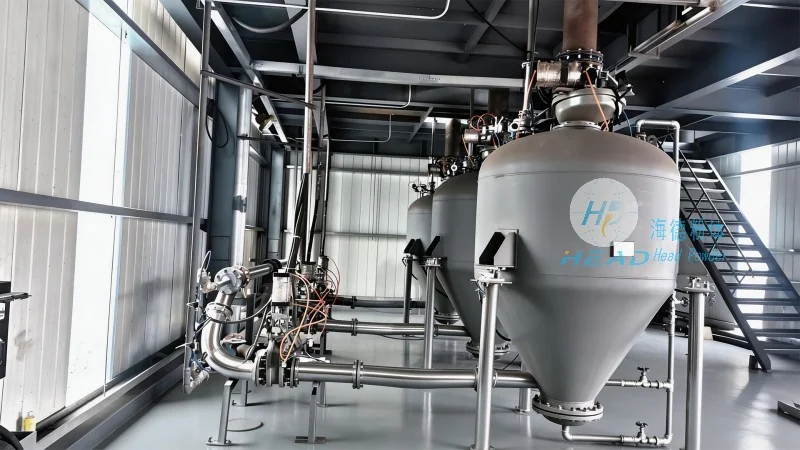
Working Scene Characteristics and Application Scenarios
The working scene characteristics of bamboo powder pneumatic conveying systems are closely tied to the specific industrial applications where they are deployed. These systems are commonly used in the paper and pulp industry, where bamboo powder is a key raw material for producing paper products. In this context, the system must handle large volumes of powder efficiently while maintaining consistent moisture levels to prevent degradation of the final product.
In the food processing industry, bamboo powder (often used as a natural ingredient or filler) requires pneumatic conveying systems that meet strict hygiene standards. This includes the use of stainless steel components, sealed systems to prevent contamination, and easy-to-clean designs. The systems must also be capable of handling varying particle sizes and moisture contents without compromising product quality.
Another application is in the chemical industry, where bamboo powder may be used as a filler or additive in manufacturing processes. Here, the pneumatic conveying system must be robust enough to handle abrasive or corrosive materials, with components designed to resist wear and chemical attack. The system's ability to maintain a consistent flow rate is crucial for ensuring uniform product quality.

Industrial manufacturing facilities, particularly those involved in biomass processing or renewable energy production, also utilize bamboo powder pneumatic conveying systems. These systems are integrated into larger production lines, where the efficient transport of raw materials is essential for maintaining production throughput. The working scene may involve multiple stages of processing, with the pneumatic system connecting different equipment such as mills, classifiers, and storage silos.
Advantages and Considerations in Bamboo Powder Pneumatic Conveying
Implementing a pneumatic conveying system for bamboo powder offers several advantages over traditional methods. One of the primary benefits is the reduction in equipment wear and tear, as the material is transported without direct contact with mechanical components. This leads to lower maintenance costs and longer equipment lifespan. Additionally, pneumatic systems provide better control over material flow, allowing for precise dosing and consistent product quality.
Another advantage is the improved safety and hygiene in processing environments. By using enclosed systems and filtered air, the risk of dust exposure and contamination is significantly reduced. This is particularly important in industries where product purity is critical, such as food and pharmaceuticals. The systems also help in controlling dust emissions, contributing to better environmental compliance.

However, there are considerations to keep in mind when designing and operating a bamboo powder pneumatic conveying system. The light weight and fine particle size of bamboo powder can lead to high air velocities, which may cause pressure drops and increased energy consumption. Proper system sizing and component selection are essential to optimize performance and energy efficiency. Additionally, the potential for caking or agglomeration in the material hopper requires regular maintenance and conditioning to ensure smooth material flow.
Conclusion and Company Overview
Bamboo powder pneumatic conveying systems represent a sophisticated solution for handling fine particulate materials in various industrial applications. By leveraging the principles of pneumatic transport, these systems enhance efficiency, safety, and product quality. As a leading provider in this field, Shandong HeadPowder Engineering Co., Ltd. specializes in designing and manufacturing customized pneumatic conveying solutions tailored to the unique needs of each client. With a focus on innovation and quality, the company ensures that its systems meet the highest standards of performance and reliability, supporting the success of its clients in the bamboo powder processing industry.