

Principles and Working Scene Characteristics of Cement Powder Conveying
Shandong HeadPowder Engineering Co., Ltd., commonly known as HeadPowder, specializes in the design and implementation of cement powder conveying systems. These systems are crucial for the efficient and safe transportation of cement and other fine powders in industrial settings. Understanding the principles and characteristics of such systems is essential for optimizing material handling processes in the cement industry.


The Fundamental Principles of Cement Powder Conveying
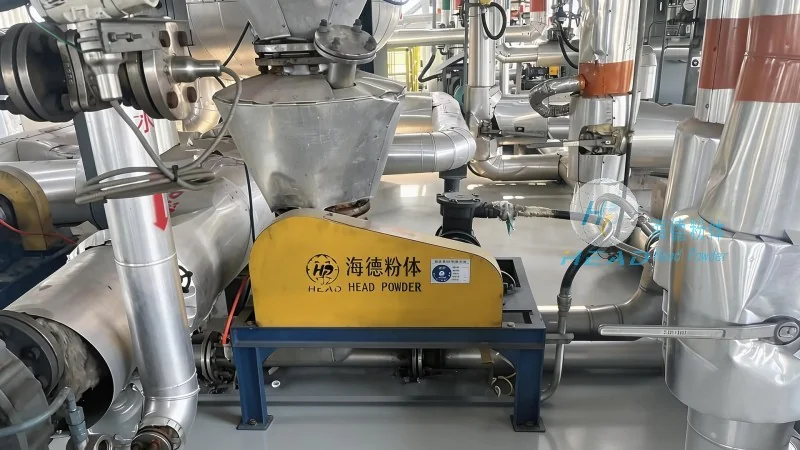
Cement powder conveying primarily relies on two main mechanisms: pneumatic conveying and mechanical conveying. Pneumatic systems use air to transport powders through pipelines, while mechanical systems employ screw conveyors, belt conveyors, or bucket elevators. The choice of method depends on factors like material properties, distance, and required throughput. For cement, which is a fine, abrasive powder, pneumatic conveying is often preferred due to its ability to handle high volumes and maintain material integrity. The process typically involves a hopper to store the material, a feeder to control the flow rate, a conveying line with appropriate pressure or vacuum, and a receiver to collect the material at the destination. This system ensures that cement is moved from production facilities to storage silos, or from silos to mixing plants with minimal loss and maximum efficiency.

Key Working Scene Characteristics
The working scene characteristics of cement powder conveying systems vary based on the application. In cement manufacturing plants, these systems are integrated into the production line, connecting raw material handling, clinker grinding, and packaging stages. The systems must operate under high dust conditions and handle large volumes of material, requiring robust equipment and effective dust control measures. At construction sites, portable or semi-portable conveying systems are used to transport bulk cement from storage silos to mixing trucks or on-site batching plants. These systems are designed for mobility and quick setup, enabling efficient material delivery to remote or temporary work areas. Additionally, in industrial applications beyond cement, such as in chemical or pharmaceutical industries, similar conveying principles are applied to handle fine powders, though the specific requirements may differ. The versatility of cement powder conveying systems makes them adaptable to various industrial environments, from large-scale manufacturing to on-site construction operations.
Efficiency and Safety in Cement Powder Conveying
Efficiency is a critical characteristic of cement powder conveying systems. Modern systems are designed to minimize energy consumption while maximizing throughput. Pneumatic systems, for example, can achieve high material velocities with relatively low air pressure, reducing operational costs. The use of advanced control systems allows for precise regulation of flow rates, ensuring that the right amount of material is conveyed at the right time. Safety is equally important, as cement powders can be hazardous if not handled properly. Systems are equipped with dust collection and filtration systems to prevent airborne dust, and safety interlocks to prevent accidental release of material. Additionally, the materials used in the construction of conveying equipment, such as stainless steel or corrosion-resistant alloys, protect against wear and corrosion from the abrasive cement particles, extending the lifespan of the system.