

Principles and Application Scenarios of Denitrification Urea Powder Conveying
Denitrification urea powder conveying systems are critical components in industrial processes, particularly in power plants and chemical facilities where nitrogen oxide reduction is essential. The efficient transport of urea, a key reagent in selective catalytic reduction (SCR) systems, directly impacts the performance and environmental compliance of these operations. This article explores the fundamental principles behind denitrification urea powder conveying, alongside the specific characteristics of its application scenarios, to provide a comprehensive understanding for industry professionals.

Understanding the Core Principles of Denitrification Urea Powder Conveying
The primary principle of denitrification urea powder conveying revolves around the safe and reliable transport of urea granules from storage silos to the injection points in SCR systems. This process typically involves several key components, including storage silos, conveying equipment (such as pneumatic or mechanical conveyors), and control systems. The conveying method chosen depends on factors like the distance between the storage and injection points, the required flow rate, and the environmental conditions. Pneumatic conveying systems, for instance, use compressed air to move urea particles through pipelines, while mechanical conveyors employ screw or belt mechanisms for bulk material transport. Both methods aim to maintain the integrity of the urea powder, preventing agglomeration or degradation that could affect its effectiveness in reducing nitrogen oxides.
Key Components and Their Functions in Urea Powder Conveying Systems
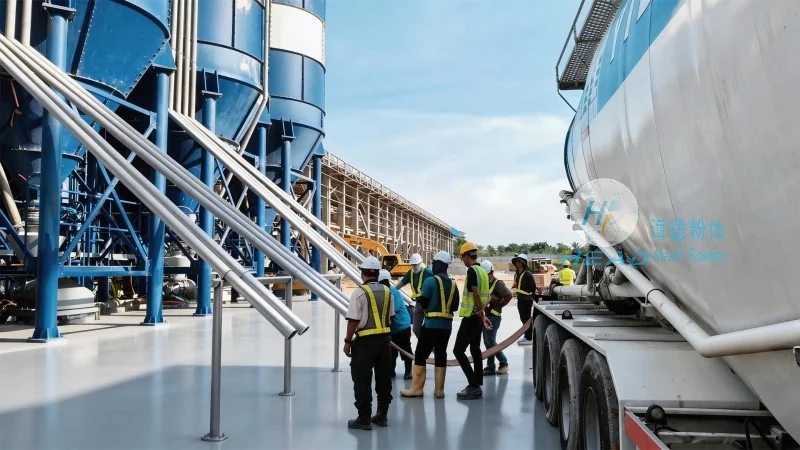
Effective denitrification urea powder conveying relies on a well-integrated system of components, each playing a crucial role in ensuring smooth operation. The storage silo is the initial stage, where urea is stored under controlled conditions to maintain its quality. From there, the conveying equipment transfers the urea to the injection system. Pneumatic conveying systems often include a hopper, which feeds the urea into the pipeline, and a rotary valve that regulates the flow. The control system monitors parameters such as pressure, flow rate, and temperature to ensure optimal performance. Additionally, dust suppression and filtration systems are integrated to prevent air pollution and protect equipment from wear and tear. These components work in harmony to deliver a consistent and reliable supply of urea for denitrification processes.

Application Scenarios: Where Denitrification Urea Powder Conveying is Essential
Denitrification urea powder conveying is predominantly used in power generation facilities, where SCR systems are installed to meet stringent emission standards for nitrogen oxides. In these scenarios, the system must handle large volumes of urea, often at high flow rates, to support the continuous operation of the power plant. The conveying distance can vary from a few meters to several hundred meters, depending on the plant's layout. Another common application is in chemical manufacturing plants that produce or use urea as a raw material, where the conveying system ensures a steady supply to reactors and processing units. The versatility of denitrification urea powder conveying also makes it suitable for industrial facilities in regions with strict environmental regulations, where compliance is a top priority. Each application scenario requires tailored system design to address specific challenges, such as varying ambient temperatures or the need for high-precision flow control.
Advantages and Challenges in Denitrification Urea Powder Conveying
Denitrification urea powder conveying offers several advantages, including high efficiency, low maintenance requirements, and the ability to handle large quantities of material. The pneumatic conveying method, in particular, allows for flexible system layouts and minimal space constraints, making it ideal for retrofitting existing facilities. However, the process also presents challenges, such as the risk of material degradation due to moisture or temperature fluctuations, and the need for robust dust control measures to prevent environmental contamination. Additionally, the system must be designed to handle the abrasive nature of urea particles, which can cause wear on equipment components over time. Proper maintenance and regular inspections are essential to mitigate these challenges and ensure the long-term reliability of the conveying system.
Case Study: Implementation of Denitrification Urea Powder Conveying by Shandong HeadPowder Engineering Co., Ltd.
Shandong HeadPowder Engineering Co., Ltd., a leading provider of industrial powder handling solutions, has successfully implemented denitrification urea powder conveying systems in numerous power plants and chemical facilities across China. The company specializes in customizing conveying systems to meet the unique requirements of each project, ensuring optimal performance and compliance with environmental regulations. For instance, in a recent project for a thermal power plant in Shandong, HeadPowder designed and installed a pneumatic conveying system that reduced urea transport time by 30% and improved overall system efficiency. The system was equipped with advanced control technology, enabling real-time monitoring and adjustment of flow rates. The company's expertise in material handling and environmental compliance has made it a trusted partner for facilities seeking reliable denitrification solutions. HeadPowder's commitment to quality and customer satisfaction is reflected in the successful implementation of its urea powder conveying systems, which have contributed to improved operational performance and reduced emissions in various industrial applications.