

Principle and Working Scene Characteristics of Tote Bag Quantitative Feeding Powder Material Conveyi
For industrial operations that handle bulk powder materials, the tote bag quantitative feeding and powder conveying system is a critical piece of equipment designed to ensure precise material handling and efficient production processes. This system, developed by Shandong HeadPowder Engineering Co., Ltd., a leading manufacturer in the field, integrates advanced technology to address the challenges of accurate dosing and reliable material transport in various industrial applications.
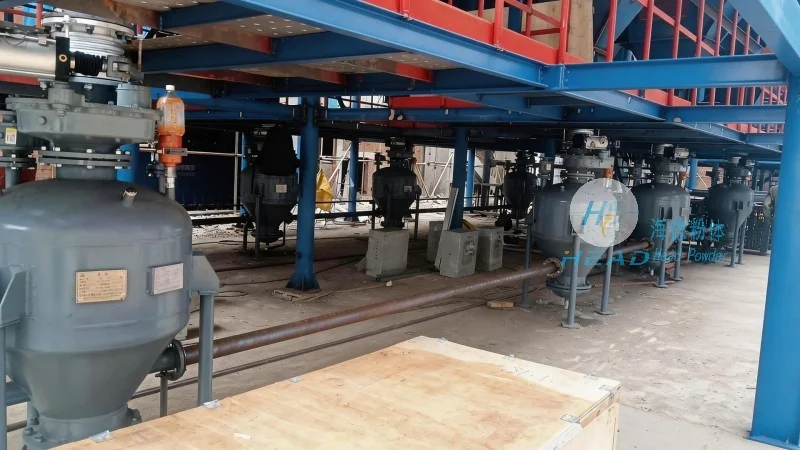
System Principle: Precision and Reliability
The core of the tote bag quantitative feeding system lies in its ability to deliver a consistent and accurate amount of powder from a bulk tote bag into a processing line or storage container. The system typically operates through a combination of mechanical and pneumatic components. When a tote bag is positioned under the discharge port, the system uses a controlled flow mechanism—often involving a rotary valve or a metering screw—to regulate the powder discharge rate. This mechanism ensures that the material is released at a pre-set rate, minimizing variations and optimizing the feeding process. The integration of sensors, such as level detectors or flow meters, further enhances precision by providing real-time feedback on the material level and flow rate, allowing for automatic adjustments to maintain the desired output. The system's design prioritizes durability and low maintenance, making it suitable for continuous operation in demanding industrial environments.

Working Scene Characteristics: Versatility and Adaptability
The tote bag quantitative feeding and powder conveying system is designed to operate in diverse industrial settings, including chemical manufacturing, food processing, pharmaceutical production, and mining operations. Its adaptability stems from its modular design, which allows for customization based on the specific material properties and production requirements. For instance, in chemical plants, the system can handle corrosive or abrasive powders with specialized materials of construction for the discharge components. In food processing facilities, the system is equipped with sanitary components to meet stringent hygiene standards, ensuring that the material remains uncontaminated throughout the process. The system's compact footprint and flexible installation options make it suitable for both new plant constructions and retrofitting into existing production lines, providing a cost-effective solution for upgrading material handling capabilities.

Application Scenarios: Enhancing Production Efficiency
In practical applications, the system is deployed in scenarios where consistent material feeding is essential for maintaining production quality and throughput. For example, in the production of bulk chemicals, the system ensures that each batch receives the exact amount of raw material, reducing waste and improving product consistency. In the food industry, the system is used to feed ingredients into mixing or extrusion lines, where precise dosing is critical for product uniformity. The system's ability to handle large volumes of powder efficiently, combined with its low downtime, contributes to overall production efficiency and cost savings. Additionally, the system's integration with other production equipment, such as mixers or reactors, allows for seamless material transfer, streamlining the entire production workflow and minimizing manual intervention.