

Principle and Working Scene Characteristics of Automatic Powder Material Unpacking and Powder Pneuma
Shandong HeadPowder Engineering Co., Ltd., situated in Shandong, China, is a leading provider of advanced material handling solutions. The company focuses on developing and manufacturing systems that enhance the efficiency and reliability of powder processing in industrial settings. At the core of their offerings is the automatic powder material unpacking and powder pneumatic conveying system, a comprehensive solution designed to streamline the handling of bulk powders from initial unpacking to final delivery.


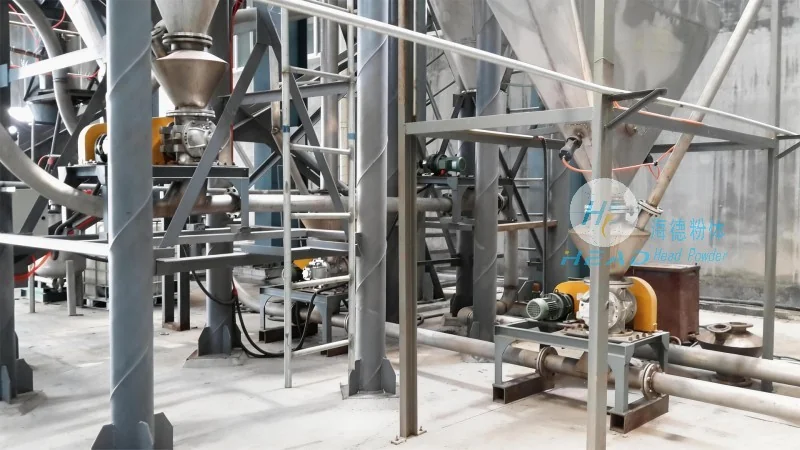
System Principle: The Mechanics of Automatic Unpacking and Pneumatic Conveying
The automatic powder material unpacking system operates by integrating advanced mechanical or pneumatic technologies to open bulk bags (FIBCs) without manual intervention. This process typically involves a specialized cutter or seal breaker that precisely removes the top of the bag, allowing the powder to flow into a hopper or collection chamber. The design prioritizes safety and efficiency, minimizing the risk of material spillage or contamination while ensuring consistent material flow. Once the powder is unpacked, the system connects to a pneumatic conveying unit that utilizes air pressure to transport the material through a network of pipes to the desired destination. The conveying method can be either positive pressure, where compressed air forces the powder through the system, or negative pressure, where vacuum draws the powder. The system incorporates control valves, filters, and pressure regulators to maintain optimal flow rates, prevent blockages, and ensure smooth operation. This integrated approach eliminates manual handling steps, reduces labor costs, and enhances overall process reliability.
Working Scene Characteristics: Tailored Solutions for Diverse Industrial Needs
The automatic powder material unpacking and pneumatic conveying system is engineered to address the unique requirements of various industries, including chemical manufacturing, food processing, pharmaceuticals, and cement production. Its adaptability stems from a modular design that allows customization for different powder types, particle sizes, and environmental standards. In chemical plants, the system can handle corrosive or hazardous powders with materials selected for durability and safety compliance. In food processing facilities, it meets stringent sanitary requirements, ensuring product purity and preventing cross-contamination. For pharmaceutical applications, the system is designed to maintain aseptic conditions, with features like HEPA filters and cleanroom-compatible components. The system's efficiency is evident in its ability to handle large volumes of material with minimal downtime, improving overall production throughput. Additionally, the system's energy-efficient operation and reduced waste generation contribute to cost savings and environmental sustainability. By automating the unpacking and conveying process, the system enhances operational consistency, reduces human error, and provides real-time monitoring capabilities for process optimization. This makes it an essential component for modern industrial operations seeking to improve productivity while maintaining high standards of quality and safety.